


Art Deco Pottery Vase
An art deco pottery vase brings striking geometric lines and rich glazes into a room, offering an instant focal point for modern interiors.
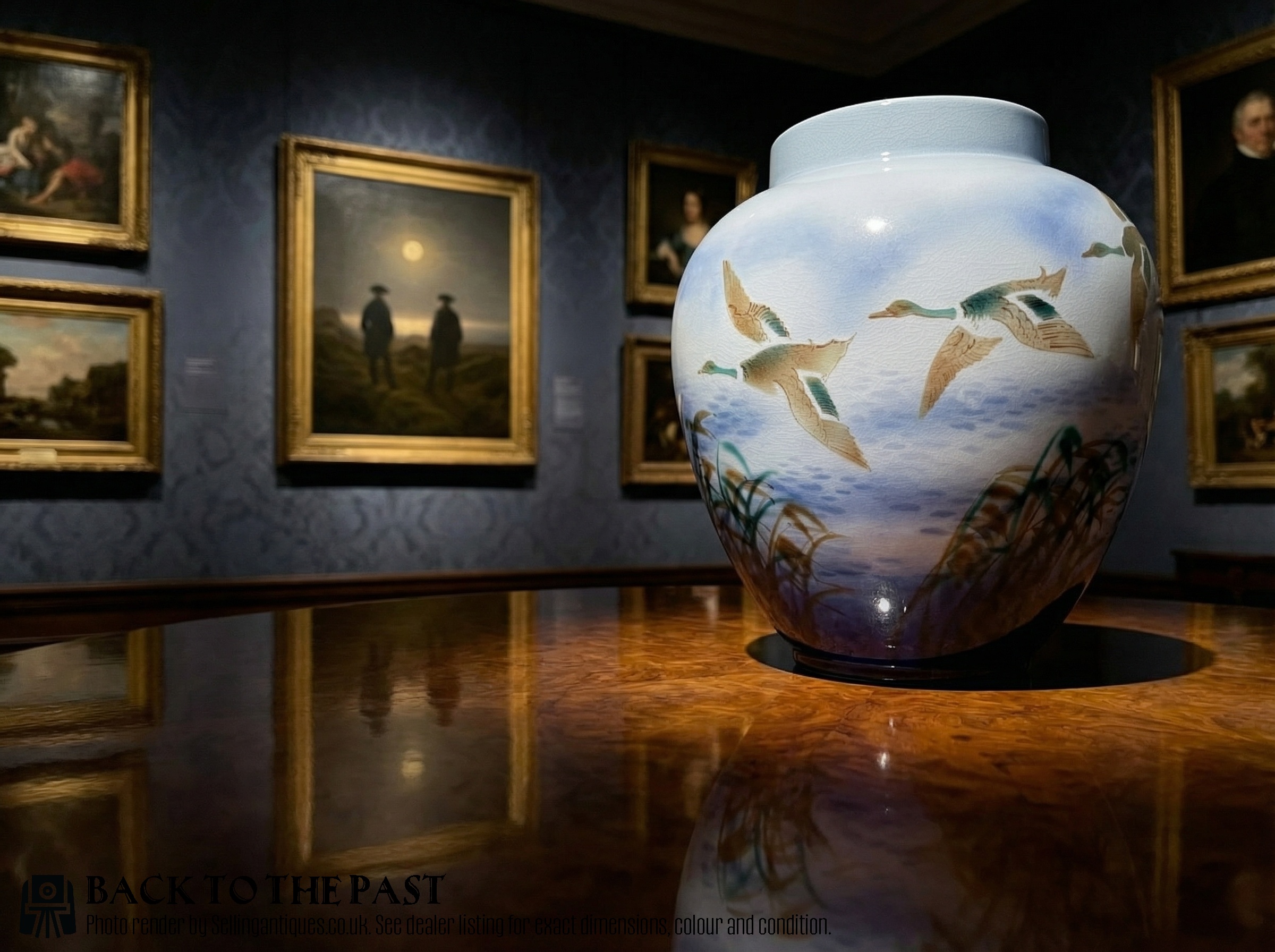
Art Deco Pottery Vase
An art deco pottery vase represents the distinctive design movements of the early twentieth century, spanning from the nineteen-tens through to the nineteen-thirties. Buyers searching this phrase encounter sculptural earthenware vessels displaying characteristic modernist motifs, stylised animal figures, and landscape scenes.
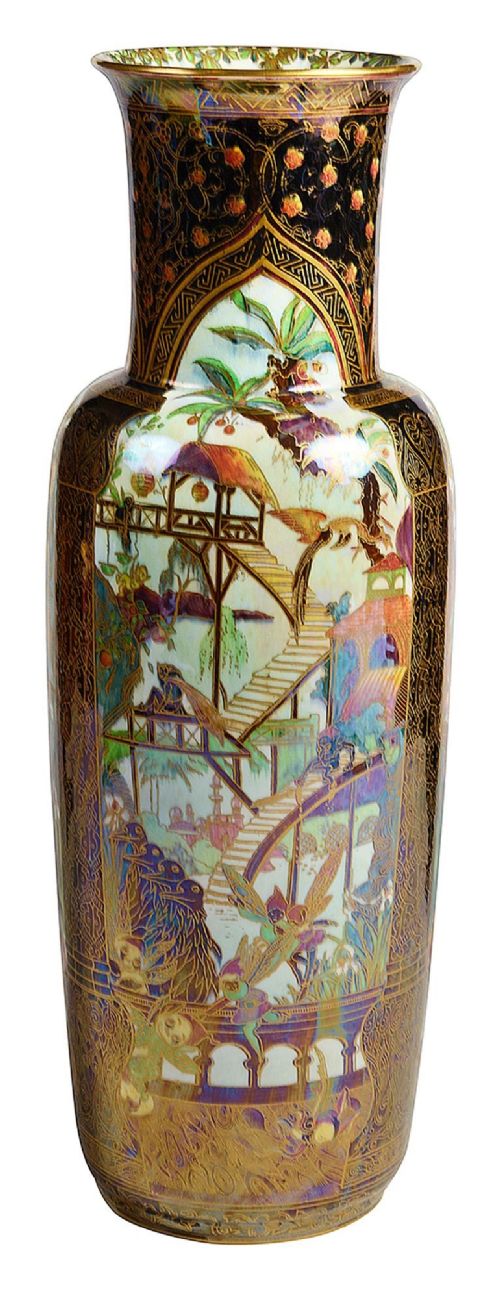
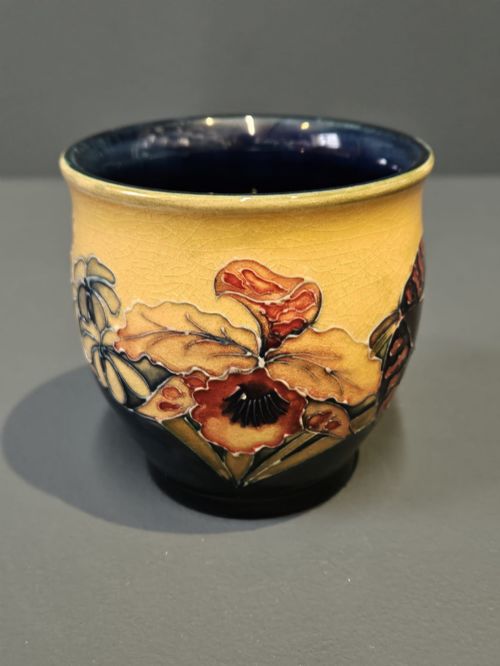
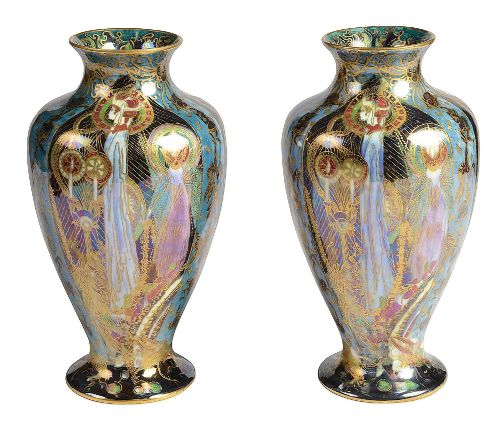
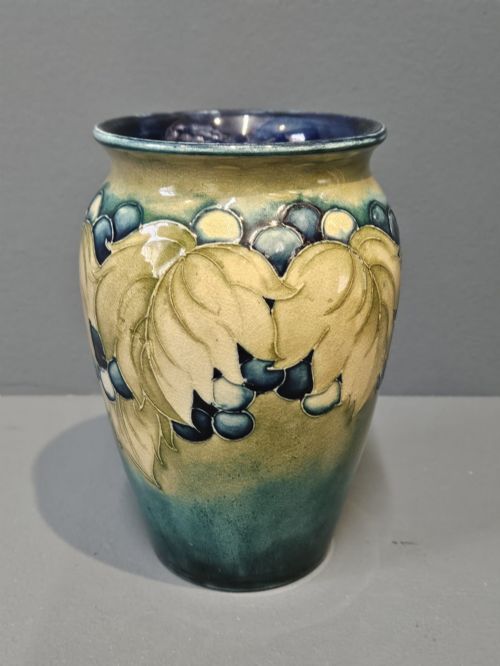
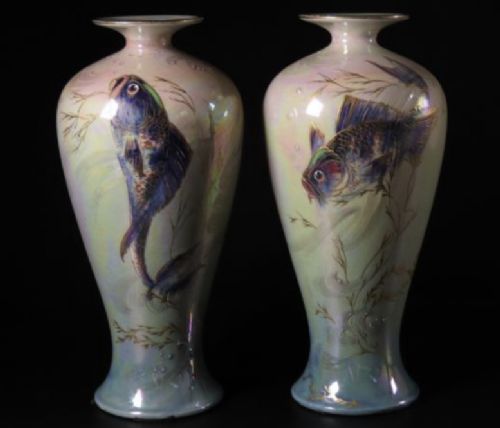
The pieces available here include works from British potteries such as Pilkington's Royal Lancastrian and Falcon Ware, alongside continental examples like Pierrefonds and Ruskin. Forms range from large painted mallard scenes to intricate lustre and crystalline finishes.
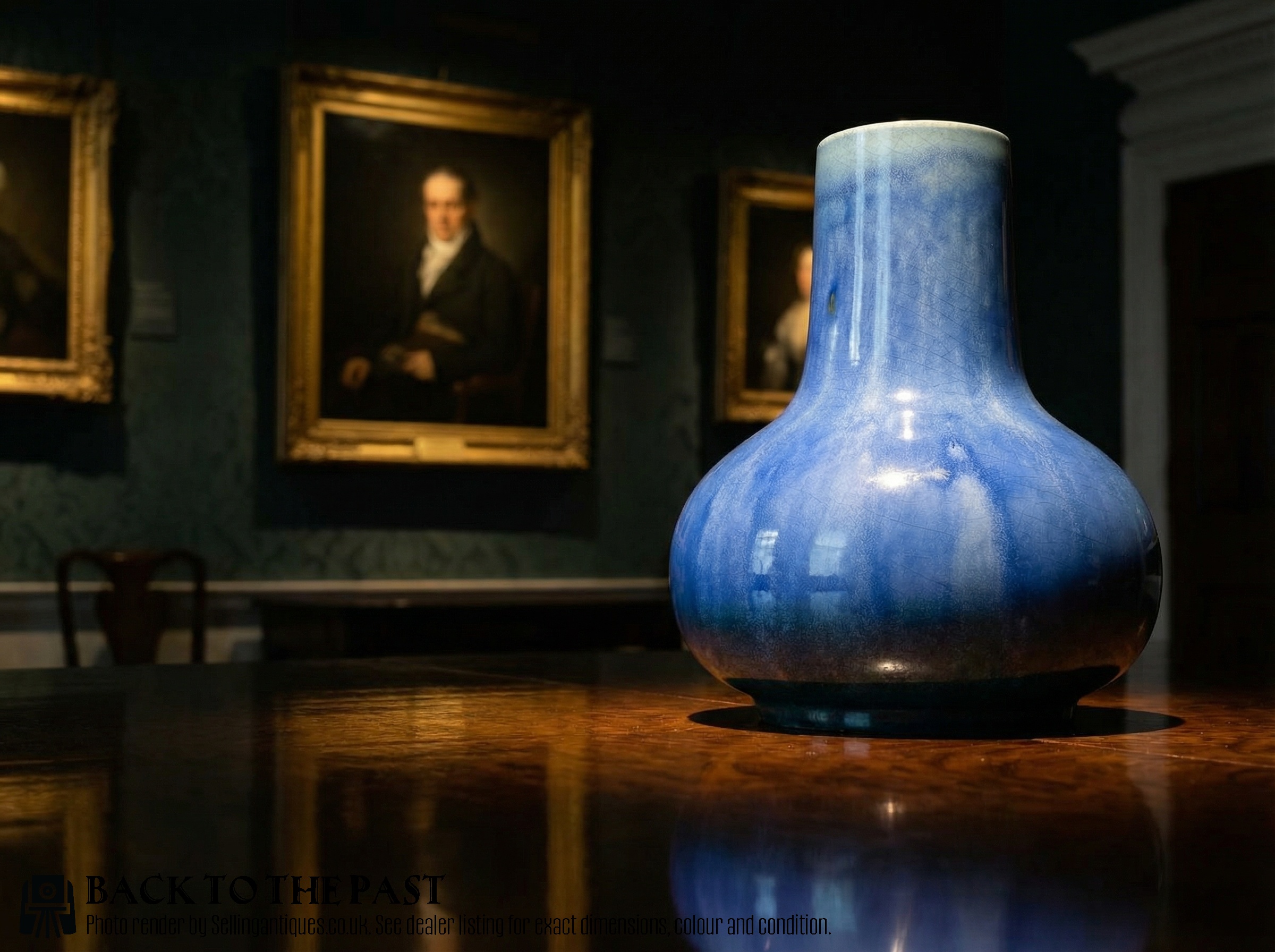
How they were made
Potters shaped these earthenware bodies using traditional throwing and moulding techniques before applying specialised surface treatments. The creation relies heavily on the chemistry of the kiln, where metallic lustre glazes and crystalline finishes develop during the firing process.
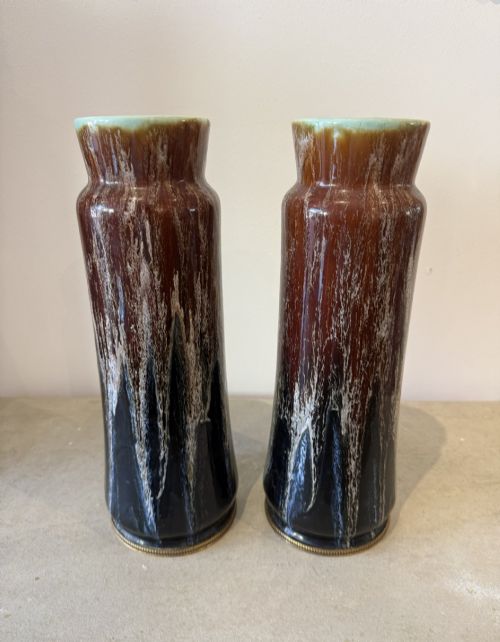
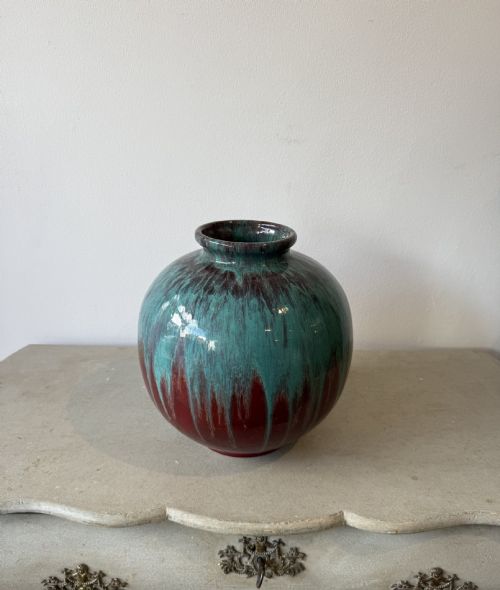
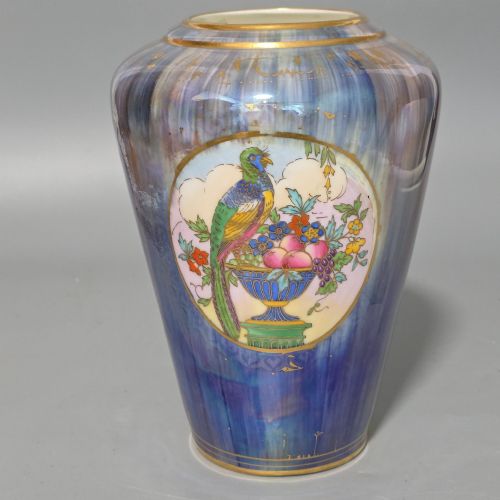
Makers achieved distinctive surface effects through hand-painted decoration, such as the mallard motifs on Falcon Ware, or through controlled glaze runs that produce organic crystalline and drip patterns.
Listings for this phrase feature earthenware pieces spanning the decades from 1910 through 1930, utilising metallic lustre and crystalline glazes.
What varies in quality
Quality in an art deco pottery vase rests upon the precision of the form and the depth of the glaze chemistry. Superior pieces display complex metallic lustre or crystalline effects that require expert kiln temperature control.
The artistic merit of the painted or modelled decoration also divides the range, with named designers like Richard Joyce achieving greater distinction through finely rendered animal subjects.
Pilkingtons Royal Lancastrian·Richard Joyce·Falcon Ware·Ruskin Pottery·Pierrefonds
The Art Deco Pottery Vase Glossary
- Earthenware
- Porous pottery fired at lower temperatures, commonly used as the base body for glazed decorative vessels. It requires an impermeable glaze layer to hold water.
- Metallic lustre glaze
- A specialised surface treatment incorporating metallic salts that creates a shimmering, iridescent sheen upon firing. This technique demands precise reduction conditions in the kiln.
- Crystalline glaze
- A finish featuring visible crystal growths suspended within the glassy matrix of the surface. These patterns form naturally during slow cooling cycles.
- Drip glaze
- A technique where viscous surface coatings run down the sides of the vessel during firing. This produces overlapping colours and unique abstract patterns on the body.
Art Deco Pottery Vase: Frequently Asked Questions
How do I date an art deco pottery vase?
Dating relies on maker marks, impressed pottery numbers, and stylistic shifts between the nineteen-tens and nineteen-thirties. Early pieces often feature matte or simple gloss finishes, whereas later examples embrace bold crystalline and lustre treatments.
Examining the bottom of the vessel usually reveals factory ciphers or artist signatures that narrow down the exact production era.
Were these vases used for fresh flowers?
Many of these vessels served primarily as decorative mantelpiece ornaments rather than functional flower holders. Their intricate metallic and crystalline surfaces were designed to catch the ambient light of the room.
Using them with water requires caution to protect delicate earthenware bodies and historic interior glazes from moisture damage.
What is a lustre glaze?
A lustre glaze contains thin metallic films that create an iridescent, reflective surface effect. Makers developed complex chemical recipes to achieve these shimmering rainbow hues under specific kiln conditions.
This technique represents some of the most technically demanding work undertaken by twentieth-century studio potteries.
How do I display an art deco pottery vase?
Position these vessels on flat surfaces where adequate lighting can illuminate their metallic sheens and geometric forms. Pairing them with minimalist surroundings allows the strong silhouettes to stand out effectively.
Keep them away from direct sunlight and high-traffic edges to preserve the delicate surface glazes.