


Art Deco Light Fitting
An art deco light fitting brings geometric discipline and striking industrial materials into a room, offering both focused illumination and strong period character.
Art Deco Light Fitting
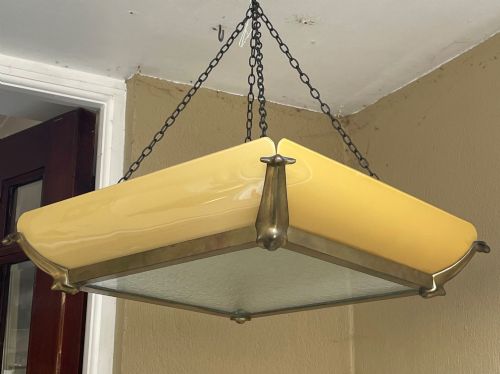
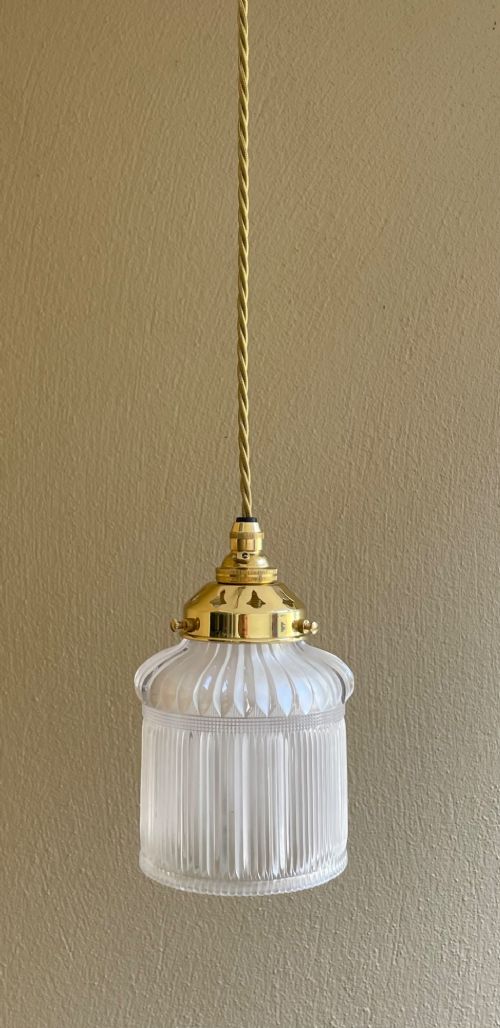
An art deco light fitting encompasses chandeliers, pendant lights, ceiling lights, and wall sconces designed primarily during the 1920s and 1930s. The versions most commonly met on this page combine symmetrical metal frameworks with moulded or frosted glass elements.
The selection extends from modest single-bulb flush ceiling lights to multi-tiered crystal chandeliers and monumental architectural installations. Pieces originate from British, French, and Dutch workshops, reflecting the international reach of the design movement.
How they were made
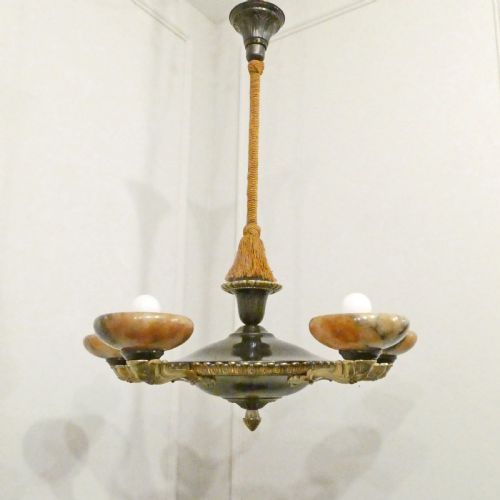
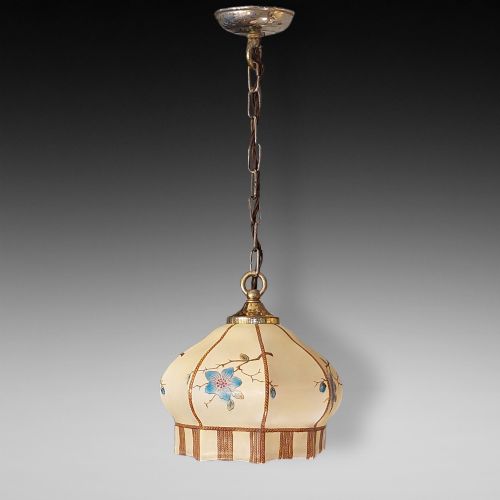
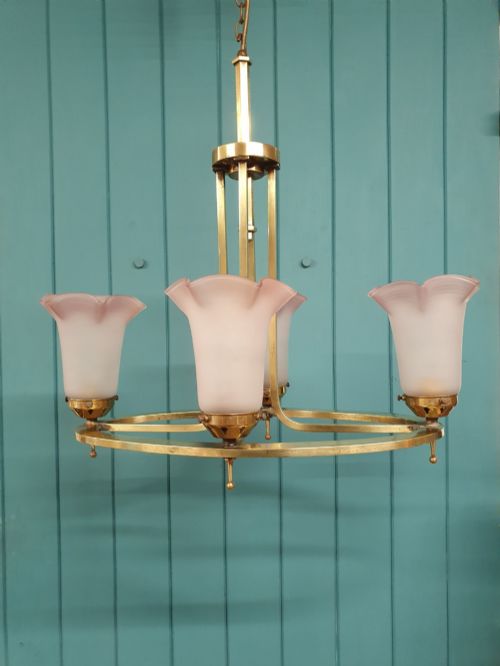
Makers utilised cast brass, chrome plating, and bronze to construct the rigid geometric frames that support the glass components. Alabaster and hand-painted glass also appear, providing softer diffused light through dense natural or pigmented minerals.
Glass production relied heavily on specialised moulding techniques, producing slip shades, skyscraper profiles, and cloud-shaped sconces. Metalwork was frequently assembled in tiers, reflecting the architectural ambitions of the period.
Materials in these listings span brass, chrome, alabaster, oak, and multiple varieties of cut, frosted, and opaline glass.
What varies in quality
Quality rests in the weight of the metal chassis and the precision of the glass casting. Superior fittings employ thick, heavy gauge brass or solid chrome alongside finely finished slip shades with crisp relief moulding.
The sophistication of the design dictates the upper tier of pieces, where signed French glass or complex tiered crystal arrangements demonstrate exceptional craftsmanship. Simpler commercial production utilises lighter pressed metals and plain frosted shades.
Heal's·Harry and Lou Epstein·René Lalique·Jean Gauthier
The Art Deco Light Fitting Glossary
- Slip shade
- A moulded piece of glass that slides or slots directly into a metal frame to form a bowl or shade. These often feature stylised floral or geometric motifs.
- Plafonnier
- A ceiling-mounted bowl light that sits close to the surface, popular in French interiors of the period. This form directs illumination upwards against the ceiling.
- Alabaster
- A fine-grained mineral stone carved to diffuse light evenly across a room. It yields a warm, opaque glow when illuminated from within.
- Skyscraper
- A stepped architectural style applied to glassware and metal frames. It echoes the vertical geometry of early twentieth-century urban towers.
- Amsterdam School
- An expressionist architectural and design movement originating in the Netherlands. Works from this tradition favour rounded brickwork, expressive metal framing, and rich surface textures.
Art Deco Light Fitting: Frequently Asked Questions
How do I hang a heavy chandelier safely?
Heavy fixtures require direct anchoring to ceiling joists using steel hook plates rather than standard lath and plaster support.
Consulting a qualified electrician ensures the wiring and ceiling fixings can bear the substantial combined weight of the metal frame and glass components.
Can these old lights use modern bulbs?
Most surviving fixtures accept standard screw or bayonet LED lamps once the internal wiring has been updated to current safety standards.
Matching the wattage to the thermal tolerance of original glass shades prevents heat damage to vintage components.
How do I clean delicate period glass?
Remove glass shades from the metal frame and wash them gently in lukewarm water with mild soap, avoiding harsh chemical abrasives.
Dry each piece thoroughly with a soft cloth to protect hand-painted details and mercury mirrored surfaces.
What rooms suit an art deco light fitting?
Hallways and dining spaces benefit particularly from the strong downward illumination and striking geometric profiles of these pendant and flush fittings.
Matching the drop height of a chandelier to the proportions of the room prevents the piece from dominating the space.