


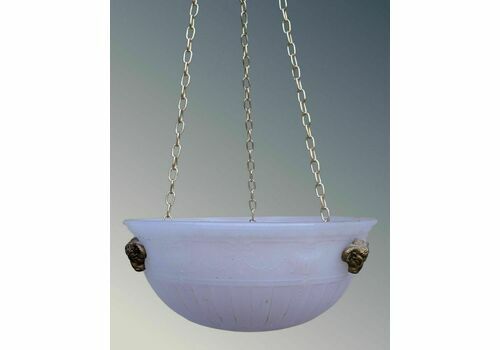


Frosted Glass Light Bowl
A frosted glass light bowl softens harsh illumination and transforms a room, combining practical overhead lighting with striking period design.
Frosted Glass Light Bowl
A frosted glass light bowl is a ceiling-mounted or suspended lighting fixture designed to diffuse light evenly across a space. When you search for a frosted glass light bowl, you encounter pieces that span the nineteenth century through the nineteen-thirties, reflecting significant shifts in interior design. The most common examples belong to the Art Deco period, taking the form of shallow plafonniers or hanging pendants designed to sit close to the ceiling.
These bowls appear in various forms, including flush ceiling lights, bowl chandeliers, and individual up-light lamp shades. Earlier nineteenth-century examples often feature elaborate ornamentation, such as ruby glass or gilded finishes, while twentieth-century pieces favour cleaner geometric lines. Their primary function remains the same: providing a warm, diffused glow while serving as a decorative centrepiece in a room.
Materials and construction methods
Makers produced these lighting components using specialised glass-forming techniques, most notably pressing, moulding, and acid-etching to achieve the signature opaque or satin finish. Pressed satin glass and opalescent glass dominate the twentieth-century selections, creating a soft texture that absorbs and scatters light effectively. Heavier crystal and ruby glass define the nineteenth-century pieces, showing deeper colouration and tactile surface patterns.
Metal mounts and suspension hardware provide structural support, utilising brass, patinated brass, bronze, copper, and gold leaf. These metal elements secure the glass bowls using galleries, clips, or chains, anchoring the fixtures safely to ceilings while complementing the tone of the glass.
Materials recorded across the selection include pressed glass, opalescent glass, ruby glass, crystal, brass, copper, and bronze.
Assessing quality and craftsmanship
The quality of a frosted glass light bowl rests largely on the depth of the moulding and the weight of the material itself. Finer examples display crisp relief work on the glass surface, where botanical motifs or geometric patterns retain sharp definition despite the softening effect of the frosting process. Thicker glass and substantial metalwork indicate higher production standards, ensuring the bowl hangs securely and diffuses light without dark patches.
Artistry in the glass formulation also separates standard pieces from exceptional ones, particularly where opalescent or pink glass catches ambient light to shift tones. The integration between the glass bowl and its metal mount reveals the level of thought put into the design, with bespoke brass or bronze fittings offering greater visual harmony than mass-produced alternatives.
René Lalique·Verrerie Des Vosges
The Frosted Glass Light Bowl Glossary
- Plafonnier
- A shallow ceiling light that sits flush or close to the ceiling surface, commonly glazed with frosted or pressed glass. This French term translates directly to ceiling lamp.
- Opalescent glass
- Glass that exhibits a milky, translucent appearance with milky-blue or fire-like undertones when lit. It diffuses glare while adding subtle shifts of colour.
- Pressed glass
- Glass shaped by being pressed into a metal mould using a plunger, allowing for consistent patterns and textured surfaces. It became widespread during the nineteenth and twentieth centuries.
- Satin glass
- Glass treated with acid or sandblasting to create a smooth, velvety finish that diffuses light completely. This texture removes transparency without losing luminosity.
- Up-light
- A lighting configuration where the bowl directs illumination upward toward the ceiling, bouncing light back down into the room for a softer ambient effect.
Frosted Glass Light Bowl: Frequently Asked Questions
How do I hang a heavy bowl light?
Heavy glass bowls require robust ceiling joists and appropriate fixings to support the combined weight of the thick glass and metal hardware. Professional installation ensures the electrical load and physical strain are managed safely.
Most fixtures use a central rod or a three-point chain suspension connected to a ceiling canopy. Checking the integrity of the original metal loops and hooks is essential before mounting.
What rooms suit a bowl light?
These fixtures work well in hallways, bedrooms, and reception rooms where ambient, glare-free illumination is preferred over direct spotlights. The shallow profile of plafonniers suits rooms with standard ceiling heights.
Larger spaces often benefit from multi-arm chandeliers featuring bowl components, whereas smaller rooms take single pendant bowls. The diffused light creates an inviting atmosphere without harsh shadows.
How do I clean frosted glass?
Dust the glass regularly with a soft, dry cloth to prevent grime accumulation on the textured surface. Avoid harsh abrasives that can damage the delicate acid-etched or satin finish.
Use mild soapy water on a damp cloth for deeper cleaning, ensuring the glass is dried thoroughly before switching the light back on. Take care when handling older metal mounts to keep moisture away from vintage wiring.
How do I date an antique light bowl?
Dating relies on examining the manufacturing style, the type of glass used, and the construction of the metal fittings. Art Deco pieces from the nineteen-thirties typically feature geometric moulding and streamlined bronze or copper mounts.
Earlier nineteenth-century examples often display heavier ruby glass, ornate brass collars, and hand-applied gilding. Comparing the mounting screws and wiring channels also provides clues to the era of production.