


French Press Moulded Glass
French press moulded glass brings together tactile relief and luminous optical effects from the early decades of the twentieth century.
French Press Moulded Glass
French press moulded glass encompasses decorative vessels, tableware and lighting created during the Art Nouveau and Art Deco periods. Buyers seeking french press moulded glass will encounter vases, bowls, plates, perfume bottles and chandeliers produced in France during the early decades of the twentieth century.
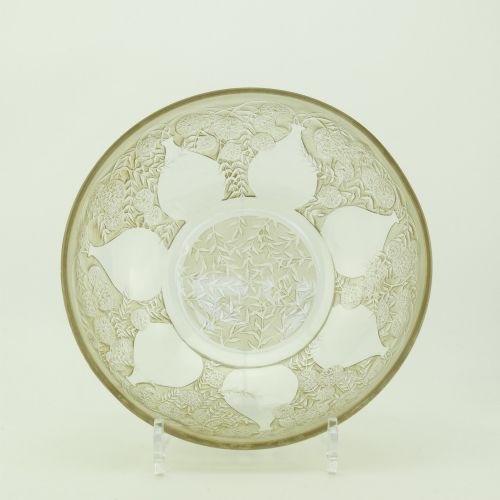
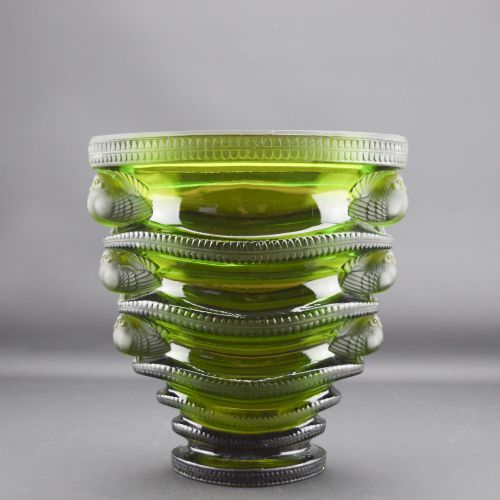
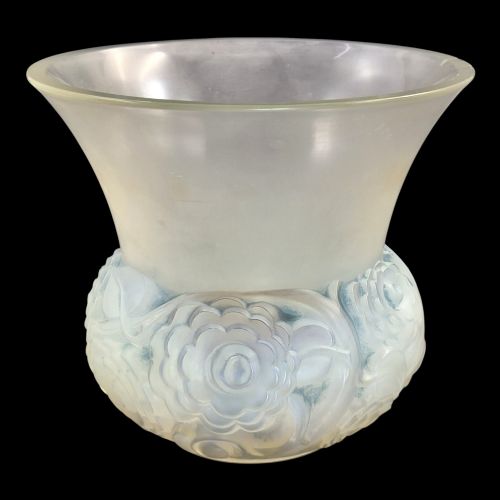
The objects frequently take the form of footed bowls, chargers, plafonniers and sculptural vases designed by prominent makers. These pieces showcase botanical motifs, fauna and figurative designs rendered in high relief across the body of the glass.
Examples on this page span the Edwardian era through the nineteen-thirties, reflecting stylistic shifts from naturalistic floral contours to geometric Art Deco symmetry. The physical presence of each item relies on thick-walled vessel construction designed to catch and refract light.
Materials and production techniques
Makers utilised heavy glass formulations, incorporating clear glass, crystal, frosted glass and opalescent glass that shifts in tone from blue to amber depending on the light. Molten glass was pressed into metal moulds using mechanical force to impart deep relief patterns and three-dimensional motifs onto the surface.
Surface treatments such as sepia stain, enamel and contrasting colour additions were applied to highlight the intricate details of the moulded designs. These chemical and physical applications accentuated the contrast between the frosted background areas and the polished highlights of the relief work.
Several pieces depict cheerful cherries and watchful hounds frozen forever in heavy French glass.
Judging quality and execution
Quality resides in the crispness of the moulded relief and the depth of the opalescent fire within the glass body. Superior examples display precise definition in fine botanical or figurative details without distortion from the pressing process.
The integration of surface patination, such as uniform sepia staining or carefully controlled frosting, separates standard production from exceptional studio output. The weight, structural integrity and optical refraction of the heavy glass further distinguish finer pieces.
Rene Lalique·G Vallon·Etling·Marius Ernest Sabino·Jean Gauthier
The French Press Moulded Glass Glossary
- Opalescent glass
- Glass that milky-blue appearance under transmitted light and amber tones under reflected light. This optical property results from the chemical composition reacting during the cooling process.
- Plafonnier
- A ceiling-mounted bowl light fixture held by metal or bronze mounts. These fixtures illuminate interior spaces while displaying moulded glass motifs from below.
- Press moulded
- A manufacturing technique where molten glass is compressed into a metal mould by a mechanical plunger. This process allows for consistent production of thick vessels with complex surface relief.
- Sepia stain
- A dark pigment applied to the recessed portions of a glass design. It creates tonal depth and emphasises the sculptural details of the moulded motifs.
- Coupe
- An open bowl or shallow vessel form. These pieces often serve as decorative centerpieces or display dishes.
French Press Moulded Glass: Frequently Asked Questions
What is French press moulded glass?
French press moulded glass refers to decorative and utilitarian glass objects produced in France during the early twentieth century by pressing molten material into metal moulds.
These pieces span the Art Nouveau and Art Deco movements, encompassing tableware, lighting fixtures and sculptural vessels adorned with botanical or figurative relief.
How do I clean opalescent glass?
Cleaning requires warm water and mild soap applied with a soft cloth to protect the delicate surface frosting and applied stains.
Harsh chemical detergents and abrasive sponges must be avoided to prevent damage to the historic glass body and any original sepia patination.
How can I date these pieces?
Dating relies on stylistic markers that transition from organic Art Nouveau floral motifs to geometric Art Deco symmetry between nineteen-ten and nineteen-thirty.
Signatures, moulded marks and manufacturing techniques recorded across the periods provide additional chronological indicators for specific workshops.
Where were these glass pieces made?
Production was centered in France, particularly around Paris and regional glassmaking hubs, during the height of twentieth-century decorative arts.
Workshops and individual designers utilised specialised pressing facilities to create heavy, tactile glass objects for domestic interiors.