


Art Deco Desk Timepiece
An art deco desk timepiece brings geometric rigour and polished modernism to a working surface, driven by period mechanical or early electrical movements.
Art Deco Desk Timepiece
An art deco desk timepiece brings precise mechanical or early electrical timekeeping to a workspace, combining compact utility with the striking geometry of the period. These objects span desk clocks, mantel clocks, and miniature strut designs intended for personal surfaces.
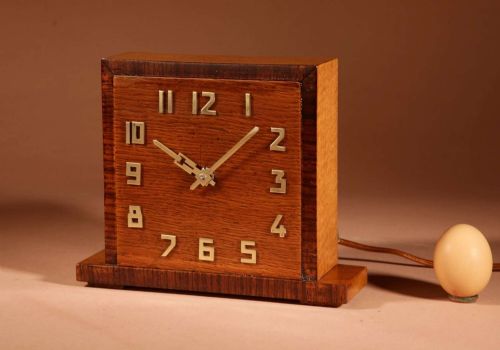
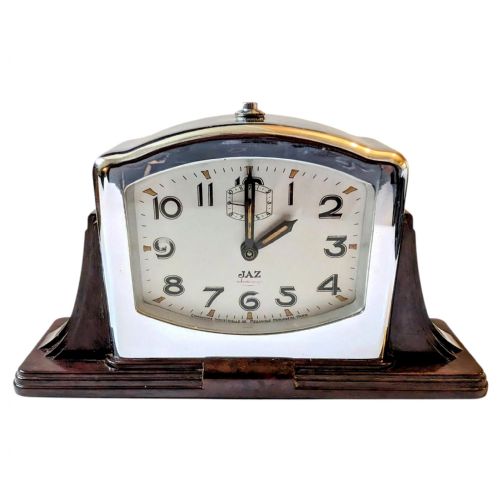
The versions most frequently met on this page date predominantly from the 1930s and 1920s, reflecting the height of modernist design. Makers utilised contemporary forms such as skyscraper silhouettes alongside traditional materials to create functional desk ornaments.
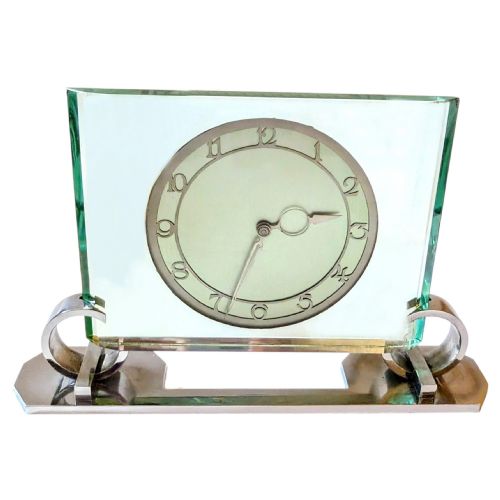
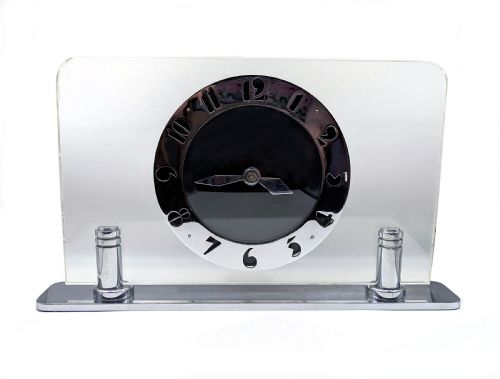
Beyond standard timepieces, variants encompass travel clocks, mirror clocks, and specialised glass models driven by early electrical systems. Each piece demonstrates how period makers adapted architectural trends for domestic and office interiors.
Materials and Construction
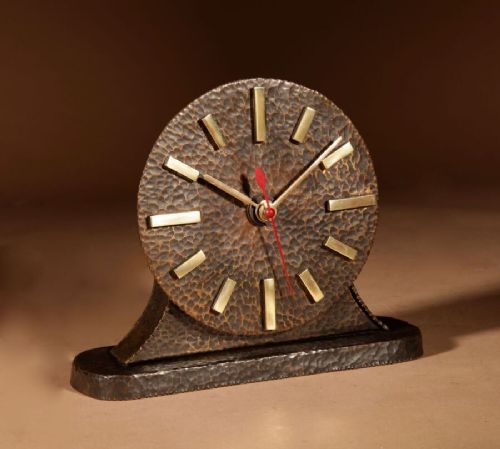
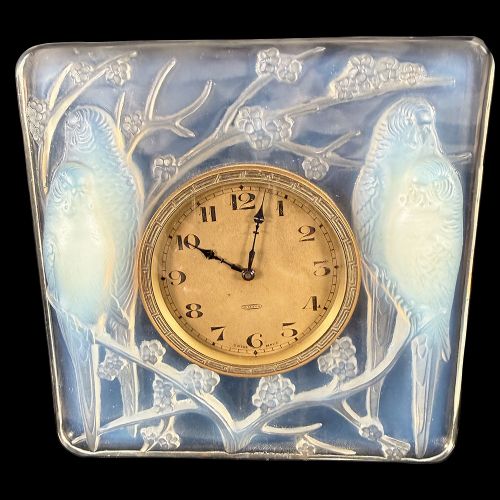
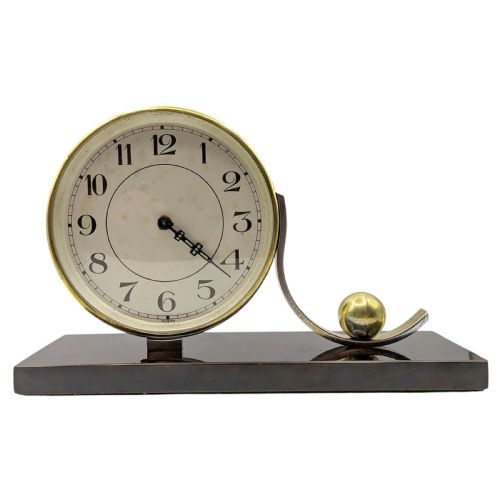
Makers constructed these timepieces using a combination of industrial metals and newly developed synthetics, mounting chromium-plated or brass mechanisms inside housings of glass, bakelite, and marble. Glass elements range from opaline and uranium variants to moulded opalescent figural panels produced by renowned glassworks.
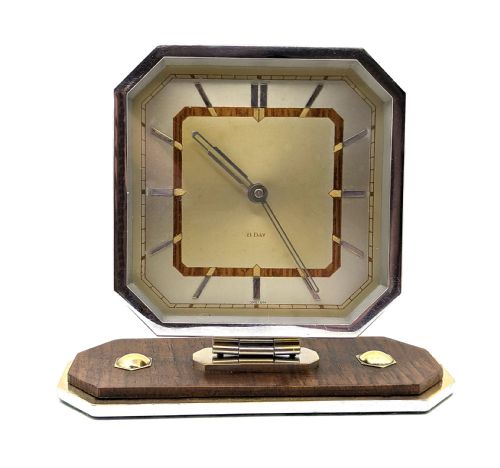
Movements within the housings vary from standard 30-hour and 8-day mechanical wind-up calibres to early electrical systems like those by Bulle. Cases often incorporate contrasting details such as rosewood, oak, or silver mountings to accentuate the linear geometries of the style.
Materials documented across the available selection include chrome, brass, glass, marble, bakelite, enamel, and various hardwoods.
Distinctions in Quality
Quality rests upon the execution of the housing and the sophistication of the internal movement, separating mass-produced items from works by premier retailers and specialised clockmakers. Pieces bearing signatures from established houses or esteemed makers display superior casting, finer dial painting, and more reliable movements.
The choice of materials also dictates the standing of a piece, with heavy cast metals, solid silver cases, or signed moulded glass bodies representing the upper tier. Integrity of the original finish, alongside a fully serviced mechanical or electrical movement, marks the distinction between standard and superior examples.
R Lalique·Smiths Clockmakers·Mappin And Webb·Harrods of London·Asprey
The Art Deco Desk Timepiece Glossary
- Strut clock
- A timepiece supported by a hinged prop or easel on the reverse, designed specifically for upright placement on a desk or dressing table.
- Bakelite
- An early thermosetting plastic frequently utilised for clock bases and cases during the interwar period.
- Mystery clock
- A timepiece where the mechanism driving the hands is concealed or seemingly absent, creating an optical illusion.
- Opalescent glass
- Glass containing agents that cause it to appear milky with translucent colour variations, famously employed in period decorative dials and figural housings.
- Champlevé enamel
- A technique where troughs are carved into a metal surface and filled with vitreous enamel before firing.
Art Deco Desk Timepiece: Frequently Asked Questions
How do early electrical movements work?
Early electrical movements replace traditional mainsprings with battery-driven electromagnetic impulses that keep the pendulum or balance wheel in motion. These systems represent an innovative transition period in domestic timekeeping.
Such mechanisms require specific technical attention during servicing to preserve their original wiring and magnets while ensuring reliable daily operation.
Where were these clocks placed?
These timepieces were designed for prominent placement on office desks, library tables, and mantelpieces where their architectural silhouettes could be easily admired. Miniature versions served as portable travel companions or dressing table accessories.
Their compact scale allowed them to function as both practical instruments and striking decorative centerpieces within domestic interiors.
How do I care for a vintage movement?
Maintaining a vintage movement involves regular professional servicing to clean gears and replace worn lubricants without altering original components. Winding mechanical versions requires a gentle touch to avoid over-tensioning the spring.
Keeping the timepiece away from direct sunlight and excessive moisture protects both the delicate internal mechanics and vulnerable exterior materials like bakelite and glass.
What defines skyscraper styling?
Skyscraper styling draws direct inspiration from modern interwar urban architecture, featuring stepped silhouettes, vertical lines, and tiered metallic forms. This aesthetic emphasises height and geometric progression.
Clocks utilising this design language often pair chrome plating with dark marble or contrasting wood bases to reinforce the vertical motif.