


Chrome Glass Clock
A chrome glass clock brings the striking geometry of the 1930s directly into a room, offering both practical timekeeping and brilliant reflective surface.
Chrome Glass Clock
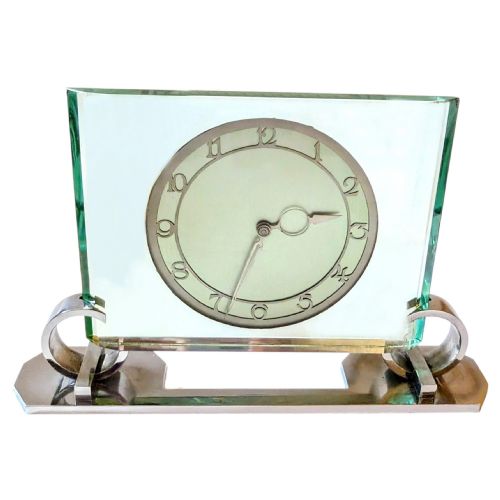
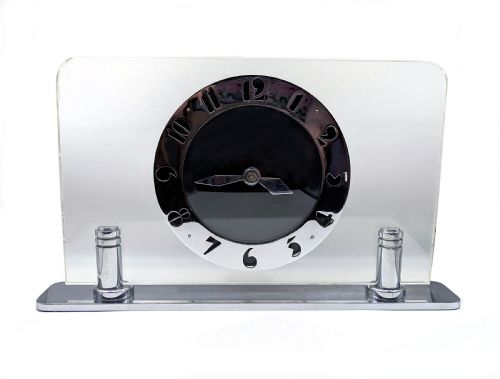
When you search for a chrome glass clock, you encounter pieces designed primarily during the 1930s, spanning the Art Deco and Modernist styles. These timepieces combine metallic frames with coloured, mirrored, or transparent glass panels to create a bold visual presence.
Mantel clocks and wall clocks dominate the selection, often appearing in vibrant hues such as green, blue, pink, and opaline uranium glass alongside polished metal housings. Desk models and specialised mechanical Atmos clocks also emerge within the range, particularly from mid-century decades like the 1950s and 1960s.
The objects serve as functional sculptures, with many examples featuring clear glass dials, metal hands, and geometric housings that reflect the industrial optimism of the era.
Assessing quality and finish
The standard of a chrome glass clock rests on the crispness of its metal casting, the weight of the glass, and the integrity of the plating. Superior examples display thick, flawless mirrored panels and precisely fitted bezels without looseness in the joints.
The sophistication of the movement further distinguishes the pieces, from standard mechanical wind-up calibres to complex Swiss Atmos mechanisms. Original matching hands, clean dials, and well-preserved plating separate standard production items from finer studio or maker-signed examples.
Some mystery clocks use hidden glass discs to make the hands look like they are floating by magic.
Smiths Clockmakers·Mappin & Webb·Jaeger-LeCoultre·GEC·Jaz·Enfield
The Chrome Glass Clock Glossary
- Atmos clock
- A mechanical clock driven by a hermetically sealed capsule containing a gas and liquid mixture that expands and contracts with temperature fluctuations. This design eliminates the need for manual winding.
- Opaline glass
- A semi-translucent glass type often tinted in pale green or other pastel tones, frequently utilised in modernist timepiece dials and surrounds.
- Mystery clock
- A timepiece where the hands appear to float without any visible mechanical connection to the movement, usually achieved through concealed glass discs.
- Rhodium plating
- A metallic coating applied to base components to provide a bright, reflective finish that resists tarnishing better than standard nickel.
- Westminster chiming
- A mechanical striking sequence that sounds four notes on the quarter-hour, commonly found in larger mantel clock movements.
Chrome Glass Clock: Frequently Asked Questions
How do I wind a mechanical model?
Wind the mainspring using the designated key inserted into the dial or backplate, turning gently until resistance increases. Avoid over-winding to preserve the internal mechanism.
Ensure the clock rests on a completely level surface to keep the escapement beating evenly.
Can electric models run safely today?
Many vintage electric movements require professional rewiring or conversion to modern standards for safe domestic use. Some examples feature modern quartz replacements to ensure reliable timekeeping.
Check individual listings to confirm whether a piece retains its original electric coil or has been adapted.
Where should I place a mirrored clock?
Position the timepiece on a sturdy mantelpiece or shelf away from direct moisture and strong sunlight. The reflective surfaces catch ambient light, making them effective focal points in living rooms or studies.
Allow adequate clearance around the piece to showcase the glass panels and metal framing from multiple angles.
How do I clean chrome and glass?
Wipe the glass components gently using a soft cloth and a mild glass cleaner sprayed onto the cloth rather than directly onto the surface. Polish the chrome plating carefully to avoid scratching the polished finish.
Refrain from using abrasive pads or harsh chemical solvents on painted dials or plated metal parts.