


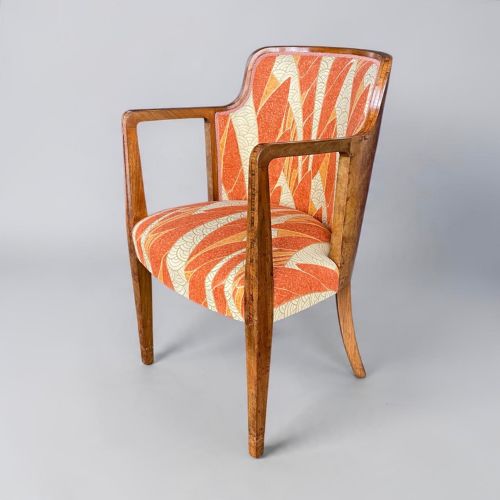
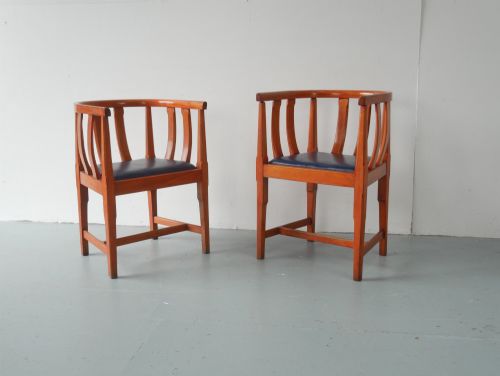
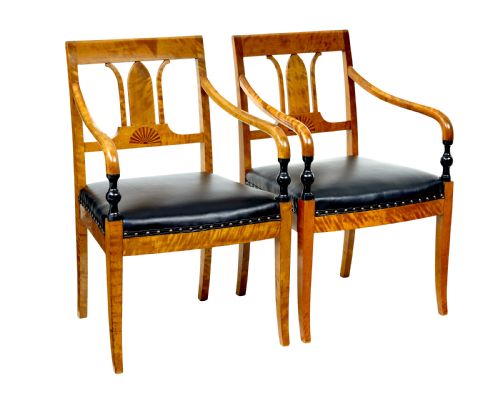
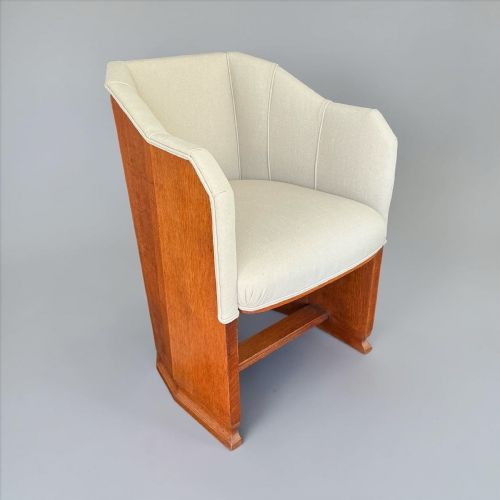
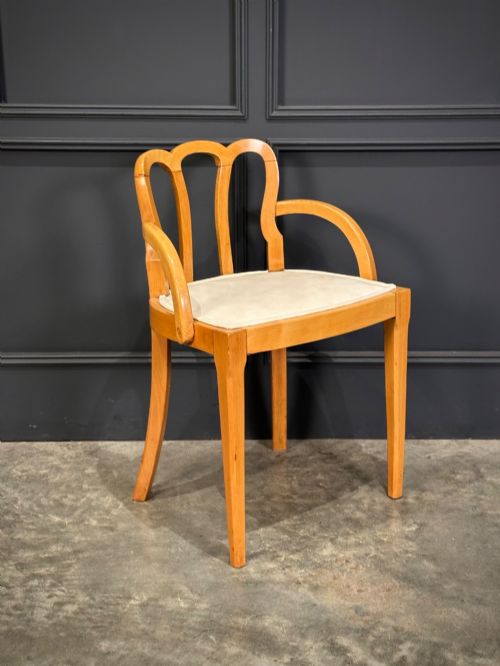
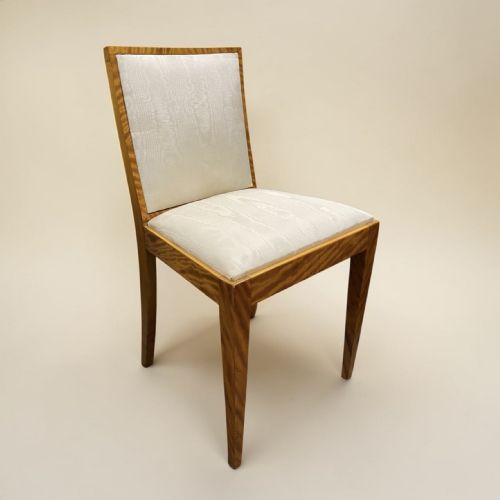


Art Deco Desk Chair
An art deco desk chair brings sculptural twentieth-century form and practical workspace comfort to a study.
Art Deco Desk Chair
An art deco desk chair combines the bold geometric lines characteristic of the twentieth-century movement with the ergonomic requirements of a working seat. Buyers searching for an art deco desk chair will find pieces ranging from fixed-leg executive armchairs to swivelling office seats designed for boardrooms and studies.
The selections span various forms including oak and walnut revolving desk chairs, leather-upholstered armchairs, and matching vanity or side seating. Many examples date from the nineteen-thirties, with occasional earlier interpretations incorporating nineteenth-century revival influences.
How they were made
Cabinet makers utilised choice hardwoods including oak, walnut, satinwood, and burr walnut, often highlighting the natural grain of the timber through polished finishes. Selected pieces feature flame birch or rosewood veneers applied to curved wooden frames.
Upholstery forms a central element of construction, with craftsmen employing supple leather, durable fabric, and occasionally decorative brass studs. Swivelling variants integrated mechanical metal components within timber and leather structures to provide functional movement.
Art Deco Desk Chair Retail Price Guide 2026
Typical asking prices for art deco desk chair among the pieces listed under this phrase on Sellingantiques today, from the lower quarter to the upper quarter. They describe what is for sale here now, not the wider market.
What varies in quality
The standard of an art deco desk chair depends largely on the choice of timber veneer and the precision of the joinery in curved wooden elements. Master makers invested skill in creating fluid, uninterrupted lines and robust revolving mechanisms.
Upholstery detailing also distinguishes simpler examples from works by notable makers such as Hille, Epstein, or Bath Cabinet Makers. Finer pieces display careful stitching, high-grade leather, and harmonious proportions suited to executive interiors.
Bath Cabinet Makers·Harry and Lou Epstein·Hille·Heal's
The Art Deco Desk Chair Glossary
- Bridge chair
- A compact, low-slung armchair originating in France, often utilised around gaming tables or small desks. These chairs feature comfortable upholstered seats and supportive curved backs.
- Burr walnut
- A highly decorative wood veneer taken from the growth excrescences of walnut trees. It displays intricate swirling grain patterns highly favoured by twentieth-century designers.
- Revolving chair
- An office seat incorporating a central vertical spindle allowing the user to turn. Many period examples combine this mechanical function with solid oak or walnut frames.
- Satinwood
- A luminous hardwood known for its golden-yellow sheen and fine grain. Cabinet makers utilised this timber for sophisticated bedroom and desk furniture.
- Tub chair
- An armchair featuring a continuous curved back and arms forming a semi-circular enclosure. This form provides wrap-around comfort during extended periods at a desk.
Art Deco Desk Chair: Frequently Asked Questions
What defines an art deco desk chair?
An art deco desk chair is defined by its early twentieth-century stylistic origins, featuring geometric lines, curved wooden frames, and materials such as walnut, oak, and leather.
These pieces were constructed for offices, boardrooms, and home studies, balancing decorative modernist appeal with practical seating support.
Were these chairs used in offices?
Many period examples were built specifically for commercial offices, boardrooms, and ships' cabins, incorporating swivelling mechanisms and robust timber frames.
Other lighter versions served domestic functions as writing table seats or bedroom desk chairs.
How do I identify a period piece?
Period pieces typically display construction methods, timbers, and upholstery styles consistent with the early twentieth century, particularly the nineteen-thirties.
Maker marks, traditional joinery, and genuine age in the leather and timber help verify authenticity against later reproductions.
What woods were commonly used?
Cabinet makers predominantly utilised oak and walnut for standard desk chairs, frequently employing figured grains like burr walnut or birds eye maple.
More decorative or lighter pieces occasionally featured satinwood, birch, or rosewood veneers.