

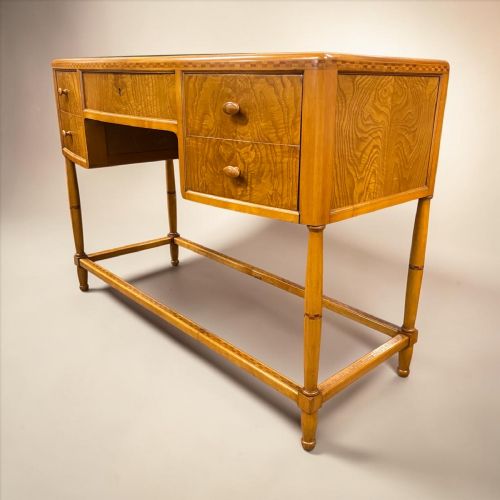


Art Deco Console Table
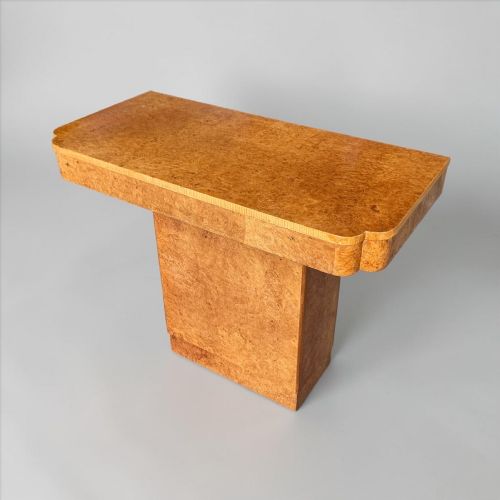
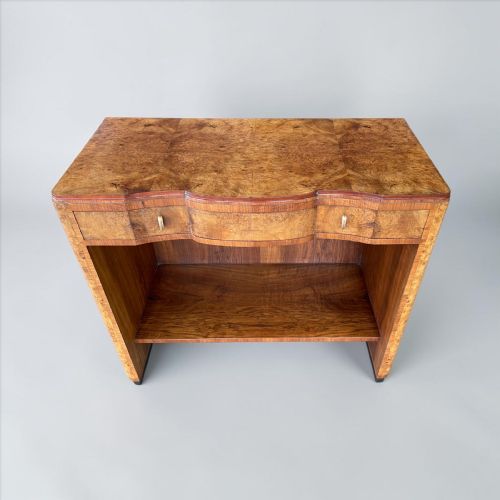
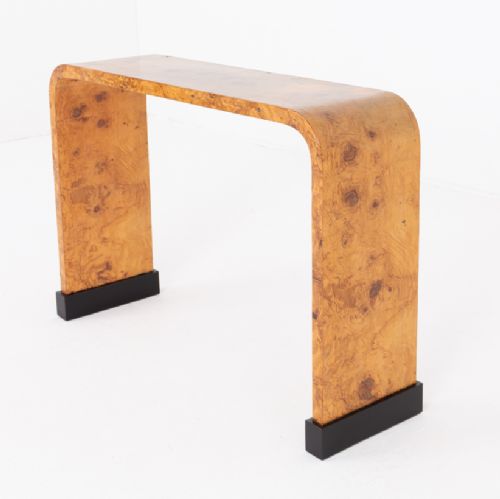
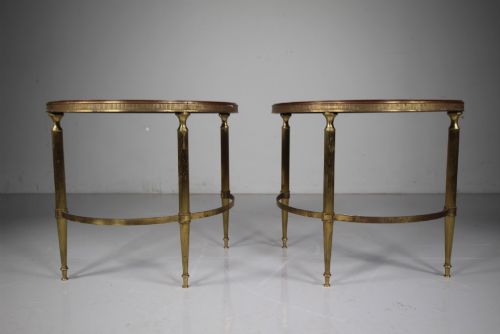
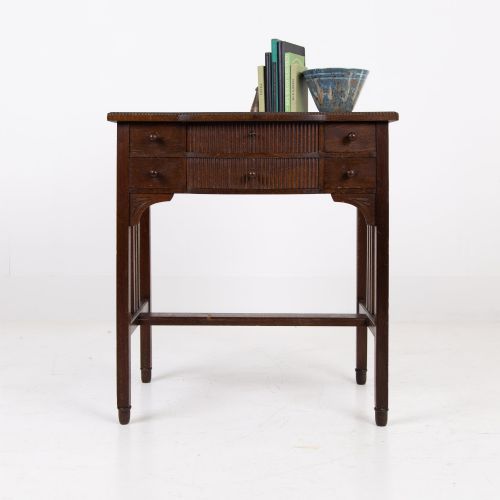
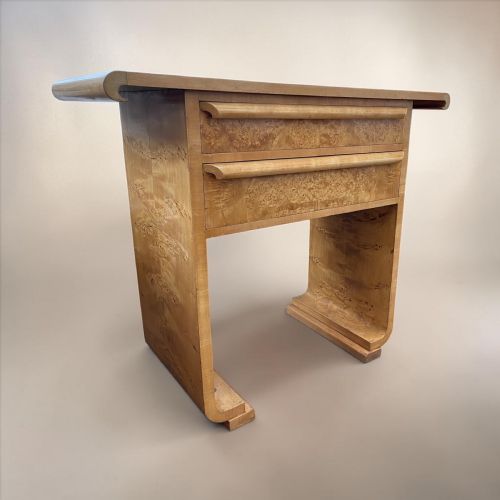
These art deco console table examples bring striking geometric form and rich timber grains directly into a hallway or living space.
What the pieces are
An art deco console table serves as a functional surface for a hall or living space, often appearing alongside related forms such as desks, side tables, and serving tables. These pieces date predominantly to nineteen thirty, with occasional examples from nineteen hundred, aligning with the Art Deco style.
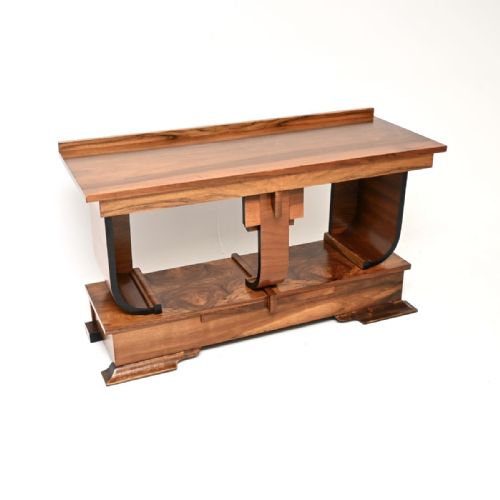
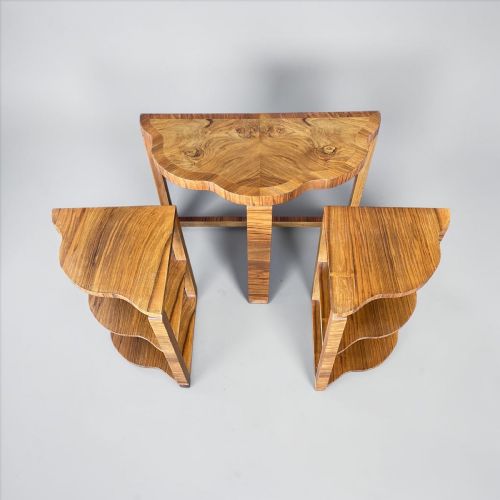
The typical construction takes the form of a console or hall table designed to stand against a wall, though variants include folding games tables, lamp tables, and pairs sharing U-shaped bases.
How they were made
Makers utilised a foundation of solid wood such as oak or walnut, onto which they applied decorative veneers including burr walnut, burr birch, birds eye maple veneer, and amboyna. Ebonised wood and wrought iron also appear as primary structural and decorative materials in these listings.
Cabinet makers harnessed grain patterns deliberately, laying veneers to create symmetrical patterns across tabletops and facades, while metal elements provided industrial contrast.
Retail Price Guide 2026
Typical UK retail prices for art deco console table, calculated from the Sellingantiques database of over a million retail prices indexed since 2003. This retail price guide relies exclusively on Sellingantiques data; no external sources or auction records are used, so the figures do not describe the wider market.
Recorded object types include console tables, desks, side tables, serving tables, lamp tables, and folding games tables.
What varies in quality
Quality separates through the selection and placement of decorative timber veneers, where complex figures like burr walnut and birds eye maple demonstrate superior craftsmanship. The architectural execution of bases, such as the U-shaped supports, distinguishes standard pieces from more ambitious designs.
Attribution to known makers elevates a piece, as does the preservation of original ebonised highlights and ironwork alongside the primary wooden structures.
Hille·C Lazarus of Calcutta·Heals of london·Charles A Richter for Bath Cabinet Makers
The Art Deco Console Table Glossary
- Veneer
- A thin layer of figured wood applied to a stable underlying timber base. This technique allowed cabinet makers to display expensive grains across broad surfaces without risking the warping associated with solid exotic woods.
- Console
- A side table designed to stand flat against a wall, often supported by brackets or legs at the front. These pieces served functional roles in hallways and reception rooms.
- Demi-Lune
- A half-moon shape used for table tops and furniture footprints. This curve allowed tables to sit flush against walls while projecting softly into a room.
- Ebonised
- Wood treated to resemble ebony through staining or painting. This dark finish provided sharp visual contrast against lighter veneers.
Frequently Asked Questions
What is an art deco console table used for?
These tables function as surface furniture in entrance halls, living rooms, and corridors. They hold lamps, letters, and decorative objects while framing a wall space.
Many examples double as serving tables or narrow side tables depending on their proportions and leg room.
How do I identify nineteen thirties furniture?
Look for symmetrical geometric shapes, stepped profiles, and streamlined silhouettes characteristic of the period. The absence of traditional carving distinguishes these pieces from earlier styles.
Timber choice also aids identification, with burr walnut and birds eye maple appearing frequently alongside ebonised details.
Where were these tables made?
The recorded pieces originate from English and French workshops, reflecting different regional interpretations of the style. English makers often favored walnut and oak, while French makers utilised exotic woods like amboyna.
Workshop origins sometimes appear through maker stamps or documented attribution to specific cabinet makers.
How do I care for veneered wood?
Protect veneered surfaces from direct sunlight and excessive moisture to prevent lifting or fading. Regular dusting with a soft, dry cloth maintains the polished finish without chemical buildup.
Maintaining stable room humidity preserves the underlying wood and prevents the veneer from cracking.