
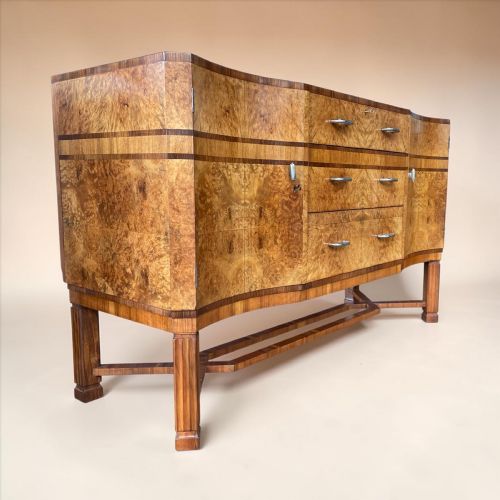
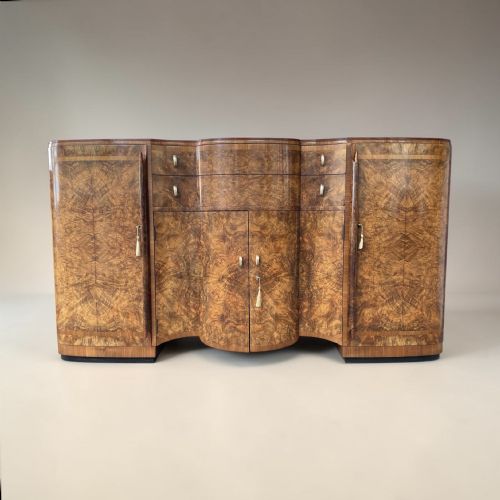

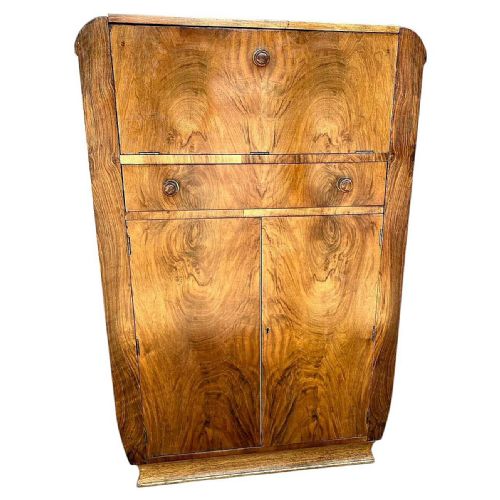
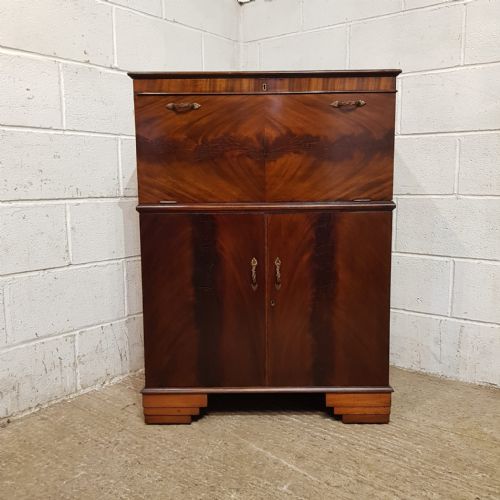
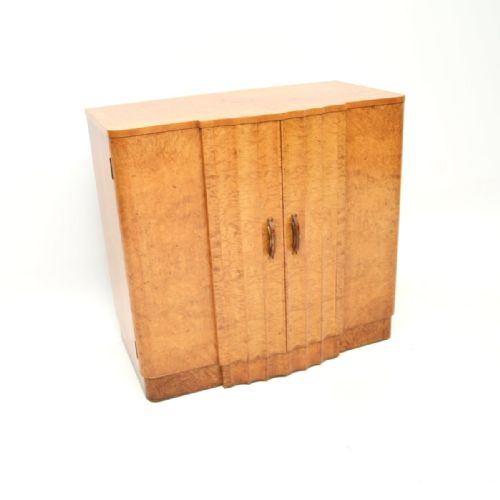
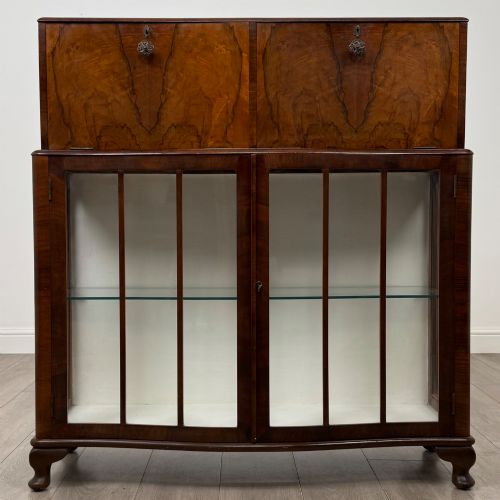
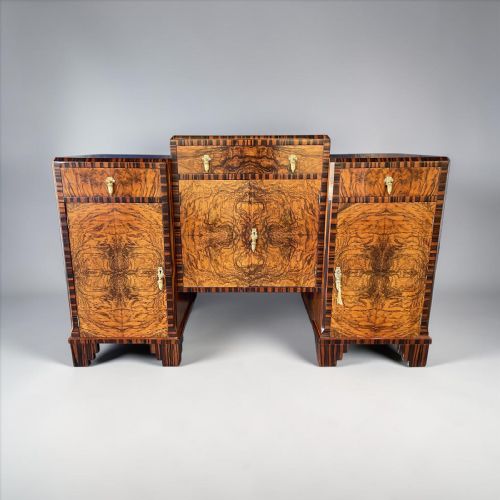
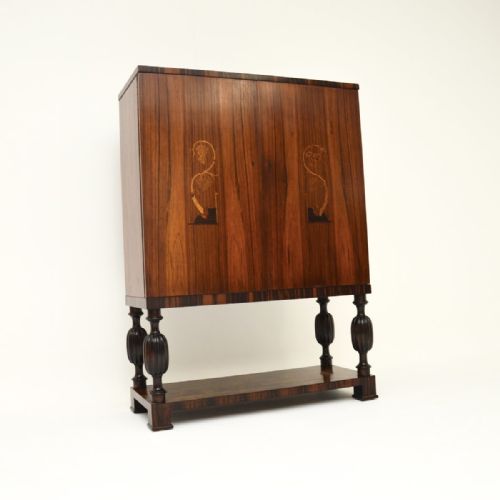
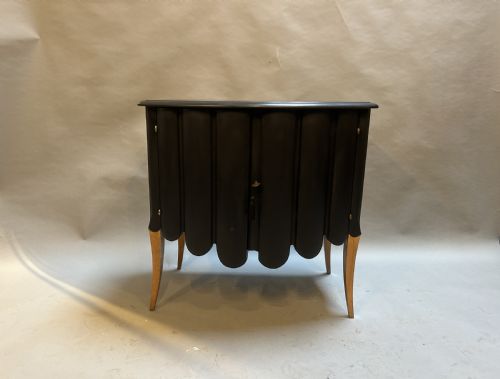
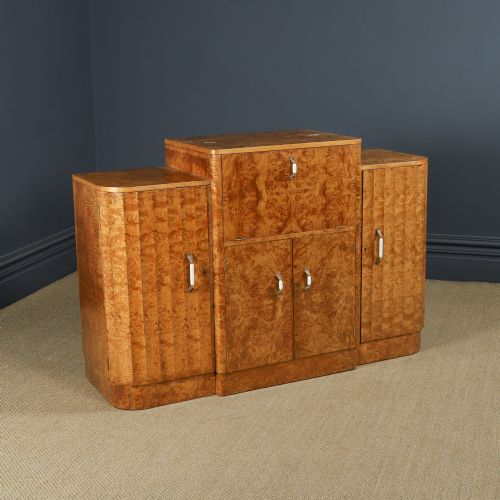


Art Deco Cocktail Sideboard
An art deco cocktail sideboard brings striking geometric presence and dedicated hospitality storage into a modern room.
Art Deco Cocktail Sideboard
An art deco cocktail sideboard unites the broad surface of a traditional server with fitted compartments designed specifically for holding bottles, glassware and mixing equipment.
Most examples found on this page date from the nineteen-thirties and nineteen-twenties, though occasional Edwardian pieces also appear.
These forms range from streamlined low cabinets to large fitted drinks chests with internal lighting and mirrored serving slides.
Materials and construction
Cabinet makers utilised richly figured veneers such as burr walnut and walnut, laid across sturdy timber carcases to create dramatic grain patterns on the main doors.
Details in brass, glass, mirror and bakelite provide functional contrast, while interior fittings often incorporate electric lighting and specialist shelving for glassware.
Several cabinets manage to conceal intricate electric lighting systems inside their drinks compartments, ready to illuminate the gin bottle.
Judging quality and execution
Superior execution shows in the continuity of grain across drawer fronts and doors, where veneers are carefully matched to form symmetrical patterns.
The sophistication of the internal fittings, from bespoke bottle racks to mirrored pull-out shelves and integrated electrics, separates standard sideboards from exceptional drinks cabinets.
Maurice Adams·Harry and Lou Epstein·Hamptons of Pall Mall London·Waring and Gillow
The Art Deco Cocktail Sideboard Glossary
- Burr walnut
- A wood veneer taken from the knotted growths of the walnut tree, prized for its swirling, highly figured grain patterns. It forms the primary visual finish on many pieces from this period.
- Cocktail cabinet
- A specialist storage piece designed for entertaining, featuring internal bottle storage, glass holders and a prepared surface for mixing drinks. Many combine sideboard proportions with tall upper cupboards.
- Veneer
- A thin layer of decorative wood applied over a secondary timber base. This technique allows makers to display striking grain figures without relying on solid luxury woods.
- Bakelite
- An early synthetic plastic utilised for handles, feet and decorative trim on pieces from the nineteen-twenties and nineteen-thirties. Its dark, lustrous finish characterises the period.
- Swedish Grace
- A refined neoclassical design style popular in Scandinavia during the interwar years. It merges classical restraint with modern simplification.
Art Deco Cocktail Sideboard: Frequently Asked Questions
What is an art deco cocktail sideboard?
A dedicated storage cabinet built to house bottles, decanters and glassware, combining the surface utility of a sideboard with specialised internal drinks fittings.
Most examples date from the interwar period and display the characteristic geometric lines and figured wood veneers of the era.
How do I identify a nineteen-thirties piece?
Nineteen-thirties pieces typically display streamlined silhouettes, symmetrical burr walnut veneers and contrasting details in brass or bakelite.
Internal electric lighting and fitted mirrored pull-out trays also point strongly to this decade of manufacture.
Where were these cabinets placed?
These pieces served as the centrepiece for entertaining in dining rooms, drawing rooms and private home cocktail bars.
The top surface acted as a serving area while interior compartments kept bottles and glassware concealed when not in use.
How do I care for burr walnut veneer?
Protect the wood surfaces by keeping cabinets away from direct sunlight and maintaining stable indoor humidity levels.
Dust regularly with a soft cloth and avoid chemical polishes that can damage the historical finish.