
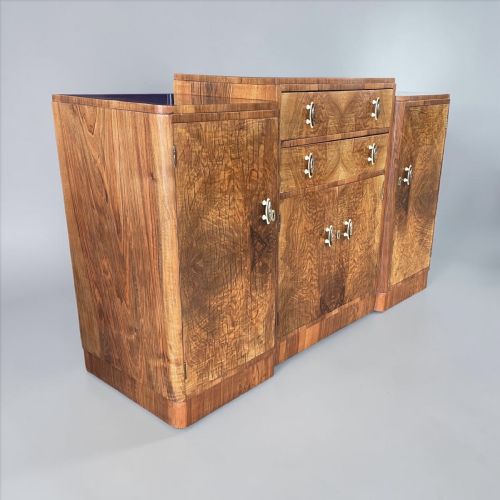
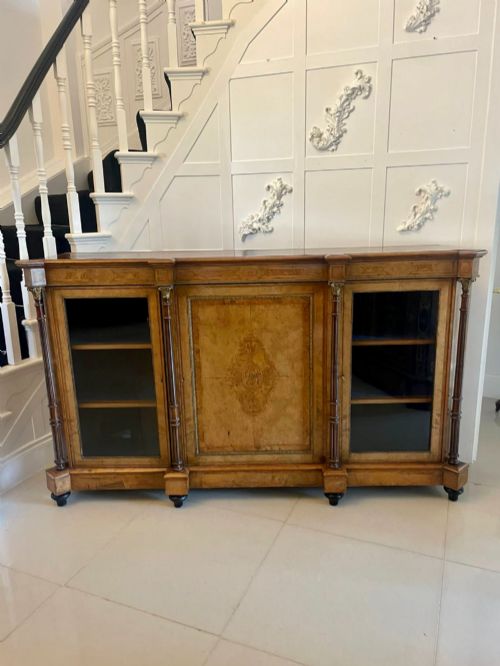
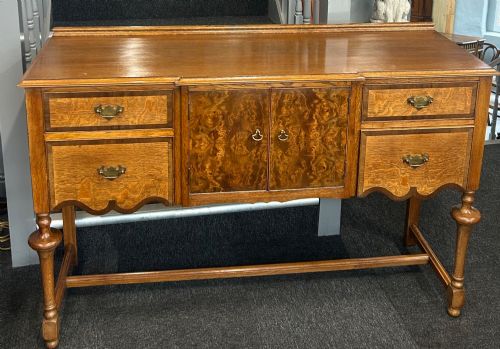
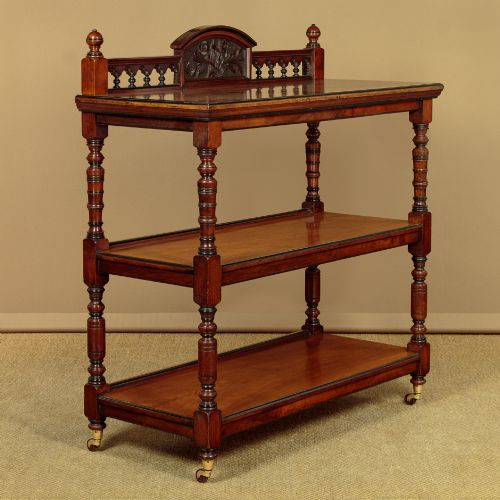


Walnut Dining Room Sideboard
A walnut dining room sideboard anchors a formal interior with rich timber grain and ample storage for hosting.
Walnut Dining Room Sideboard
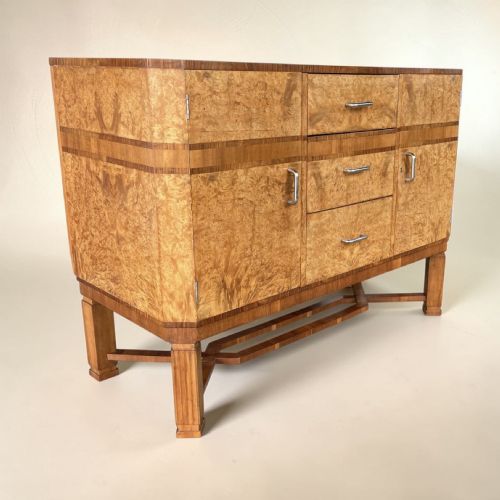
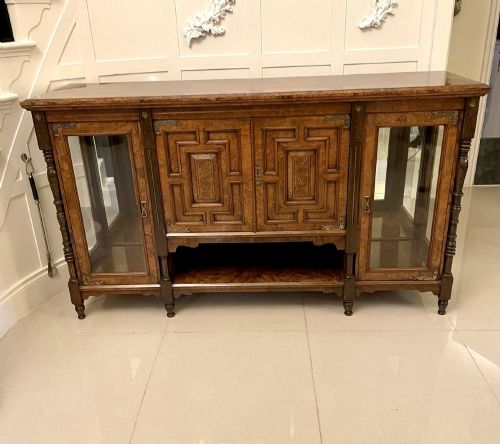
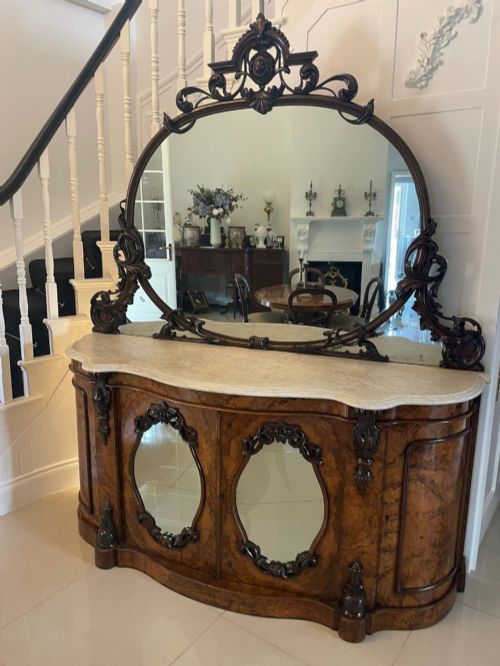
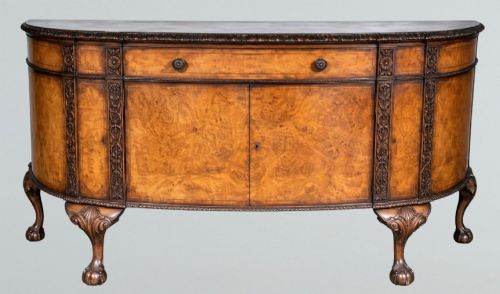
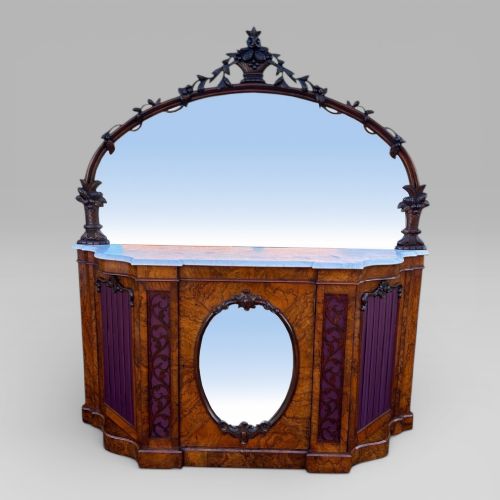
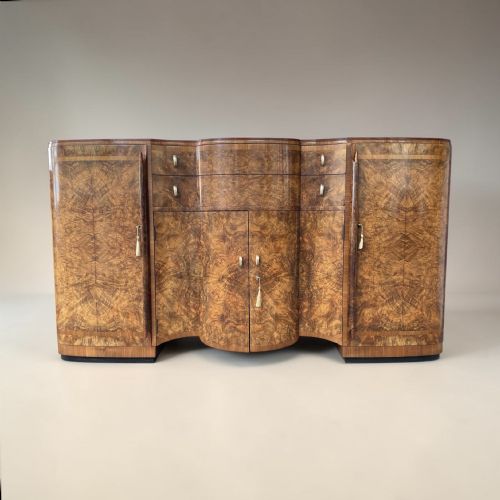
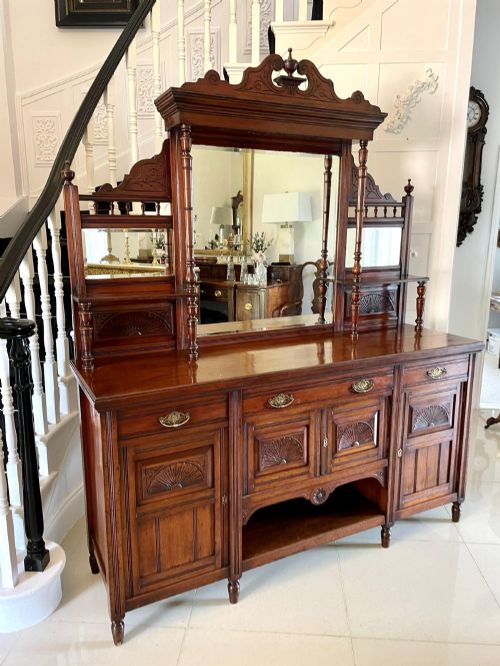
A walnut dining room sideboard serves as a functional serving surface and storage unit for dining essentials. These pieces range from substantial Victorian credenzas with mirrored backs to streamlined Art Deco cabinets.
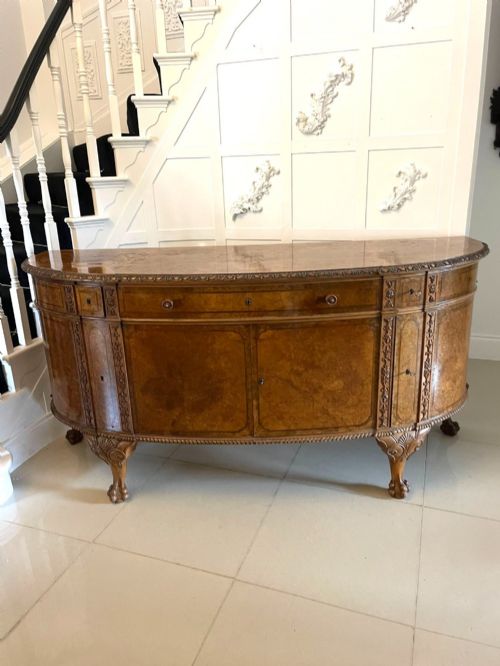
Buyers frequently encounter Victorian examples featuring burr walnut veneers and marquetry inlay, alongside later twentieth-century iterations. Forms vary from traditional bow-front buffets to specialised cocktail cabinets and servers.
Originating primarily from British and French workshops, these items reflect changing dining habits across the nineteenth and early twentieth centuries. The selection spans several decades of craftsmanship, uniting utility with decorative presence.
Materials and construction methods
Cabinet makers utilised solid walnut and decorative veneers such as burr walnut applied over secondary hardwoods. Surfaces often display intricate marquetry work, contrasting inlay, and carved detailing executed by hand.
Many mid-nineteenth-century examples incorporate heavy marble tops, brass mounts, and mirrored backsplashes. Later twentieth-century pieces favour streamlined geometry, sometimes integrating glass doors and specialised cutlery storage trays.
Several sideboards come equipped with hidden compartments designed specifically to keep Victorian silverware secure from overly curious guests.
What determines quality
The choice of timber grain dictates much of the visual appeal, with richly figured burr walnut commanding particular attention. Superior examples exhibit precise marquetry, balanced proportions, and heavy, well-cast brass or ormolu hardware.
Construction standards appear in the seamless application of veneers, the smooth operation of drawers and doors, and the stability of large mirror-backed superstructures. Original marble tops and integrated cutlery fittings further distinguish higher-tier pieces.
Maurice Adams·Epstein·Hamptons of Pall Mall London·Harry And Lou Epstein
The Walnut Dining Room Sideboard Glossary
- Burr Walnut
- A beautifully figured wood grain taken from the growth excrescence of a walnut tree. It produces intricate, swirling patterns highly prized for cabinet fronts.
- Credenza
- A low dining room cabinet or sideboard, frequently featuring glass doors or mirrored sections. Originally developed in Italy, it gained immense popularity during the Victorian era.
- Marquetry
- The art of applying small pieces of wood veneer to a structure to form decorative patterns. Craftsmen use contrasting timbers to create floral or geometric designs.
- Ormolu
- Gilded bronze mounts applied to furniture for decorative effect. This technique adds metallic contrast to dark timber surfaces.
- Chiffonier
- A compact sideboard or low cupboard developed in the nineteenth century. It typically includes shelves and enclosed storage for dining utensils.
Walnut Dining Room Sideboard: Frequently Asked Questions
How do I style a sideboard in a modern dining room?
Pair the rich wood tones with minimalist ceramics or glassware to balance traditional craftsmanship with contemporary decor.
Position artwork or a simple mirror above the surface to anchor the piece within the room.
What is the difference between a sideboard and a credenza?
Sideboards traditionally feature cupboards and drawers raised on legs for general dining storage. Credenzas often sit lower to the ground, frequently incorporating sliding glass doors or mirrored back panels.
Both serve similar roles in a dining space but originate from different design traditions.
How do I care for walnut veneer surfaces?
Keep timber furniture away from direct sunlight and steady heat sources to prevent the veneer from drying or cracking. Dust regularly with a dry cloth and apply occasional beeswax polish suited for antique wood.
Avoid using harsh chemical sprays or placing wet items directly on the polished surface.
How do I date an antique walnut sideboard?
Examine the construction methods of the drawers, the style of the hardware, and the presence of decorative motifs like mirror backs or marquetry. Victorian pieces often feature heavy carvings and marble tops, while 1930s examples display cleaner Art Deco geometric lines.
Documentation or maker stamps can also help confirm the exact period of origin.