
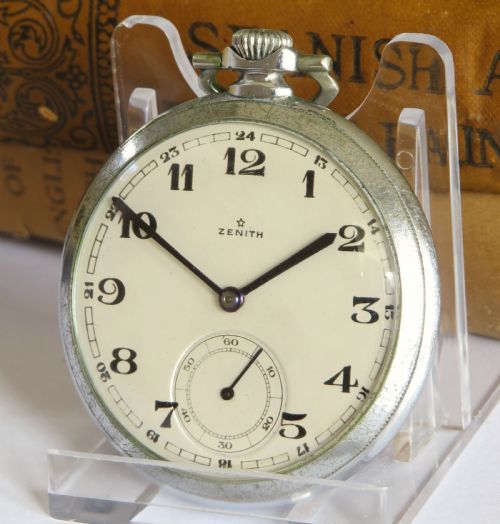


Art Deco Chrome Timepiece
An art deco chrome timepiece brings geometric modernism and polished metal into daily life, offering a functional object rooted in the interwar years.
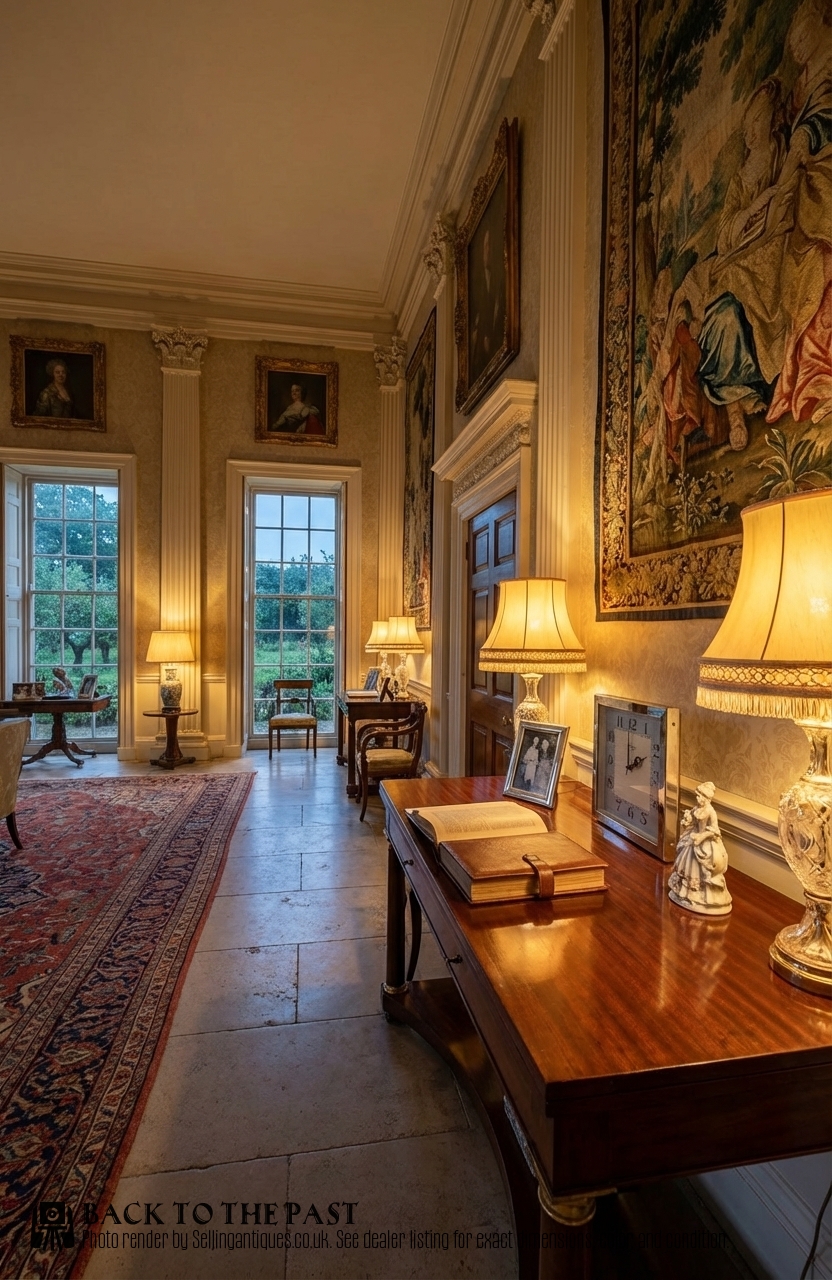
Art Deco Chrome Timepiece
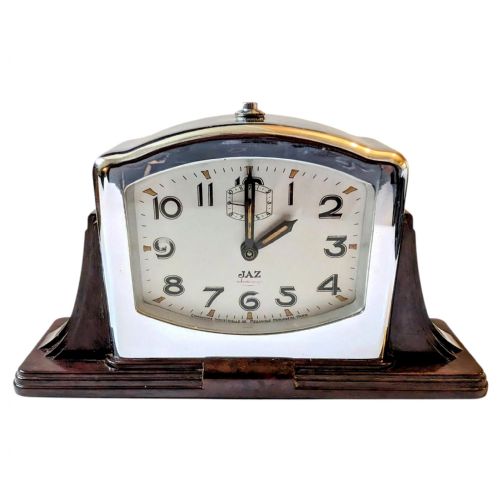
When you search for an art deco chrome timepiece, you encounter a range of functional objects from the 1920s, 1930s, and 1950s that combine metallic finishes with geometric forms. The selection focuses heavily on desk clocks, mantel clocks, travel alarms, wall clocks, pocket watches, and wristwatches.
Most examples originate from English and French makers, though other European origins appear. Forms span from simple travel clocks to architectural skyscraper models and large mantel clock sets paired with sculptures.
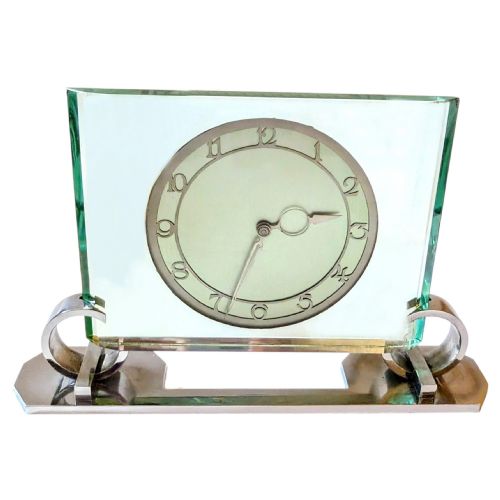
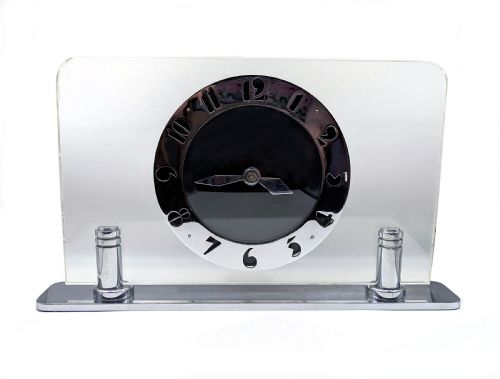
Materials extend beyond metal to incorporate glass, bakelite, walnut, marble, and leather. Buyers typically find items designed for domestic interiors, office desks, or personal wear.
How they were made
Makers utilised chrome plating over base metals to achieve a bright, durable finish characteristic of modernist design. This metalwork was frequently combined with glass, opaline uranium glass, or mirrored surfaces to catch the light.
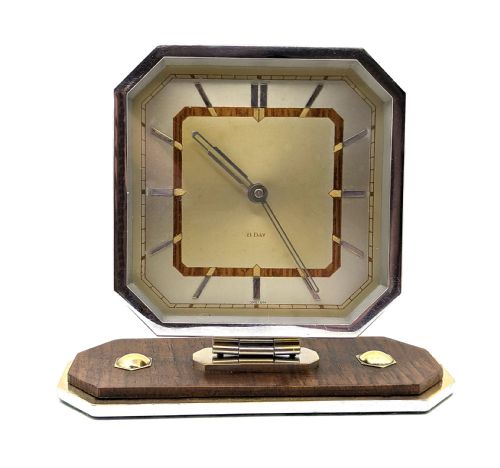
Enclosure materials such as bakelite, walnut, oak, and marble formed the body of desk and mantel clocks, housing mechanical movements that required regular winding or servicing. Leather served primarily for travel clock cases and pocket watch straps.
Dials and bezels incorporated geometric numerals, contrasting hands, and contrasting two-tone wooden elements to underline the prevailing style of the period.
Some timepieces even guarded German Shepherd dogs.
What varies in quality
The distinction between standard production items and finer examples rests on the reputation of the maker, the complexity of the movement, and the integrity of the materials. Pieces bearing signatures from established watchmakers and luxury retailers often demonstrate greater precision in mechanical execution.
Material combination also defines the tier of a piece, separating simple chrome casings from complex assemblies involving mirrored glass, coloured opaline elements, or carved marble and wood. The preservation of original finishes and dial details dictates the overall standard of the object.
Smiths Clockmakers·Mappin And Webb·Harrods Of London·Blangy Clockmakers·Asprey
The Art Deco Chrome Timepiece Glossary
- Skyscraper
- A stepped architectural form popular in tall desk clocks that echoes interwar urban architecture.
- Bakelite
- An early synthetic thermosetting plastic used for clock cases and dials.
- Garniture
- A matching set consisting of a clock flanked by decorative ornaments or sculptures.
- Movement
- The internal mechanical mechanism that drives the gears and keeps time.
- Opaline glass
- A semi-translucent milky glass used to add colour and texture to clock faces.
Art Deco Chrome Timepiece: Frequently Asked Questions
How do I wind an 8 day clock?
An 8 day clock requires winding approximately once a week using a dedicated key inserted into the winding arbours on the dial.
Care should be taken not to overwind the mainspring, stopping as soon as resistance is felt.
Can these clocks run accurately today?
Many mechanical movements from this period function reliably if they have received recent servicing by a professional watchmaker.
Daily variance can occur due to age, so regular calibration helps maintain proper timekeeping.
Where should I place a desk clock?
These clocks suit stable surfaces away from direct sunlight, excessive moisture, and temperature fluctuations that might affect the metal or movement.
Desks, mantelpieces, and bookshelves provide ideal settings to display the geometric forms.