
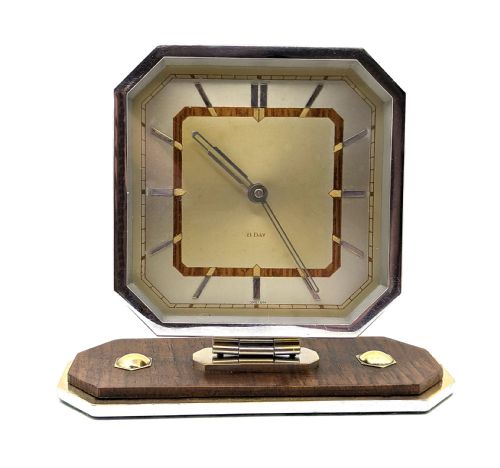


Geometric 8 Day Clock
These geometric 8 day clock pieces bring functional Art Deco design into domestic spaces with mechanical movements that require weekly winding.
Geometric 8 Day Clock
A geometric 8 day clock combines the architectural lines of the Art Deco period with a mechanical movement designed to run for eight days between windings. Buyers searching this phrase encounter desk clocks, mantel clocks, and wall clocks spanning the 1920s and 1930s.
The objects on this page rely heavily on the Art Deco style, displaying forms that range from upright skyscraper silhouettes to compact mantel pieces. English and continental makers produced these timepieces during the interwar decades using distinct metallic and mirrored surfaces.
Mantel clocks and desk clocks dominate the selection, often featuring chrome-plated housings or walnut frames. These pieces function both as reliable timekeepers and as decorative objects reflective of early twentieth-century design.
Materials and construction methods
The construction of these clocks relies on a combination of metal plating, glass, and timber. Chrome plating and nickel plating provide reflective metallic surfaces over brass or base metals, while walnut and ebonised wood introduce warm or dark wooden tones to the cabinetry.
Specialised glass components, including peach mirror glass and clear glass panels, frame the dials and contribute to the geometric aesthetic. Mechanical movements by makers such as Mauthe, Junghans, and CYMA power the timepieces, engineered to maintain accuracy across an eight-day cycle.
Listings feature chrome, brass, walnut, and peach mirror glass as primary materials across desk, mantel, and wall clock formats.
Distinctions in craftsmanship
The refinement of the housing materials separates standard production from superior pieces. Heavier gauge chrome plating, premium walnut veneers, and specialist glass elements indicate higher initial manufacturing standards.
The integration of signed movements by established makers like Asprey or Mappin & Webb elevates the standing of a clock. The precision of the geometric casing and the preservation of the original mechanical components determine the overall calibre of the piece.
Mappin and Webb·Asprey·Junghans·CYMA
The Geometric 8 Day Clock Glossary
- Art Deco
- A design style of the 1920s and 1930s characterised by streamlined geometric forms, stylised motifs, and modern industrial materials. It influenced architecture, furniture, and decorative objects.
- Eight Day Movement
- A mechanical clock movement designed to run for eight days on a single wind before requiring attention. This mechanism reduced the frequency of winding for domestic users.
- Peach Mirror Glass
- A tinted reflective glass popular in interwar interior decoration. It imparts a warm, rosy hue to mirror panels used in clock surrounds.
Geometric 8 Day Clock: Frequently Asked Questions
How often do I need to wind these clocks?
These mechanical timepieces operate on an eight-day cycle, meaning you will need to wind the mainspring approximately once a week to keep the movement running continuously.
Regular winding ensures the tension remains consistent, which helps maintain accurate timekeeping for daily use.
Where were these clocks made?
The pieces originate from various European workshops and retailers, with English, French, and German origins appearing frequently in the evidence.
Maker signatures and retail stamps on the dials or movements often indicate the specific country of manufacture.
What materials are used in the cases?
Cases are constructed from a mix of metals, woods, and glass, reflecting the industrial aesthetics of the interwar period. Common elements include chrome plating, walnut, brass, and peach mirror glass.
These materials were chosen to create striking contrasts and clean geometric lines suited to modern interiors.
How do I identify an Art Deco clock?
Art Deco clocks are recognisable by their symmetrical geometric shapes, stepped architectural forms, and clean lines. They often utilise polished chrome and contrasting wooden veneers.
Unlike earlier Victorian designs, these pieces embrace the machine age through streamlined ornamentation and simplified typography on the dial.