
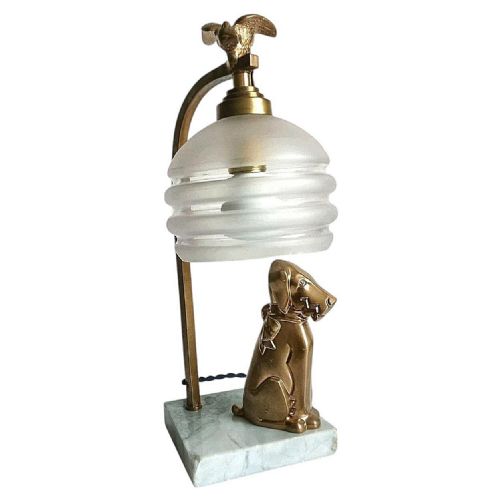


Art Deco Bronze Dog
These art deco bronze dog figures combine the sleek energy of the modernist movement with the character of beloved hounds.
Art Deco Bronze Dog
An art deco bronze dog captures the streamlined aesthetic of the interwar years, appearing across desk stands, bookends, and car mascots. These domestic and sporting subjects range from racing greyhounds and borzois to bulldogs and Alsatians, often mounted on heavy bases of marble or onyx.
The objects take many forms beyond standalone sculptures, including night lights, table clocks, and novelty table lamps. French makers feature prominently, alongside pieces produced in England and Germany during the nineteen twenties and thirties.
Materials and construction methods
Alternative materials such as brass and frosted glass appear in functional items like desk stands and night lights, combining illumination with cast metal sculpture.
A teddy bear occasionally shares the spotlight with a faithful hound.
Assessing quality and execution
The distinction in these pieces lies in the crispness of the casting and the expressiveness of the animal's form. Sculptures signed by known makers or foundries demonstrate superior chiselling and finishing compared to unsigned commercial castings.
The choice of base material and the harmony between the metal figure and its mounting also determine the standing of the piece, particularly in complex assemblages like clock sets and night lights.
Karl Hagenauer·Alexandre Kelety·Geo Maxim·Rene Varnier
The Art Deco Bronze Dog Glossary
- Spelter
- A zinc alloy frequently used as a substitute for bronze in decorative figures. It accepts patination and metallic paint finishes well.
- Cold-painted
- A technique where oil paint is applied to cold metal without subsequent firing. This finish is commonly found on small desk ornaments and car mascots.
- Onyx
- A banded variety of chalcedony used extensively for desk stands and clock bases. It provides a heavy, polished mounting for metal sculptures.
- Car mascot
- A decorative ornament mounted on the radiator cap of a motor car. Bulldog and terrier subjects were popular motoring accessories during the period.
Art Deco Bronze Dog: Frequently Asked Questions
Where were these figures made?
France and England are the primary origins for these pieces, with French foundries producing many of the stylised greyhounds and figural groups.
German workshops also contributed significant animal sculptures during the same period.
How do I identify a car mascot?
Car mascots are fitted with threaded fixings on the base to mount directly onto a vehicle's radiator cap. Subjects like Scottie dogs and bulldogs were built to withstand outdoor conditions.
Many examples now rest on secondary desk stands or display bases.
What is a night light?
A night light combines a small sculptural bronze group with an electrical fitting and frosted glass panel. These pieces illuminate the metal figures from behind, casting a warm glow.
Greyhounds and Alsatians are common subjects for this functional form.
How do I distinguish bronze from spelter?
Bronze is heavier, denser, and develops a rich patina over time without flaking. Spelter is softer and more brittle, often showing grey metal beneath worn paint or plating.
Signed pieces by named artists are almost exclusively cast in bronze.