




Art Deco Bar Cart
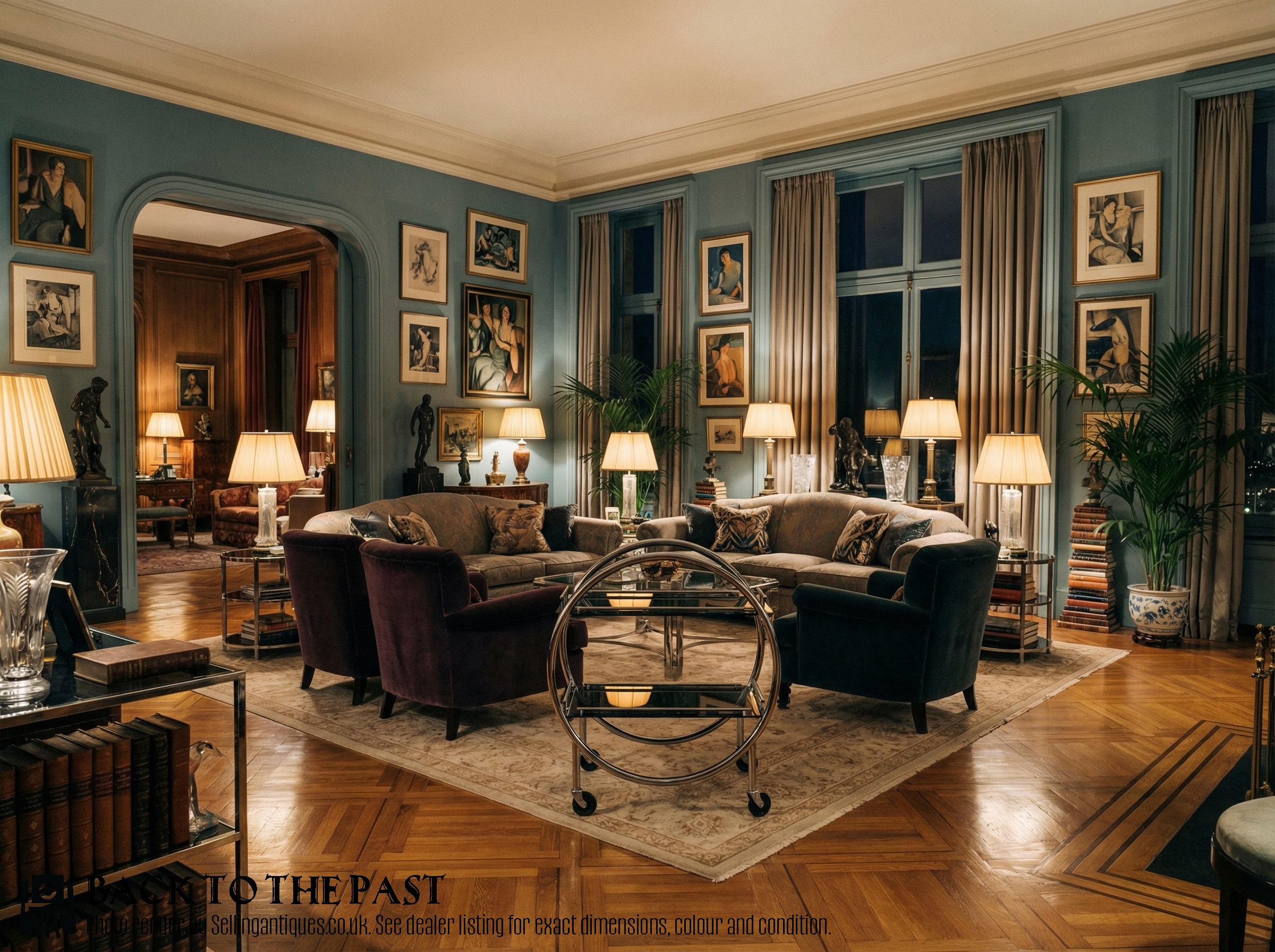
An art deco bar cart brings the polished glamour of the interwar cocktail hour straight into a modern room.
Art Deco Bar Cart
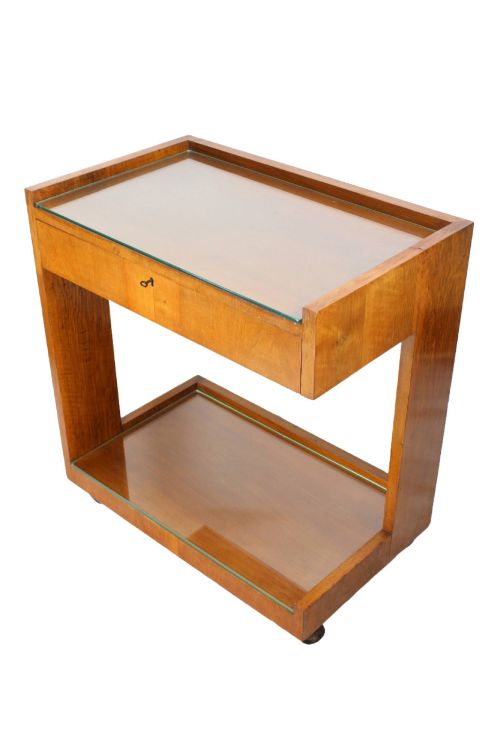
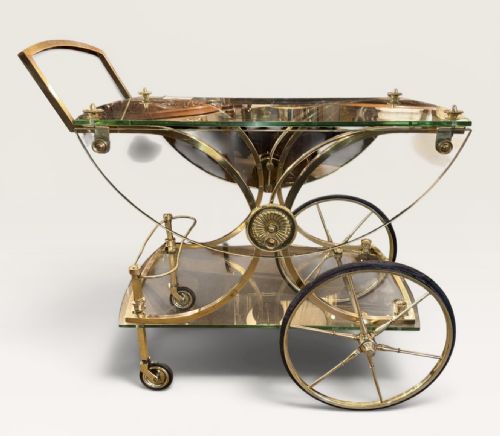
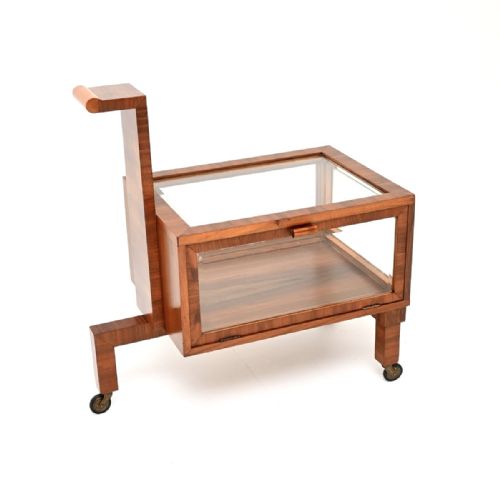
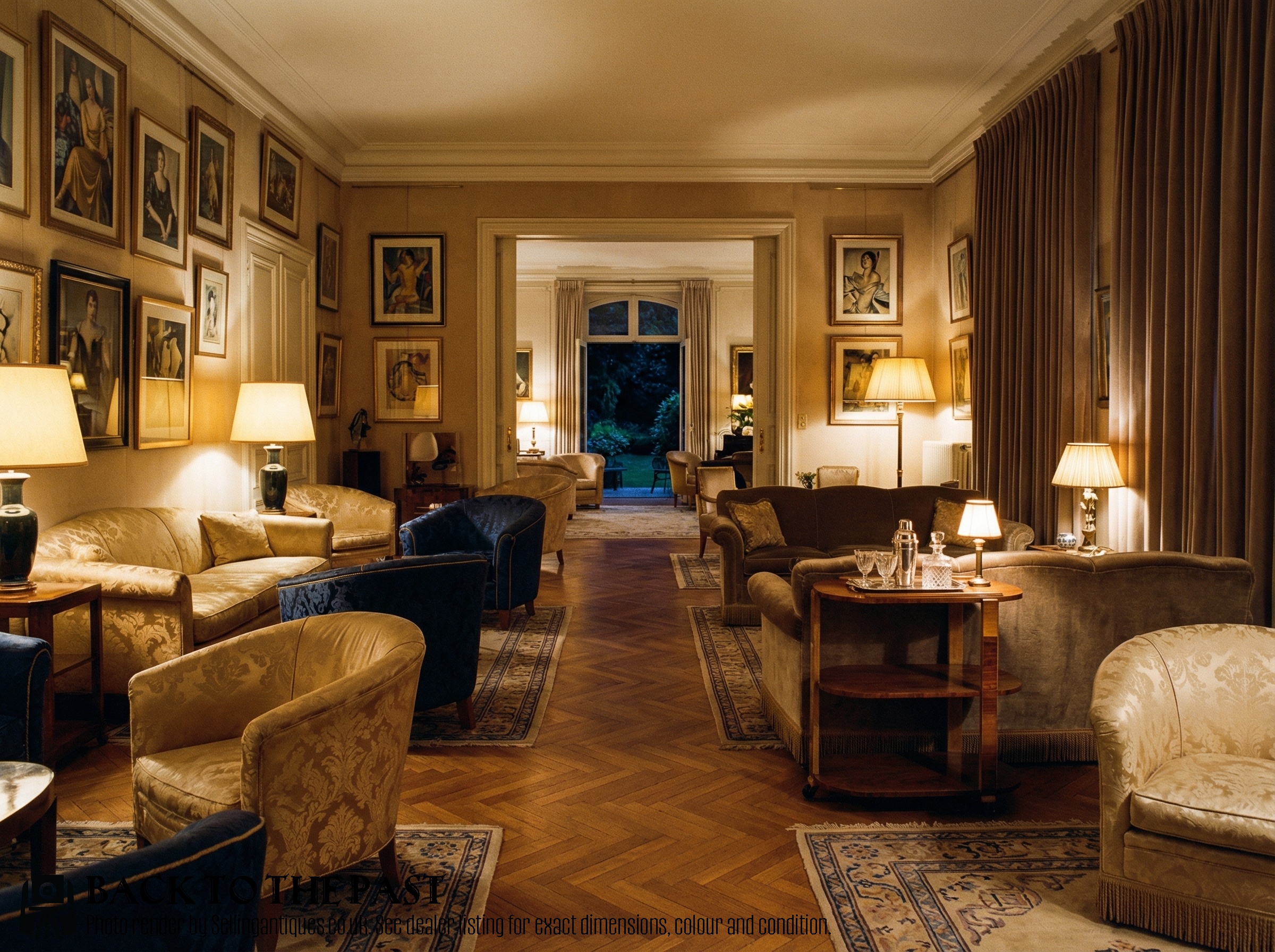
An art deco bar cart is primarily a mobile serving piece designed for entertaining, appearing in forms such as two-tier trolleys, circular carts, and serving tables. These objects date predominantly from the 1920s, 1930s, and 1940s, originating from English, French, and German workshops.
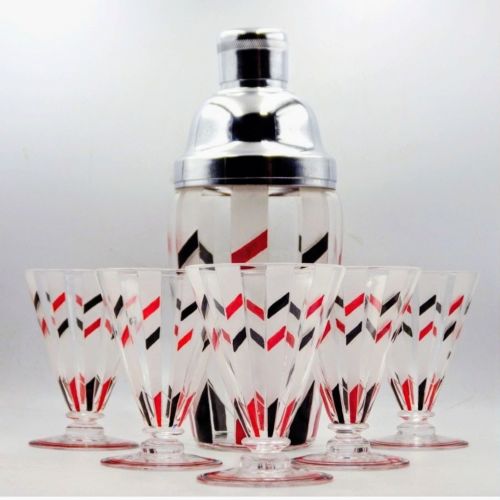
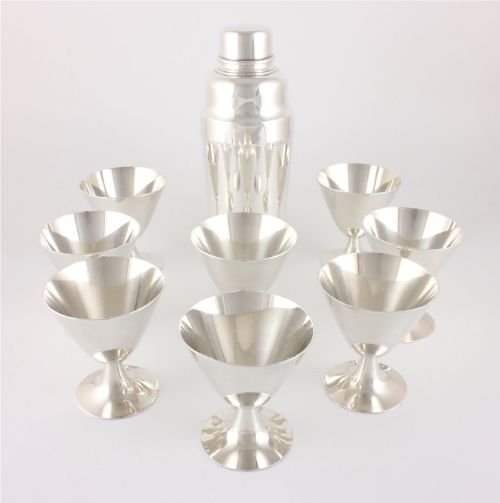
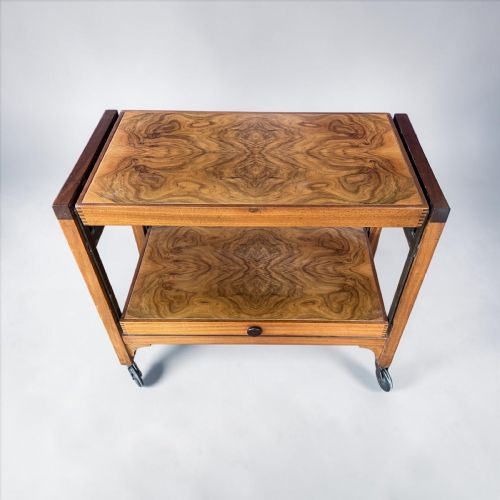
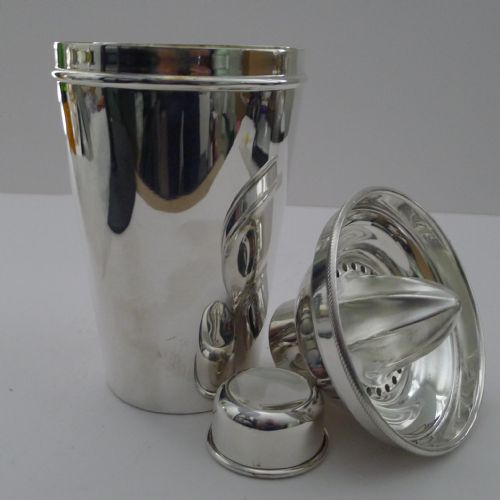
The most common version met on this page is the two-tier wooden or metal trolley, often equipped with wheels for mobility between rooms. Alongside larger carts, the selection includes related barware such as silver plated cocktail shakers, trays, and novelty cocktail sticks.
Makers and designers working in this period utilised distinct geometric shapes, clean lines, and functional mechanics, such as metamorphic designs that expand for service. Buyers encounter circular models and rectangular formats alike, designed to display glassware and bottles with theatrical effect.
Materials and construction
Cabinet makers and metalworkers built these pieces using a combination of rich timbers like walnut, burr amboyna, and mahogany, paired with industrial elements such as chrome, brass, aluminium, and silver plate. Glass surfaces, including black glass and mirror glass, form the functional tiers and serving trays.
Construction techniques balanced decorative impact with practical mobility, joining polished wood frames to metal chassis and securing castors for movement. Silver plated items and cocktail shakers display chased or engraved details, ranging from recipes to novelty motifs.
Art Deco Bar Cart Retail Price Guide 2026
Typical asking prices for art deco bar cart among the pieces listed under this phrase on Sellingantiques today, from the lower quarter to the upper quarter. They describe what is for sale here now, not the wider market.
Charlie Chaplin makes a cameo appearance on a novelty barware tray from the era.
Judging quality in execution
Quality rests upon the selection of timber veneers, such as figured walnut and burr amboyna, and the precision of the metalwork in chrome and brass frames. Superior examples display balanced proportions, integrated handles, and robust tiered structures that support glassware securely.
The distinction between standard production and exceptional work lies in the refinement of details, from the weight of silver plated shakers to the ingenuity of metamorphic folding mechanisms and specialist mirror glass inserts.
Maison Bagues·J. B. Chatterley & Sons·James Dixon & Sons·C S Green & Co.·Asprey·Gaskell & Chambers·Carl Deffner
The Art Deco Bar Cart Glossary
- Burr amboyna
- A highly figured wood veneer showing intricate swirling patterns, utilised on high-end French and English cart surfaces. It provides a warm, tactile contrast to metal mounts.
- Metamorphic trolley
- A serving cart designed to transform or expand through mechanical hinges, allowing the surface area to increase for hosting guests.
- Silver plate
- A base metal coated with a layer of pure silver, commonly found on cocktail shakers, trays, and hardware from the period. It offers the appearance of solid silver with practical durability.
- Hostess trolley
- An alternative descriptor for a serving cart or bar cart equipped with multiple tiers to transport drinks and glassware.
- Mirror glass
- Reflective glass panels fitted into the tiers of carts and trays, designed to bounce light and highlight glassware during service.
Art Deco Bar Cart: Frequently Asked Questions
How do I style a bar cart?
Keep the top tier dedicated to functional items like cocktail shakers, glassware, and current bottles, using the lower shelf for storage.
Incorporate trays, cocktail sticks, and decorative barware to add height and texture without overcrowding the surface.
Were these carts made in England and France?
Makers across both countries produced these pieces, though distinct regional preferences emerged in the materials chosen.
English examples frequently highlight figured walnut and circular frames, while French pieces often incorporate bolder contrasts of amboyna, brass, and chrome.
Can I use a trolley for daily serving?
These carts were built precisely for hosting and moving drinks between rooms during gatherings.
The inclusion of castors and secure two-tier shelving makes them practical for serving beverages in contemporary living spaces.
What materials are most common?
Walnut and chrome appear most frequently, representing the dual material interests of traditional cabinet making and modern industrial design.
Glass and silver plate complete the typical construction, appearing across both trolleys and standalone barware.