

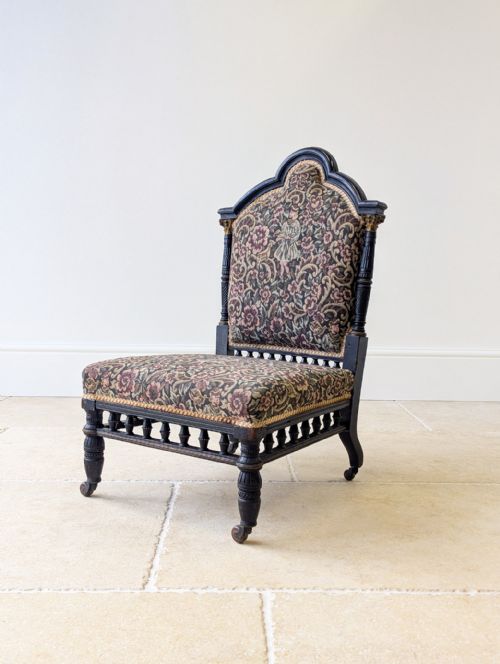
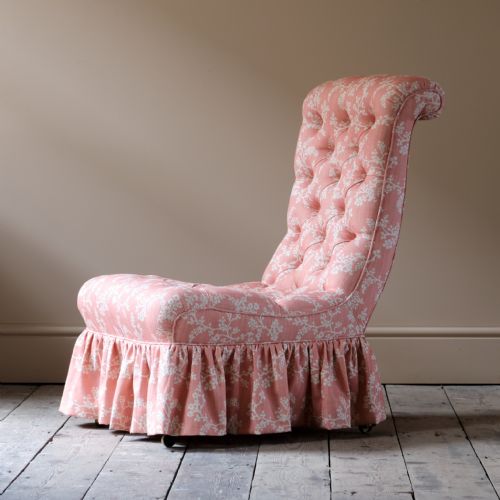
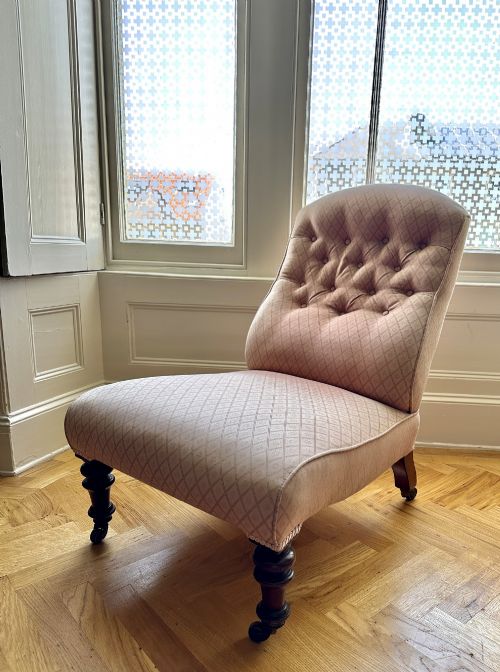

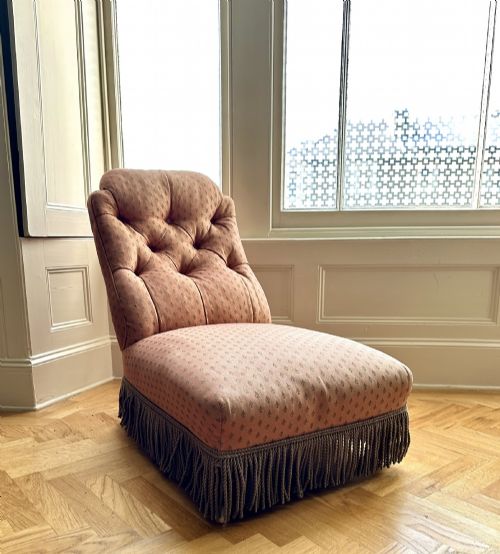

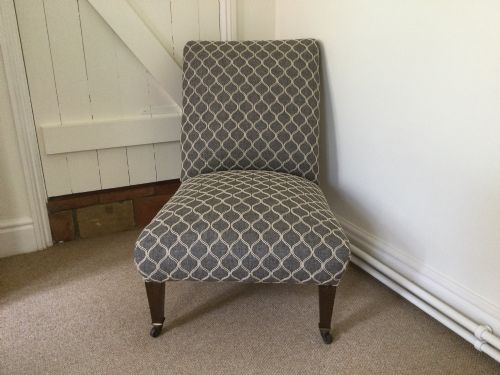


Armless Victorian Bedroom Chair
An armless victorian bedroom chair offers low, compact seating designed for private quarters and intimate spaces.
Armless Victorian Bedroom Chair
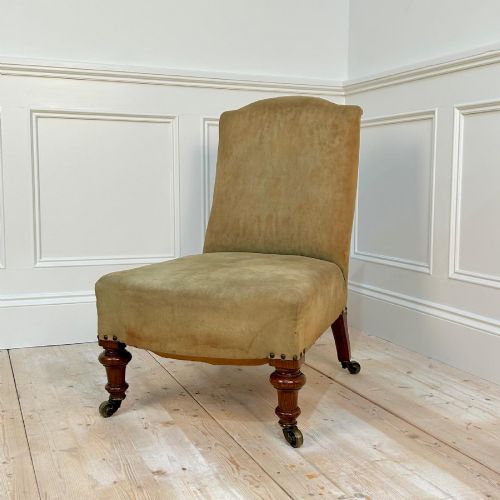
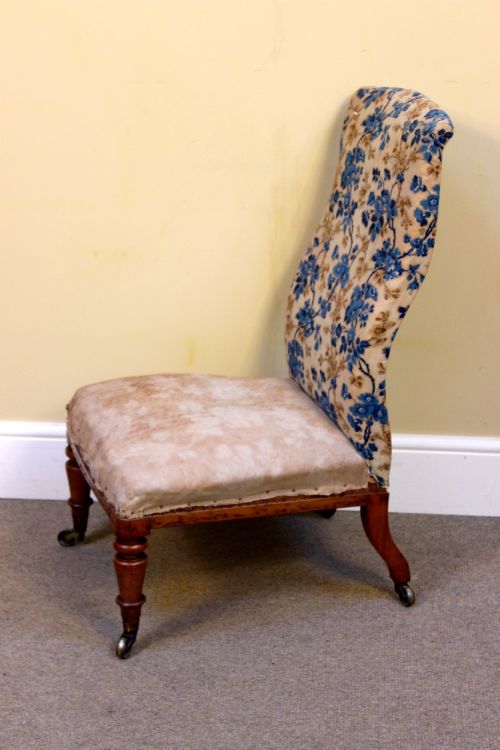
The armless victorian bedroom chair encompasses low-slung seating forms frequently designated as slipper chairs, nursing chairs, or salon chairs within the nineteenth-century domestic interior. These pieces appear primarily from the Victorian era and mid nineteenth century, featuring compact proportions tailored for private dressing rooms and chambers.
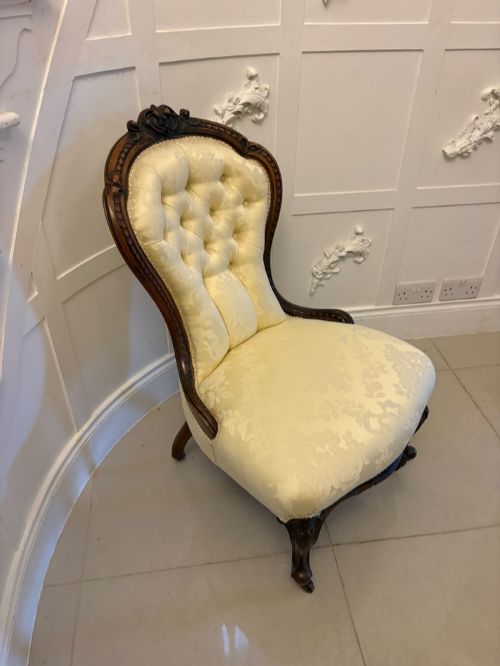
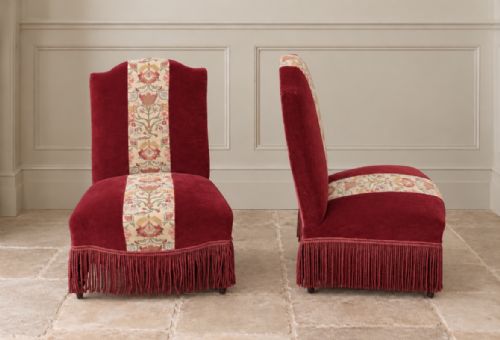
Makers utilised walnut, mahogany, satinwood, ebonised wood, and rosewood for the exposed frames, often incorporating carved details, cabriole legs, or bobbin turnings. Upholstery defines the visual weight of these items, employing button backs, textile coverings, velvet, and fringed detailing to achieve the characteristic aesthetic.
Variations span specific stylistic movements such as the Aesthetic Movement, French Napoleon III, and Regency influences alongside plain Victorian iterations. Buyers frequently encounter low profiles intended to facilitate ease of dressing or nursing, supported by sturdy wooden structures beneath generous padding.
Materials and construction
Framing relies on solid hardwoods including walnut, mahogany, and satinwood, frequently shaped into curved spoon backs or robust structural supports. Ebonised finishes and gilt highlights appear on select examples to mimic more exotic woods or align with specific stylistic trends.
Upholstery techniques involve deep buttoning, fabric padding, and textile or velvet coverings, occasionally finished with decorative fringe. Brass components appear in structural hardware or castors where mobility is required on the lower frame.
Armless Victorian Bedroom Chair Retail Price Guide 2026
Typical asking prices for armless victorian bedroom chair among the pieces listed under this phrase on Sellingantiques today, from the lower quarter to the upper quarter. They describe what is for sale here now, not the wider market.
Listings feature nineteenth-century woods including walnut, mahogany, satinwood, and ebonised finishes across various chair forms.
Assessing quality and execution
The integrity of the internal wooden frame and the precision of the carved walnut or mahogany dictate foundational worth. Finer examples display refined cabriole legs, crisp ebonised details, and balanced proportions that maintain structural stability without heavy reinforcement.
Upholstery execution and the retention of original framing characteristics distinguish superior pieces. The sophistication of turning on bobbin legs or the depth of spoon back carving separates standard workshop output from exceptional maker-attributed production.
Gillows·Hindley and Sons·Howard and Sons
The Armless Victorian Bedroom Chair Glossary
- Slipper chair
- A low-seated, armless chair originally designed for use in a bedroom or dressing room, typically featuring a compact frame close to the floor.
- Nursing chair
- A low upholstered chair traditionally utilised for nursing infants, characterised by a supportive back and absence of armrests to accommodate voluminous garments.
- Spoon back
- A padded chair back shaped like the bowl of a spoon, conforming to the curve of the human spine and popular in mid nineteenth-century seating.
- Ebonised wood
- Timber treated with a dark stain or finish to imitate ebony, frequently utilised in nineteenth-century decorative furniture.
- Aesthetic Movement
- A late nineteenth-century design ethos emphasising visual beauty and artistic expression over strict historical revivalism.
Armless Victorian Bedroom Chair: Frequently Asked Questions
What is an armless victorian bedroom chair used for?
These low-seated chairs served private dressing rooms, bedrooms, and parlours where compact seating was practical for daily routines.
Their armless design accommodated the voluminous clothing of the nineteenth century and allowed users to dress comfortably near the floor.
How do you style an armless victorian bedroom chair today?
The compact dimensions allow these chairs to fit easily into smaller corners, reading nooks, or guest bedrooms as accent seating.
Pairing them with modern furnishings highlights the carved wooden frames and textured upholstery fabrics without overwhelming a room.
What distinguishes a nursing chair from a slipper chair?
Nursing chairs typically feature slightly higher backs and specific ergonomic angles intended for prolonged seated comfort during childcare.
Slipper chairs generally present a lower profile designed originally for putting on footwear or sitting by dressing tables.
How can you identify nineteenth-century framing materials?
Examination of the exposed wood reveals the underlying timber, with walnut, mahogany, and rosewood appearing frequently in nineteenth-century production.
Ebonised finishes and gilt accents indicate specific decorative preferences from the Victorian period.