








Arita Imari Charger
An arita imari charger brings bold palettes and intricate hand-painted motifs into a room, offering centuries of ceramic artistry.
Arita Imari Charger
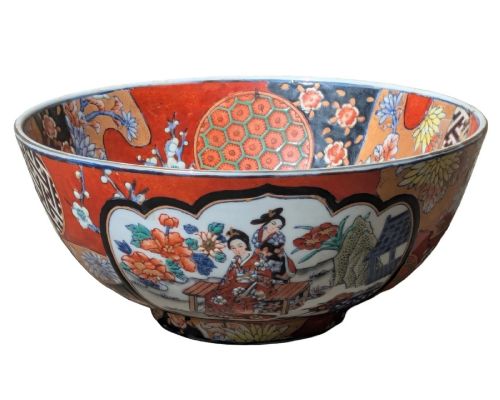
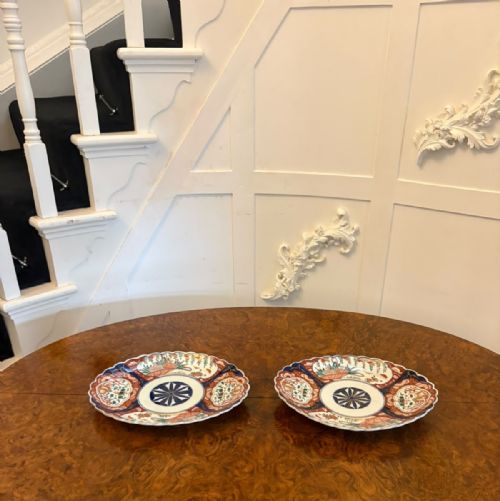
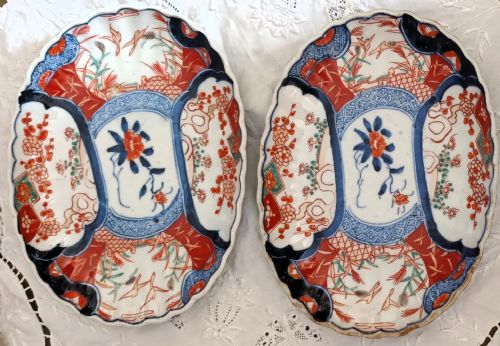
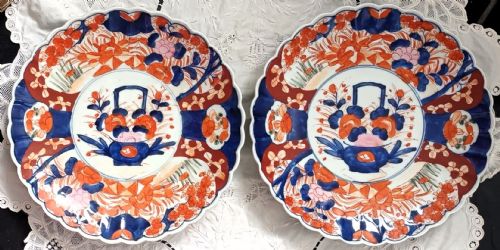
An arita imari charger represents a large, decorative ceramic plate produced in Japan, specifically centred around the kilns of Arita. These pieces span multiple eras, including the Edo, Meiji, and Victorian periods, alongside later twentieth-century examples.
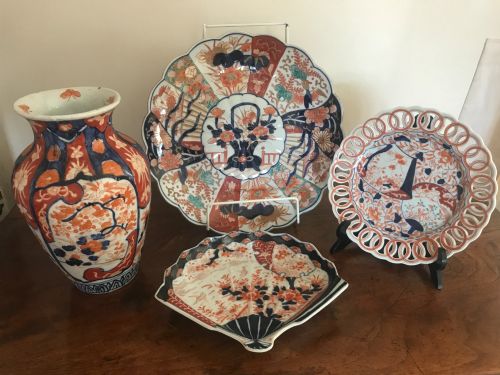
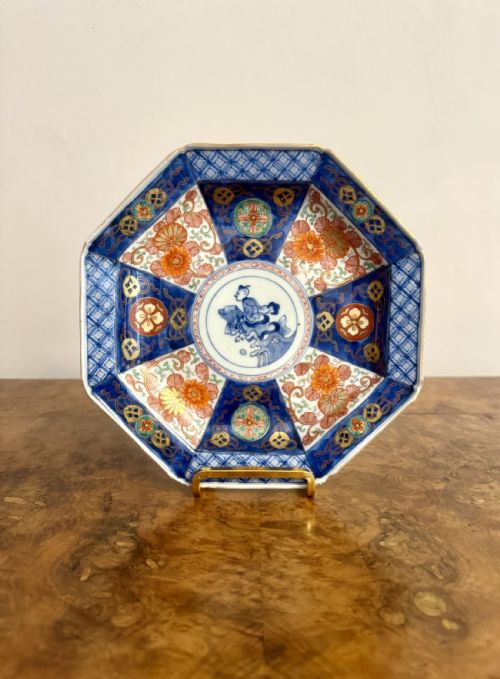
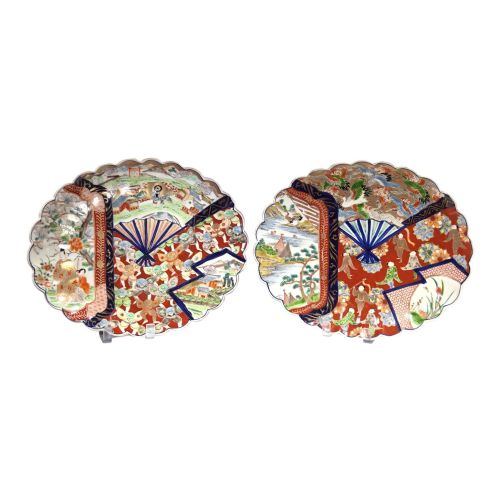
Buyers will most frequently encounter nineteenth-century pieces alongside those dated around nineteen hundred. Forms range from traditional circular chargers to scalloped, octagonal, hexagonal, and square plates, as well as bowls and dishes.
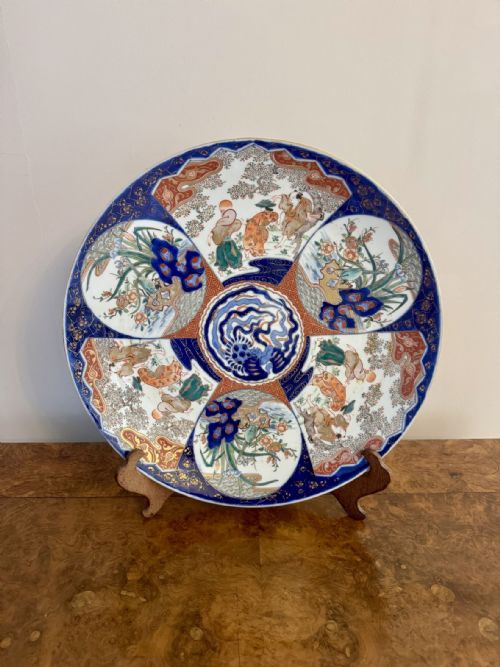
The aesthetic bridges Japanese Imari and Meiji styles, frequently incorporating specific motifs such as exotic birds, floral patterns, and koi carp. These objects function primarily as decorative wall plates or large display chargers.
How They Were Made
These pieces rely on a porcelain body shaped by hand or moulded into various geometric and scalloped forms. Cobalt pigment provides the deep blue underglaze elements that form the foundation of the design.
Enamel and glaze seal the body, while gold leaf, gilding, and gold gilt add metallic highlights over the fired surface. Artisans apply these details by hand to build up the complex visual layers characteristic of the ware.
Listings feature porcelain forms spanning the Edo and Meiji periods, alongside Victorian and early twentieth-century examples.
What Varies in Quality
Quality rests upon the precision and complexity of the hand-painted brushwork across the surface. Pieces featuring detailed exotic birds, floral scenes, or koi carp demonstrate superior artistic control compared to simpler designs.
The application of glaze, cobalt pigment, and gold leaf distinguishes finer examples. Exceptional pieces also display unusual shapes, such as fan-shaped, square, or octagonal forms, alongside crisp edge definition on scalloped rims.
The Arita Imari Charger Glossary
- Arita
- A Japanese town renowned for its ceramic production and porcelain kilns. It serves as the geographical origin for these chargers.
- Imari
- A style of Japanese porcelain exported through the port of Imari. It typically utilises a distinctive palette of cobalt blue and iron red, often enriched with gold.
- Charger
- A large decorative plate traditionally used for presentation or display. These items hang on walls or sit on surfaces as focal points.
- Meiji Period
- An era in Japanese history spanning from eighteen sixty-eight to nineteen twelve. Pieces from this time often exhibit elaborate hand-painted decoration.
- Cobalt Pigment
- A mineral colourant applied under the glaze to produce deep blue tones. It withstands high kiln temperatures without losing definition.
Arita Imari Charger: Frequently Asked Questions
How were arita imari chargers used?
These large ceramic pieces served primarily as decorative display items rather than functional tableware. Households placed them on tables or mounted them on walls to showcase their vibrant colours and intricate patterns.
Over time, collectors valued them as centrepieces that combined traditional Japanese craftsmanship with striking visual appeal.
How do I date an imari charger?
Dating relies on examining the porcelain body, the style of the hand-painted motifs, and the characteristics of the glaze. Earlier pieces often connect to the Edo period or seventeenth century, while the majority of decorative chargers found today originate from the nineteenth century and the Meiji era.
Details such as cobalt pigment depth and the presence of gold leaf also offer clues to the period of production.
How do I display a charger safely?
Wall mounting requires a secure, properly sized plate hanger designed to distribute the weight evenly across the ceramic rim. Alternatively, placing the charger on a sturdy display stand ensures it remains stable on a flat surface.
Keeping the piece away from direct foot traffic and heavy vibrations protects the porcelain and its gilded surface from accidental knocks.
What is the difference between Arita and Imari?
Arita refers to the Japanese town and production centre where the porcelain body and glazes were actually manufactured. Imari was the port from which these finished ceramics were shipped to domestic and international markets.
Collectors use the combined term to describe the distinctive style of porcelain born in those kilns and distributed through that port.