



Architectural Study Painting
An architectural study painting captures the precision and atmosphere of historic buildings, offering buyers a window into classical design and structural detail.
Architectural Study Painting
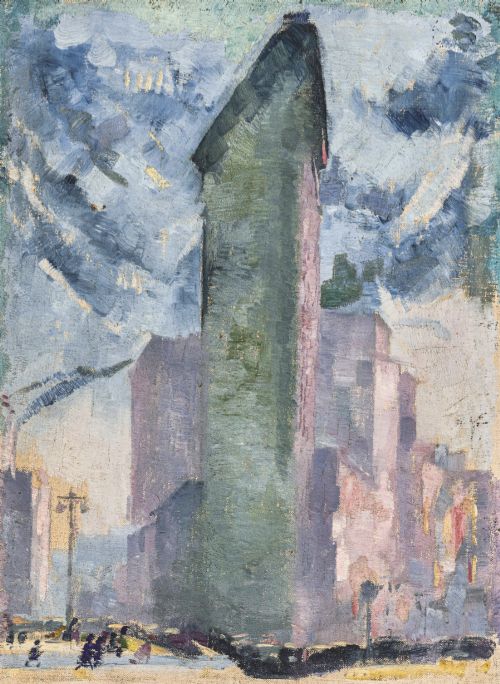
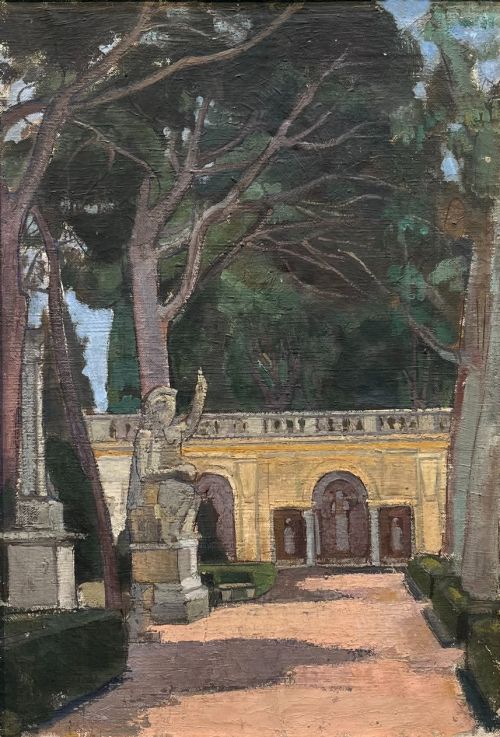
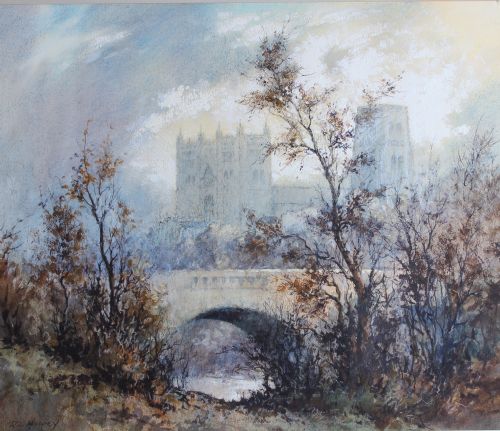
An architectural study painting focuses on the depiction of buildings, ruins, cathedrals, and interiors, ranging from grand Italian facades to English country houses. When exploring an architectural study painting selection, buyers encounter works executed across the nineteenth and twentieth centuries.
The subjects span European travel destinations, domestic halls, and ecclesiastical interiors, recording the physical fabric of historic structures. These pieces serve as both topographical records and artistic compositions, executed by professional artists and accomplished amateurs alike.
Most examples originate from the Victorian and Edwardian eras, often created during travels on the Continent or during the recording of notable British heritage sites. They appear on paper, canvas, and board, framed under glass or displayed directly on oil supports.
How They Were Made
Artists utilised watercolour and ink on paper for crisp line work and tonal washes, capturing intricate masonry and stone vaulting with precision. These works frequently combined pen drawing with delicate watercolour paint to delineate columns, arches, and decorative stonework.
Oil and pastel on canvas or wood provided heavier textures for interior scenes, depicting elaborate wall panels, furnishings, and shadowed halls. Pigments were applied to primed supports, relying on brushwork and layering to build up depth in architectural spaces.
Listings feature works spanning the nineteenth century through the 1960s, executed in watercolour, oil, pastel, and ink on paper or canvas.
What Varies in Quality
Draftsmanship sets apart the finer examples, where perspective and structural proportions are rendered with exact control over vanishing points and scale. Weaker works struggle with spatial geometry, whereas superior studies demonstrate a sure hand in mapping complex vaulting, cornices, and facades.
Atmosphere and light handling distinguish exceptional sheets from rigid topographical diagrams. The top of the range uses tone and pigment density to suggest weathering on stone and the play of interior light across grand rooms.
Thomas Ellison·Alfred Wolmark·Robert Leslie Howey·Anne Dorrien Smith·Rowland Henry Hill·Denis William Reed·Pio Panfili·Peter Toft·Tom Dudley·Frank Moss Bennett·John Jaques·WD Scull·Margaret Thompson·Joseph Murray Ince·William James Boddy·Peter De Wint·W H Sweet·G George Fall
The Architectural Study Painting Glossary
- Grand Tour
- A traditional trip through Europe undertaken by upper-class young men to absorb classical culture and art. Paintings from this context focus on Roman ruins, Italian churches, and classical architecture.
- Topographical
- Pertaining to the accurate depiction of a particular place or building. These studies record actual locations rather than imagined or idealised scenes.
- Gouache
- An opaque watercolour paint that dries to a matte finish. Artists used it to add solid highlights and opaque details over transparent watercolour washes.
- Monochrome
- Executed in a single colour or shades of one tone, such as sepia or black ink. This technique emphasises line and shadow over colour variation.
- Provenance
- The documented history of ownership or exhibition record of an artwork. It establishes authenticity and traces the path of the piece through time.
Architectural Study Painting: Frequently Asked Questions
What is an architectural study painting?
An architectural study painting is a detailed artwork focusing on buildings, interiors, or structural elements like arches and tombs. These pieces were created to document specific historical locations or explore the interplay of light and form within grand spaces.
Artists ranged from travelling professionals to topographical draughtsmen, using watercolours, oils, or ink. They provide visual records of architectural heritage across Europe and Britain.
Where were these paintings typically made?
Many works were produced on location during travels through Italy, France, and Britain, capturing famous cathedrals, ruins, and country houses. Artists often worked <i>en plein air</i> or made preparatory sketches before finishing pieces in the studio.
Domestic subjects include stately home interiors, college halls, and local churches. These locations reflect the destinations valued by artists and patrons during the nineteenth and early twentieth centuries.
How should I frame and display them?
Works on paper require conservation mounting with acid-free materials and framing behind glass to protect fragile pigments from ultraviolet light and moisture. Oil paintings on canvas or board are generally displayed unglazed in traditional wood frames suited to their period.
Keep them away from direct sunlight and damp environments to preserve the paper supports and paint layers. Proper hanging ensures the longevity of both watercolour washes and oil impasto.
How do I identify the period?
Dating relies on stylistic clues within the architectural clothing, framing methods, paper types, and artist signatures or exhibition labels on the reverse. Victorian and Edwardian works often exhibit specific tonal palettes and mount styles characteristic of their decade of creation.
Signatures matched against historical records or exhibition dates offer precise chronological anchors. Comparative study of known techniques helps narrow down undated nineteenth-century sheets.