


Townscape Watercolour Artwork
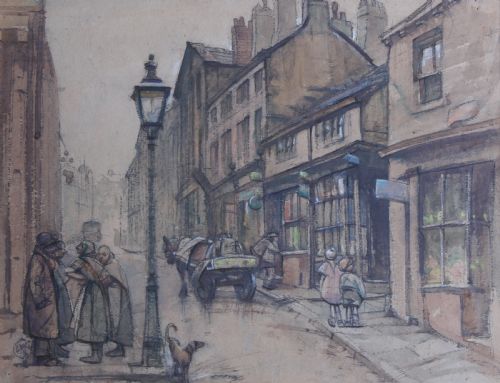
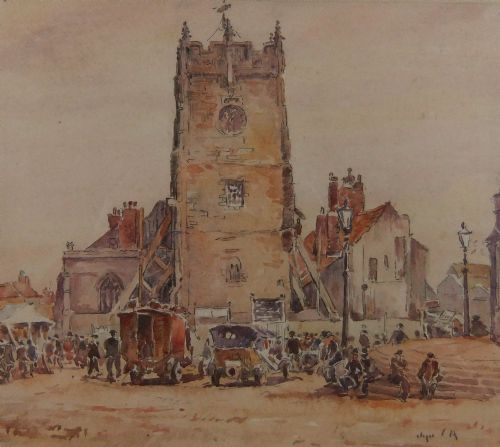
These townscape watercolour artwork pieces capture bustling streets and historic buildings through washes of pigment.
Townscape Watercolour Artwork
A townscape watercolour artwork depicts urban scenes, market squares and historic street views rendered in water-based pigments on paper. These works document architectural changes and street life across British and continental locations from the late nineteenth century to the mid-twentieth century.
Buyers encounter compositions framed under glass, often utilising wood surrounds that complement the age of the piece. The subject matter ranges from quiet northern alleys to busy Yorkshire markets, executed by regional artists working within Edwardian, Victorian, and mid-century British traditions.
The prevalent forms include framed paintings and drawings that combine watercolour washes with ink or pencil lines. Such works provide a direct window into historical town planning and daily civic routines through the specific medium of paper and pigment.
Materials and Technique
Artists typically applied watercolours onto paper sheets, frequently reinforcing architectural edges and linear details with ink or pencil. This dual approach allowed creators to establish sharp structural boundaries for buildings and bridges before laying down fluid colour washes.
Completed paintings were generally protected behind glass and housed within wooden frames, occasionally featuring gilt wood mouldings. These protective enclosures preserved the delicate paper supports and water-soluble pigments from atmospheric moisture and surface damage.
Several scenes capture historic inns and narrow bridges where local marketgoers once gathered daily.
Judging Quality
Quality rests upon the artist's ability to control pigment and water to achieve atmospheric light and architectural precision. Stronger examples demonstrate confident pencil or ink draftsmanship beneath the wash, giving crisp definition to street furniture, stonework and figures.
The effectiveness of the composition also dictates value, where dynamic perspective and tonal contrast animate a market square or narrow lane. The preservation state of the paper and the integrity of the original framing elements influence how successfully the work survives over time.
William Manners·Stanley Orchart·Joseph W Milliken·Angus Rands·Fred Lawson·Annie L Lee
The Townscape Watercolour Artwork Glossary
- Watercolour
- A painting method where natural or synthetic pigments are suspended in a water-based solution. The resulting mixture is applied to paper to create transparent washes of colour.
- Pencil and Watercolour Drawing
- A hybrid technique combining graphite sketching with painted washes. The underlying pencil lines provide structural guidance for the subsequent application of colour.
- Gilt Wood
- Timber framing finished with a thin layer of gold leaf or metallic gilt. This decorative treatment enhances the visual weight of the surround.
- Edwardian
- A stylistic period spanning the reign of King Edward VII, noted in these works for a specific approach to British topographical illustration and landscape painting.
Townscape Watercolour Artwork: Frequently Asked Questions
How do I date a townscape watercolour?
Dating relies on stylistic clues, framing materials, and artist records associated with the period of production. Architectural details like street lighting and clothing styles worn by figures provide additional chronological markers.
Signatures, inscriptions on the reverse, and labels from framers further help narrow down the specific decade of creation.
How should I hang these watercolours?
Watercolours require placement away from direct sunlight to prevent the pigments and paper from fading over time. Maintaining a stable indoor environment protects the paper support from humidity fluctuations.
Using conservation-grade backing materials during framing ensures the longevity of the artwork on the wall.
What subjects appear in these works?
Common subjects include market crosses, historic bridges, inns, and town squares across various British and continental European locations. Artists frequently recorded daily activities such as market mornings and street commerce.
These topographical views offer visual records of urban spaces before twentieth-century development altered them.
Are these works original paintings?
The pieces listed are original hand-painted works created directly by the artist on paper supports. Each item represents a unique application of pigment, ink, or pencil rather than a mechanical reproduction.
Signatures and brushwork variations confirm the individual execution of each composition.