
Architectural Relief Carving
Architectural relief carving brings structural depth and centuries of hand-worked timber directly onto the wall.
Architectural Relief Carving
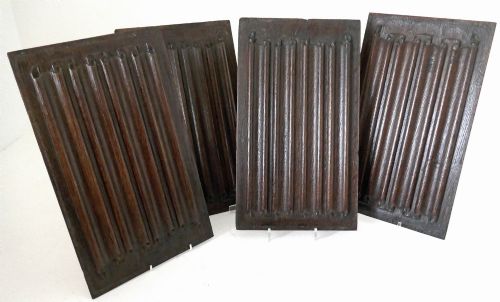
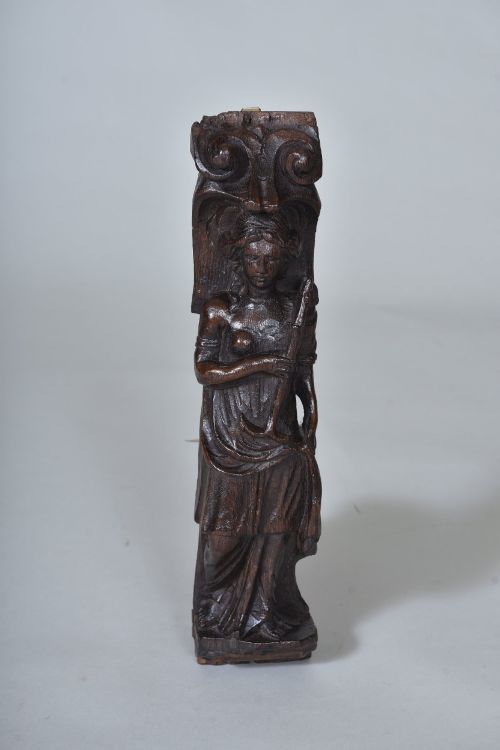
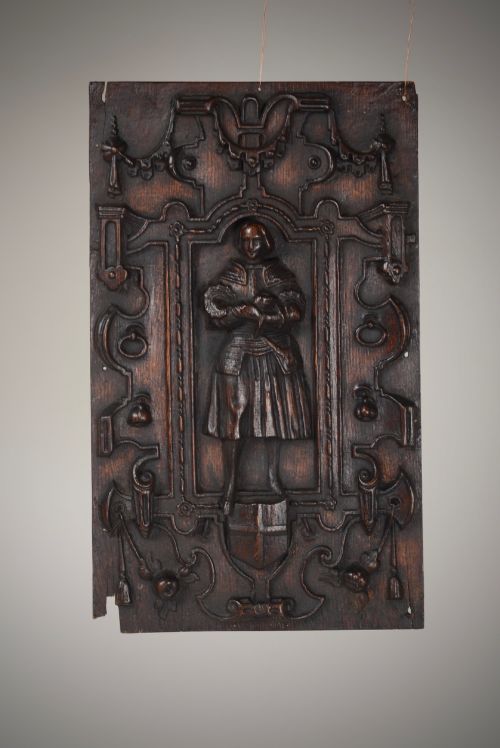
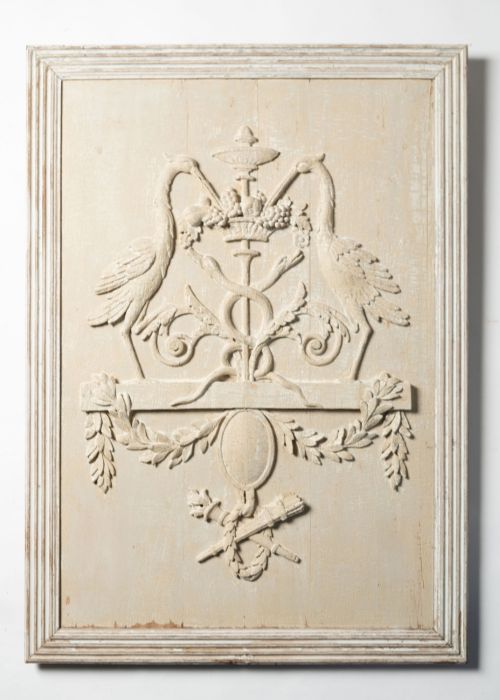
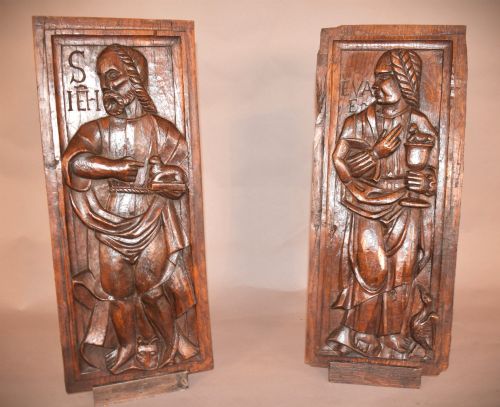
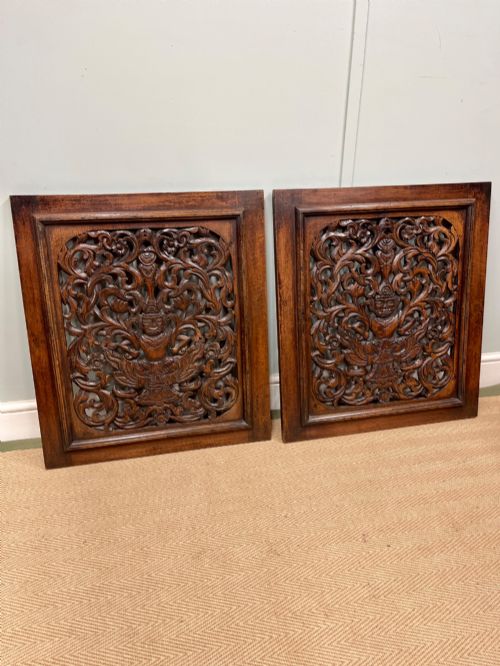
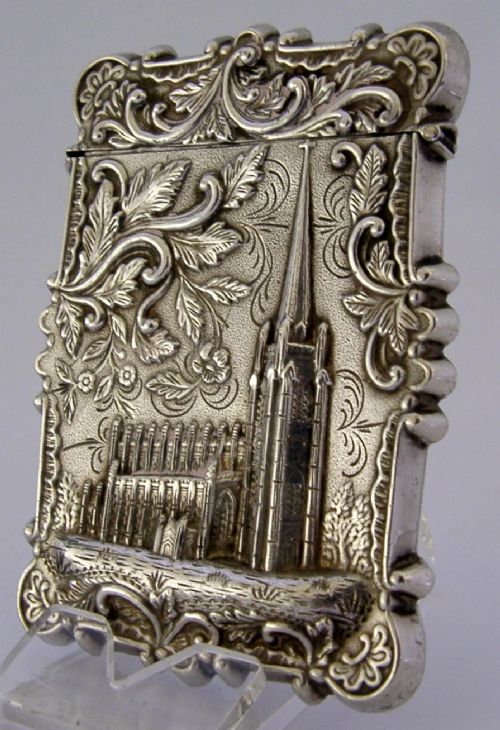
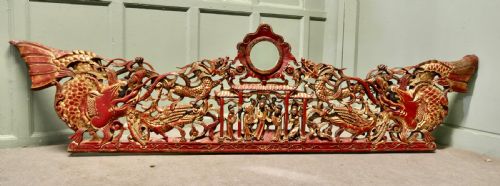
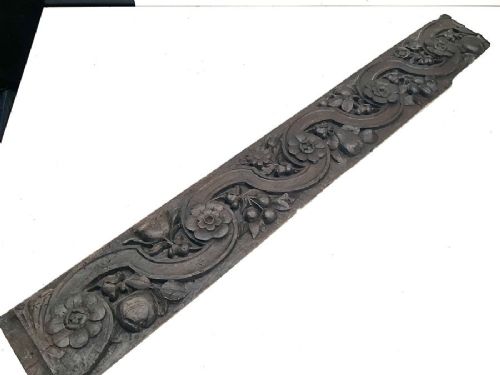
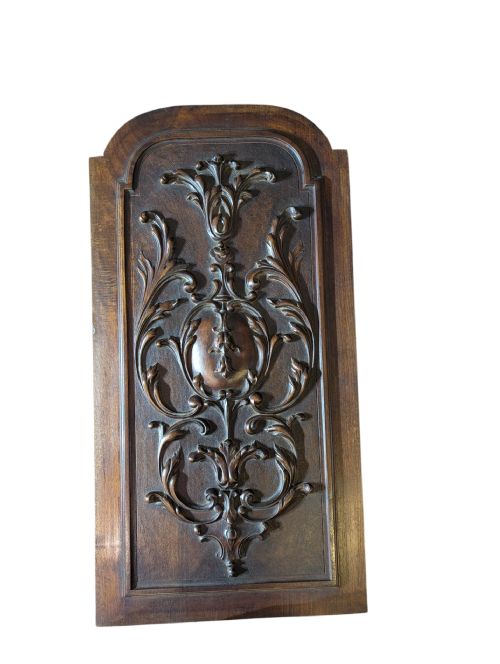
Architectural relief carving encompasses timber wall panels, pediments, ceiling bosses, friezes, and plaques salvaged from domestic and sacred buildings across several centuries. Buyers most frequently encounter oak panels from the sixteenth and seventeenth centuries, alongside eighteenth-century gilt wood and nineteenth-century Chinese temple carvings.
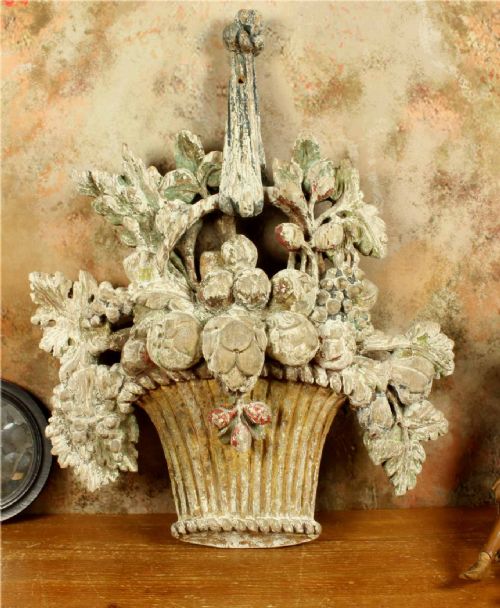
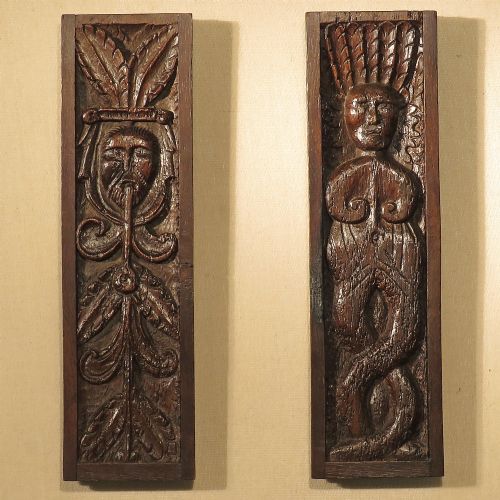
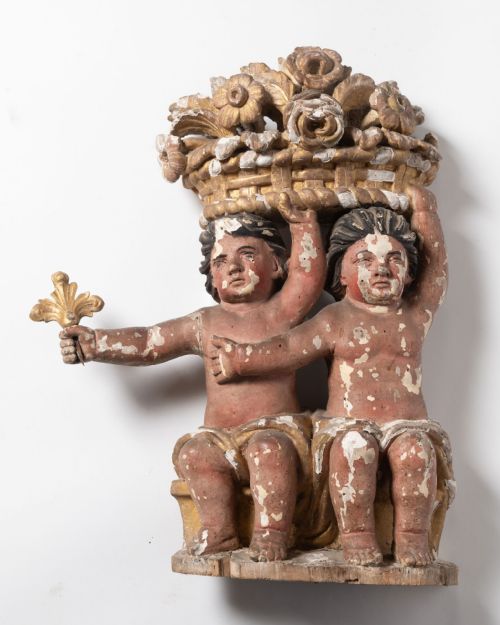
The objects serve primarily as decorative wall art, wall sculptures, and over-door panels, retaining the physical marks of historic interiors. Pieces range from small floral baskets and Green Man motifs to large armorial plaques and allegorical scenes.
Geographic origins span England, France, Flanders, Germany, Italy, Scotland, Ireland, the Netherlands, and China, reflecting diverse regional styles from Tudor linenfold to Baroque acanthus leaves and Qing Dynasty temple woodwork.
Materials and construction techniques
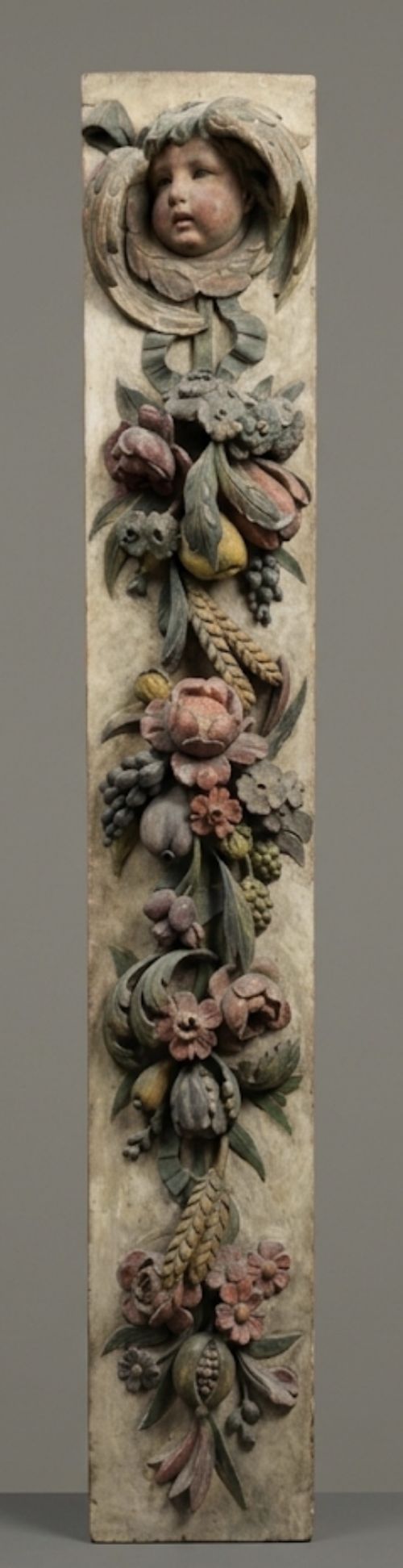
Makers relied principally on timber such as oak, walnut, limewood, and exotic woods, working the material with hand chisels and gouges to achieve high-relief and pierced depths. Many panels incorporate gesso, polychrome paint, or gold leaf to highlight intricate surface details.
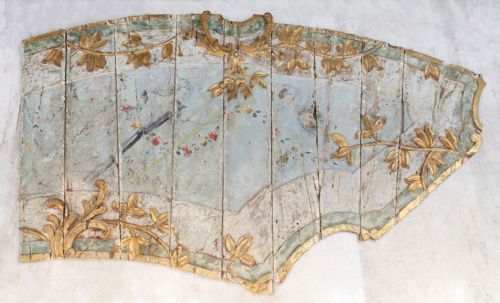
Surfaces often display the layered application of paint, lacquer, or parcel gilt over carved wood and leathermaché. Structural assembly typically involves pegged mortise and tenon joints tailored for incorporation into architectural settings like staircases, overdoors, and ceilings.
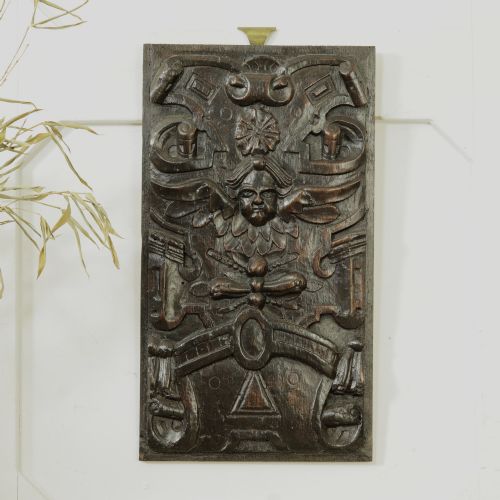
Carvers frequently hid whimsical Green Man faces amidst dense foliage on sixteenth-century panels.
Quality variations in historic carving
The distinction between standard workshop output and exceptional craftsmanship lies in the depth of the undercutting, the crispness of the chisel work, and the naturalism of the figures or foliage. Master carvers achieved remarkable dimensionality and proportion that elevate architectural salvage into fine sculpture.
Condition and originality dictate desirability, particularly the retention of original surface treatments such as gold leaf, polychrome paint, or untrimmed edges from the original architectural context.
Thomas Chippendale·Edward Pearce
The Architectural Relief Carving Glossary
- Linenfold
- A style of wood panel carving that resembles folded parchment or linen, common in sixteenth-century interiors.
- Pediment
- A triangular or segmental architectural gable placed above a door, window, or fireplace, frequently enriched with relief carving.
- Ceiling Boss
- A decorative projecting block placed at the intersection of ceiling ribs, often carved with floral or figurative motifs.
- Green Man
- A sculptural motif representing a face made of or surrounded by leaves and vines, appearing in medieval and later woodwork.
- Boiserie
- French interior wood panelling, often carved, painted, or gilded, used to decorate walls in formal rooms.
Architectural Relief Carving: Frequently Asked Questions
What is architectural relief carving?
Architectural relief carving is sculptural woodwork originally integrated into buildings, such as wall panels, friezes, pediments, and ceiling bosses.
These pieces were salvaged from historic interiors and adapted as decorative wall art and plaques.
How were these panels used originally?
Historic carvers produced these wooden elements to adorn the walls, overdoors, staircases, and ceilings of grand domestic and ecclesiastical buildings.
They provided focal points in rooms, displaying heraldic coats of arms, religious allegories, or elaborate floral motifs.
How do I hang a heavy wooden panel?
Due to the substantial weight of solid oak and walnut panels, secure wall mounting requires professional fixings attached directly to structural studs.
Many pieces retain original framing or mounting points that indicate how they were supported within historic settings.
How can I tell the period of a carved panel?
Dating relies on identifying stylistic markers such as Tudor linenfold, Baroque pierced acanthus leaves, or Chinoiserie motifs, alongside wood species.
Tool marks, timber shrinkage, and the presence of original gesso, paint, or gold leaf provide further clues to age.