
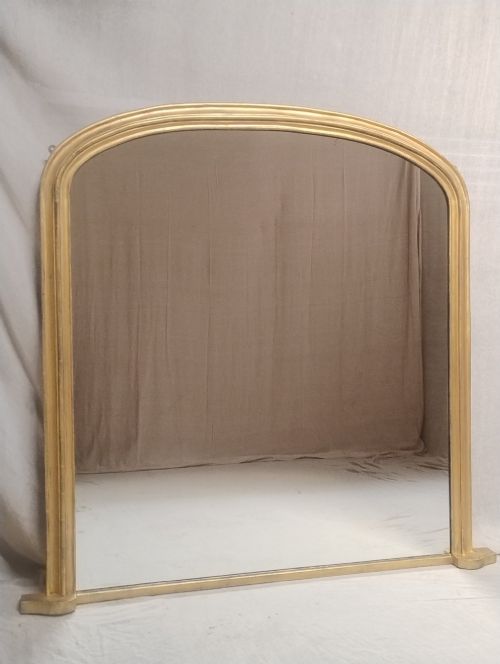

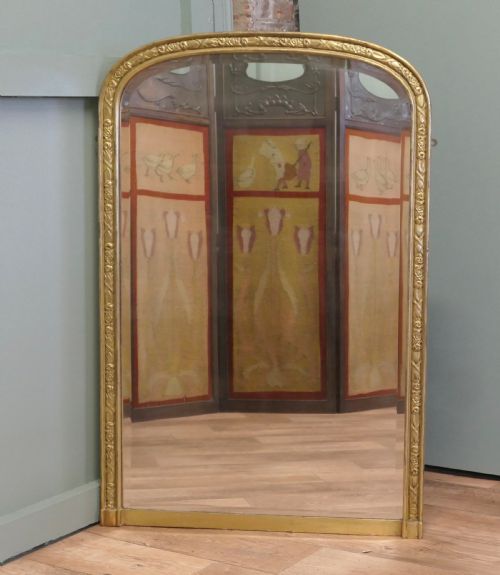

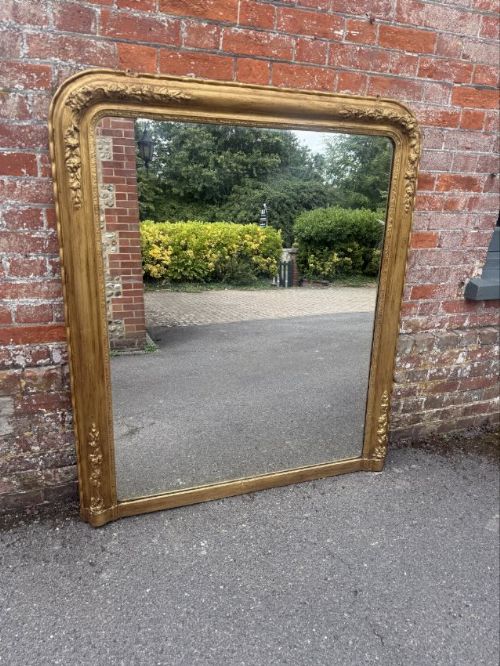
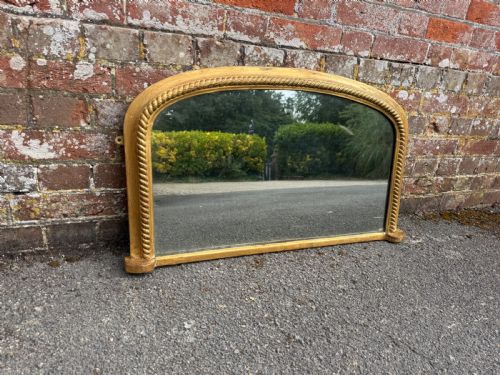
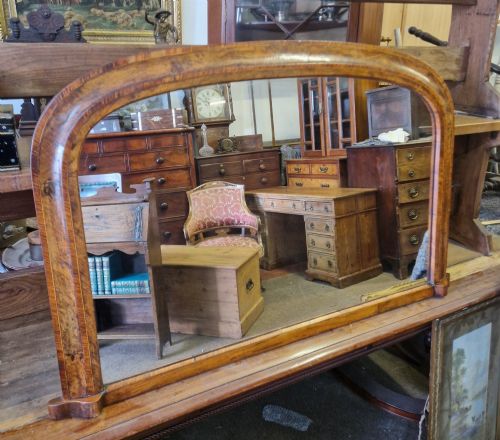
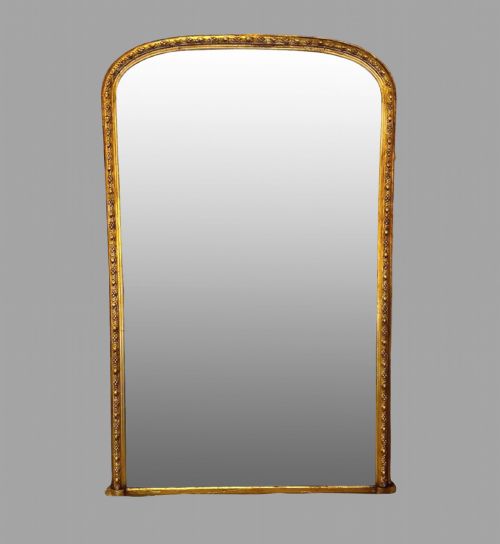
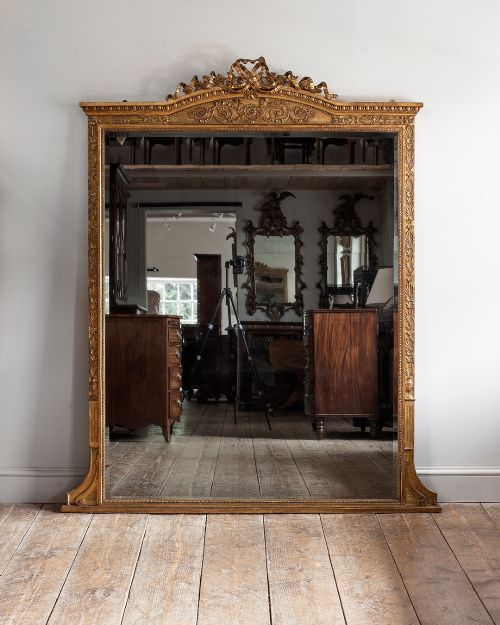
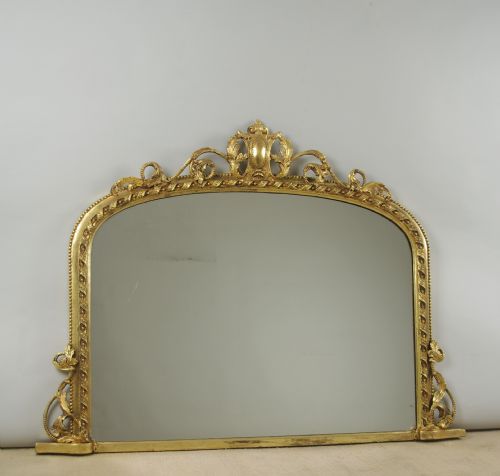


Arched Top Overmantel Mirror
An arched top overmantel mirror brings proportion and reflected light to a fireplace, offering a classical silhouette that anchors a room.
Arched Top Overmantel Mirror
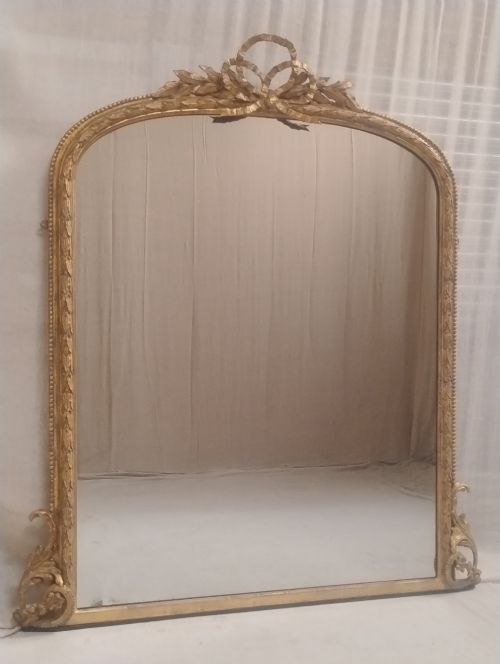
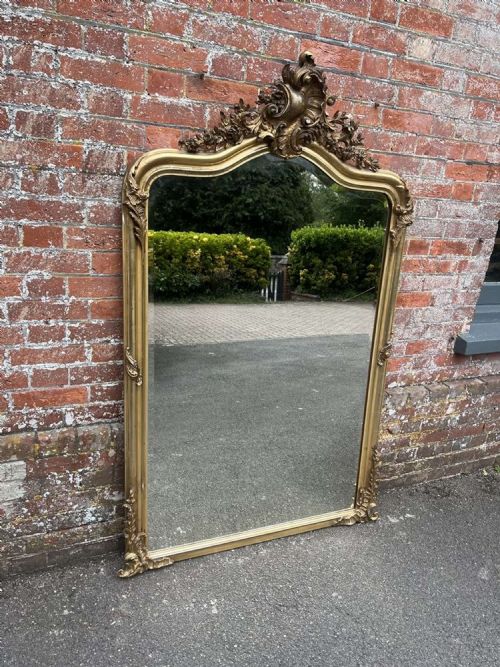
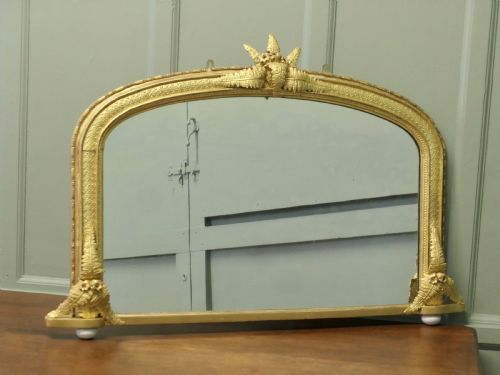
An arched top overmantel mirror is a substantial wall glass designed specifically to sit above a mantelpiece, drawing the eye upward with its characteristic curved crown. Most pieces seen here date from the nineteenth century, encompassing both English Victorian examples and French regional interpretations.
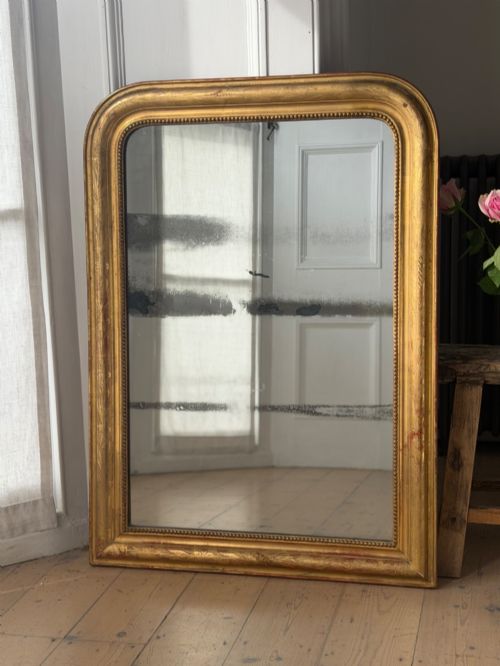
The form appears in several distinct stylistic guises, ranging from ornate English giltwood and gesso frames with ribbed or tulip moulding to simpler French Louis Philippe designs with rounded upper corners. These objects served a practical nineteenth-century purpose by bouncing candle and window light around a formal reception room while adding architectural weight to the chimney breast.
How they were made
Carved wooden foundations of pine or hardwood provide the underlying structure for the most elaborate frames, often shaped with an arched crest to match the intended mantel proportions. Artisans built up intricate decorative relief upon this timber using layers of gesso and composition mouldings.
Gilding was applied using gold leaf laid over bole, or the frames were painted and sometimes silvered for different domestic interiors. The mirror plates themselves, frequently original, demonstrate period manufacturing techniques including mercury silvering that yields characteristic foxed spots over time.
Many an antique glass has spent over a century watching the same hearth fire burn down to embers.
What varies in quality
The crispness of the carved detail and the depth of the gesso mouldings separate standard production frames from finer examples, where crisp floral or rope twist motifs retain their sharp edges beneath the gilding. High-quality pieces show careful joinery at the arch transition rather than clumsy butt joints or heavy filler.
Originality of surface and glass condition dictate the upper tier of the range, particularly where untouched gold leaf or genuine period silvering survives intact. Frames that retain their original backing boards and unblemished gilding command greater appreciation among collectors than heavily restored counterparts.
The Arched Top Overmantel Mirror Glossary
- Overmantel
- A large mirror or painting specifically proportioned to hang on the wall directly above a fireplace mantelpiece. They often feature horizontal or vertical rectangular bodies finished with an arched apex.
- Gesso
- A plaster-like mixture applied to a wooden frame to create a smooth surface for gilding or to be moulded into relief ornamentation. It allows crisp botanical and geometric details to be built up before finishing.
- Giltwood
- Timber that has been coated with a thin layer of gold leaf or gold paint for decorative effect. It creates a bright reflective surface that catches natural light in a room.
- Foxed glass
- Mirror plate that has developed dark spots, mottling, or cloudy patches due to the degradation of the backing silver over decades. This ageing process is valued for the atmospheric quality it brings to period interiors.
- Louis Philippe
- A mid-nineteenth-century French style characterised by clean architectural lines, rounded upper corners, and restrained ornamentation. These frames offer a more sober alternative to heavy rococo revival carving.
Arched Top Overmantel Mirror: Frequently Asked Questions
How do I hang a heavy overmantel mirror safely?
These large nineteenth-century frames carry considerable weight from their timber and gesso construction, requiring direct fixing into solid masonry rather than plasterboard alone. Professional mirror plates and reinforced hanging wire or brackets distributed across the frame ensure the piece stays secure against the wall.
Positioning the base so it rests slightly upon the mantelpiece shelf itself helps distribute the vertical load. This traditional placement prevents undue strain on the upper wall fixings while keeping the glass proportioned correctly to the fireplace opening.
Can these mirrors be placed on a wall without a fireplace?
While originally engineered to sit above a mantelpiece, the arched silhouette functions equally well as a principal wall mirror in a hallway or above a low sideboard. The curved top draws the eye upward and creates a strong focal point in rooms lacking a chimney breast.
When hanging one away from a fireplace, aim to position the centre of the glass at eye level to maintain correct visual balance. Pairing the piece with a console table or low piece of furniture grounds the composition in the absence of a mantel shelf.
How should I clean antique mirror glass?
Historic glass and delicate gilt surfaces require gentle maintenance using a soft, dry microfibre cloth to remove surface dust without disturbing fragile edges. Avoid spraying liquid cleaner directly onto the glass, as moisture can seep behind the plate and accelerate the deterioration of the original silvering.
If liquid is necessary, apply a small amount to the cloth rather than the mirror itself, and take care not to touch the gesso or gold leaf frame with cleaning agents. Preserving the foxed appearance of nineteenth-century plates means embracing their age rather than attempting to scrub away dark spots.
What is the difference between Victorian and Louis Philippe mirrors?
Victorian examples made in England typically display heavier carved wood and gesso ornamentation, frequently incorporating elaborate rope twists, fruit motifs, or deep architectural moulding. They lean towards decorative exuberance and substantial proportions designed for formal nineteenth-century drawing rooms.
In contrast, French Louis Philippe pieces favour a simpler profile defined by gently rounded top corners and subtle beaded or ribbon borders. Their restrained aesthetic suits both period settings and contemporary interiors seeking understated classical lines.