
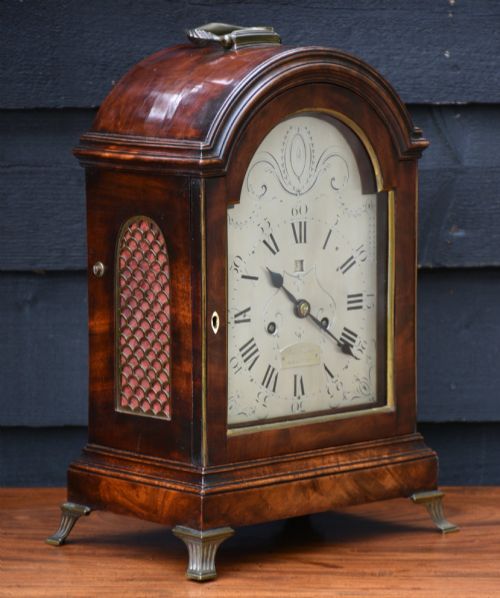
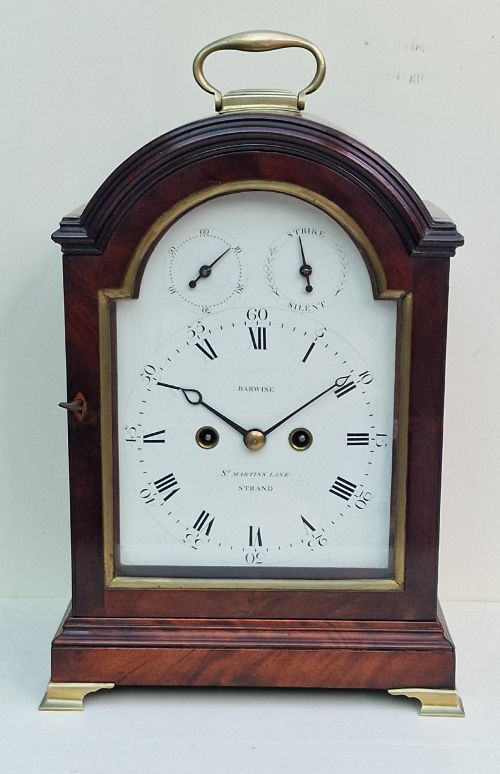
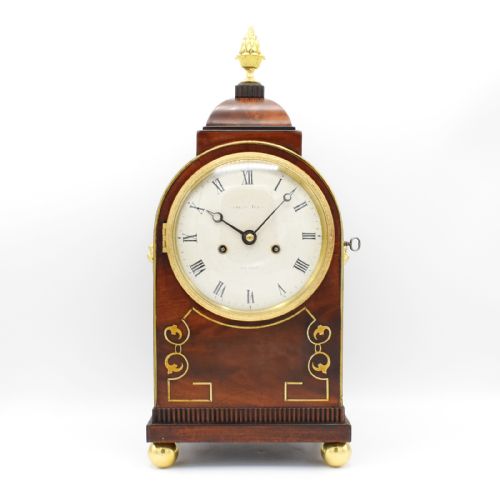
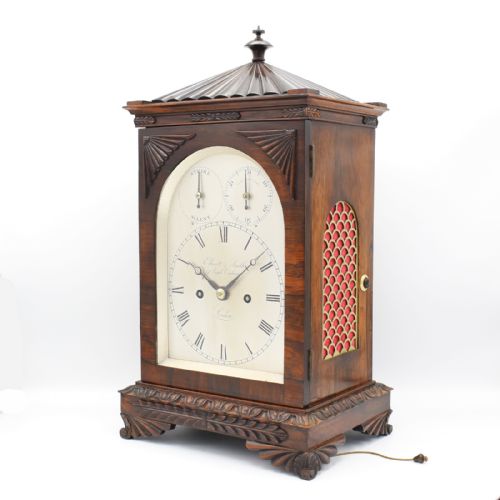
Arched Mantel Clock
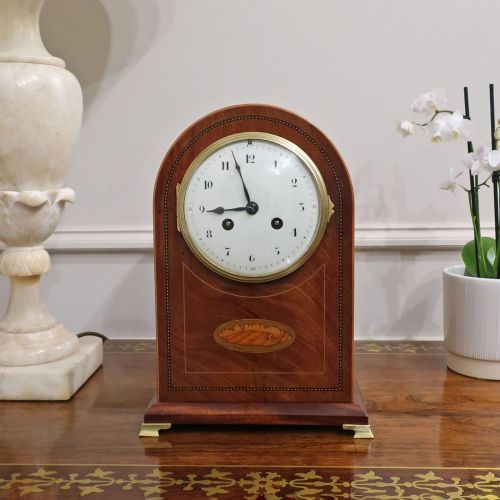
An arched mantel clock sits low and steady on the timber shelf, marking the hours in mahogany, brass and glass.
Arched Mantel Clock
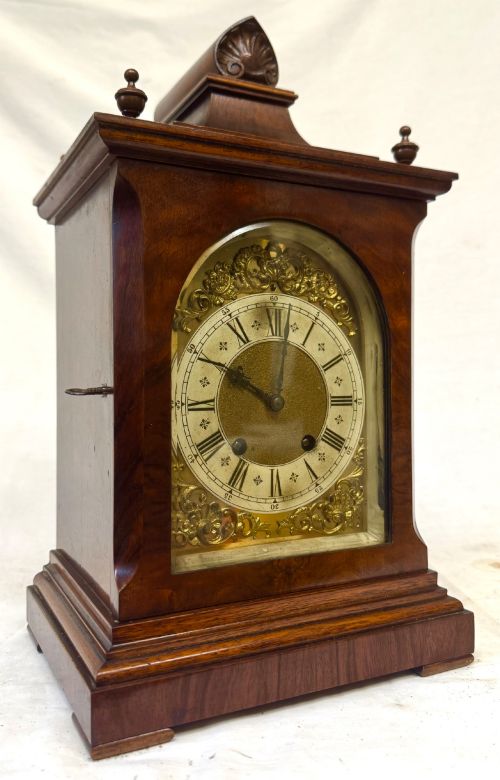
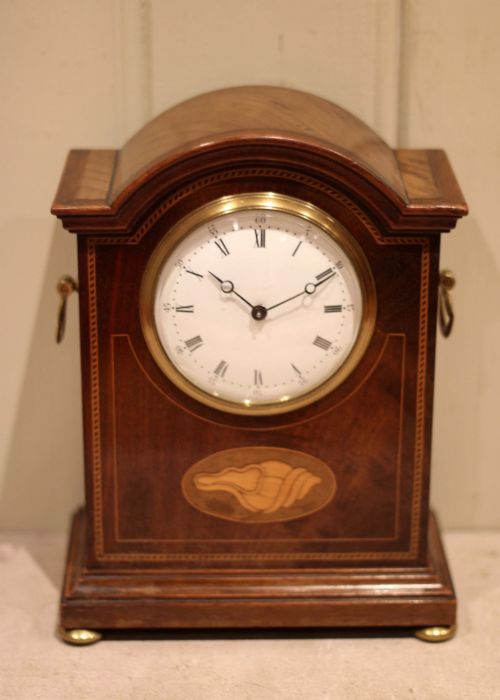
An arched mantel clock is a domestic timekeeper designed to stand on a fireplace mantel or a bracket table, distinguished by the curved apex of its wooden or stone case. When you search for this phrase, you encounter pieces spanning the Georgian, Regency, Victorian and Edwardian periods, alongside Edwardian arched top iterations.
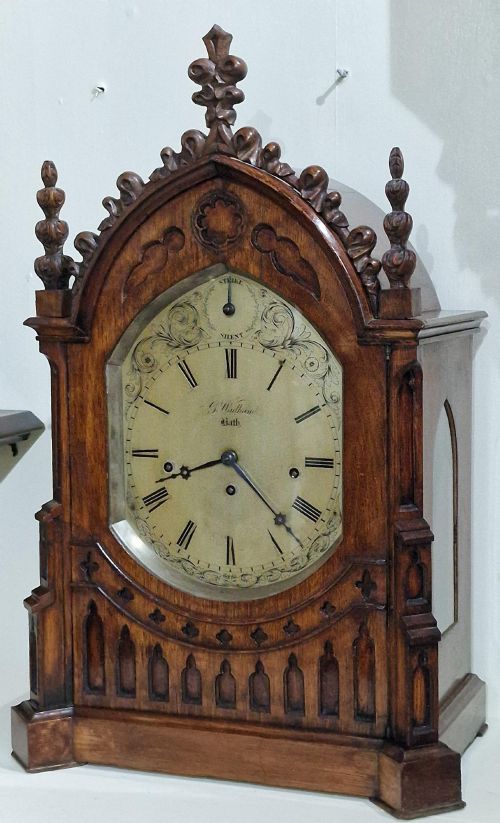
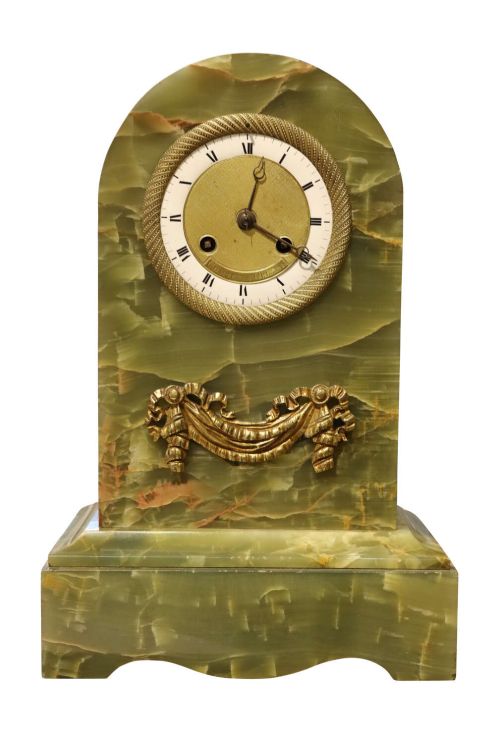
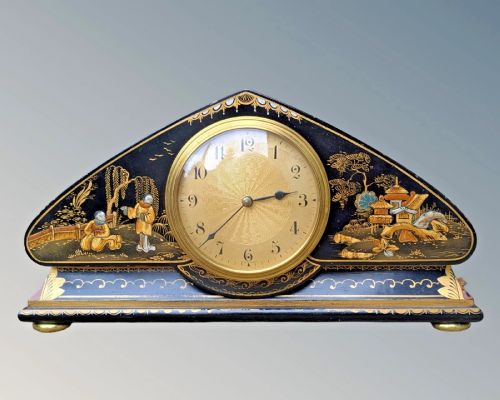
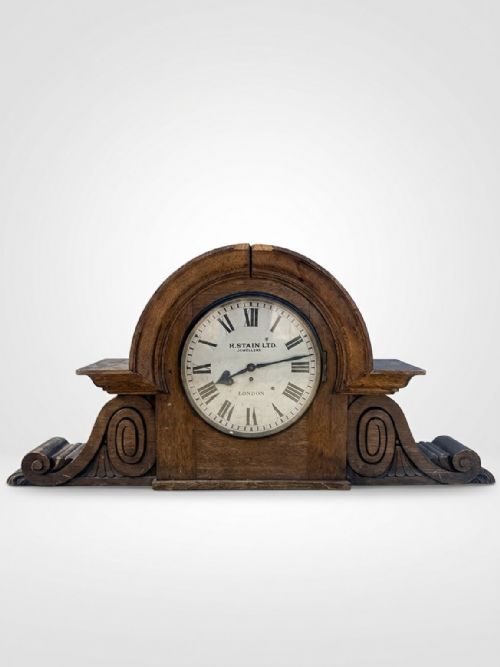
The objects take the form of mantel clocks, table clocks and bracket clocks, constructed in woods such as mahogany, oak, walnut, rosewood, satinwood and ebonised wood, as well as green onyx. Many examples originate from British workshops in London, Bath, York, Exeter, Southampton and Salisbury, while others arrive from French and German makers.
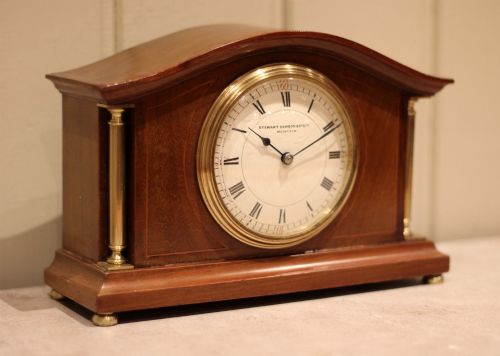
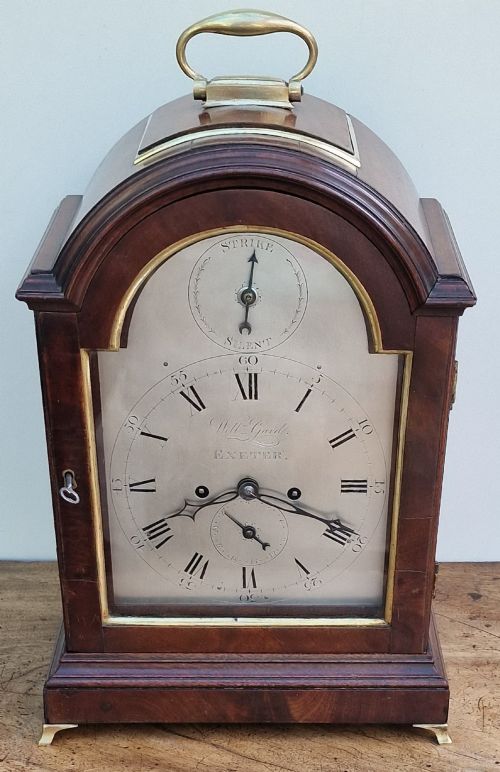
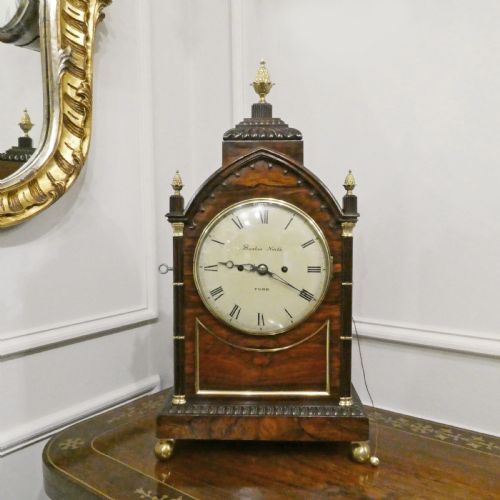
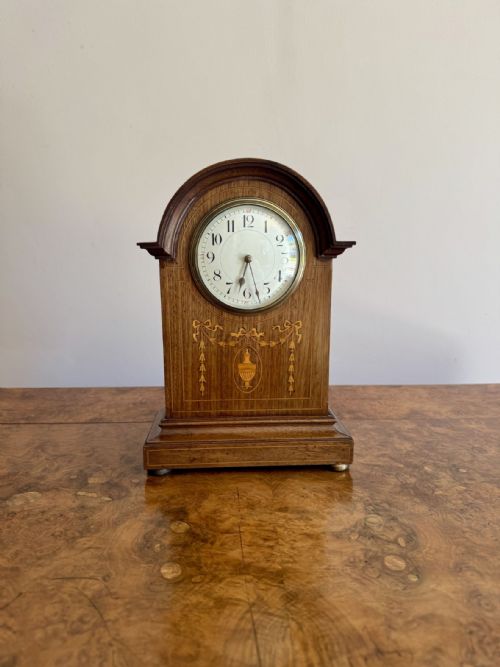
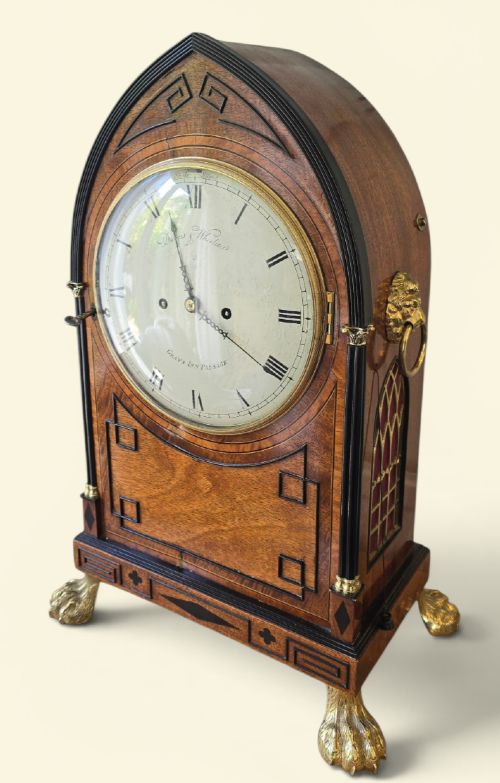
The version you are most likely to meet on this page is the Edwardian inlaid mahogany arched top mantel clock, alongside larger nineteenth-century bracket clocks driven by fusee movements. These timepieces combine functional utility with cabinet-maker joinery, often incorporating brass dials, enamel numerals and glass bezels.
What varies in quality
Quality rests in the precision of the cabinet work and the complexity of the internal movement, from simple timepieces to triple fusee or ting-tang striking mechanisms. Heavier mahogany cases with crisp satinwood inlay and signed brass backplates sit at the upper end of the scale.
The reputation of the maker dictates distinction, as signed dials and engraved backplates by established watch and clockmakers carry greater horological interest than unsigned provincial works. The integration of materials, such as heavy green onyx or finely cast brass mounts, separates standard production from exceptional pieces.
The listings on this page span the Georgian, Regency, Victorian and Edwardian periods, constructed in mahogany, oak, walnut, rosewood, satinwood and green onyx.
Lenzkirch·George Wadham·Charles a Orleans·William Gard·Barwise·Charles Pratt·Ellicott and Smith·Barber and North·Desbois and Wheeler·Schneckenburger·Thomas Moss·S Simpson·Cording·Des Granges·Phillips Brothers·Wilkinson·Junghans·Winterhalder and Hofmeier·Hyde of Salisbury
The Arched Mantel Clock Glossary
- Fusee
- A conical pulley used in spring-driven clocks to maintain an even pull on the movement as the mainspring unwinds. This mechanism ensures more accurate timekeeping throughout the duration of the wind.
- Bracket clock
- A portable timekeeper originally designed to rest on a wall bracket or a table. Many examples feature carrying handles on top of the wooden case.
- Ting-tang
- A striking system utilising two bells or gongs to sound the quarters and the hours. It produces a distinctive two-tone chime.
- Lancet-top
- A case shape featuring a pointed, gothic arch resembling a lancet window. This architectural silhouette appears frequently on nineteenth-century pieces.
- Timepiece
- A clock that tells the time without a striking mechanism. These simpler movements require only a single winding train.
Arched Mantel Clock: Frequently Asked Questions
Where should I place an arched mantel clock?
These clocks find their natural home on a living room mantelpiece, a sideboard or a dedicated bracket table where their wooden cases and brass dials remain visible.
Ensure the surface is level so the pendulum or balance wheel maintains an even beat and the movement keeps accurate time.
How do I wind my mantel clock?
Insert the appropriate key into the winding holes on the dial and turn gently until you feel resistance, taking care not to over-wind the spring.
Clocks with fusee movements or spring-driven mechanisms generally require winding once every week or eight days.
What is the difference between a timepiece and a striking clock?
A timepiece simply indicates the hours and minutes without sounding a chime, relying on a single train of gears.
A striking clock includes an additional train and hammer mechanism to ring bells or gongs on the hour or the quarters.
How do I identify the period of a wooden clock case?
Georgian and Regency pieces often display rich mahogany veneers with restrained brass inlay, while Edwardian examples frequently feature lighter satinwood stringing and fan motifs.
Examining the internal movement, backplate signatures and construction joints provides further clues to the decade of manufacture.