
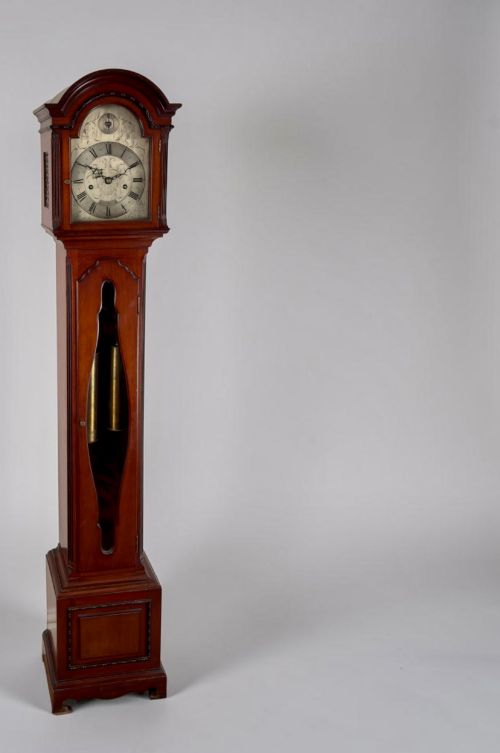

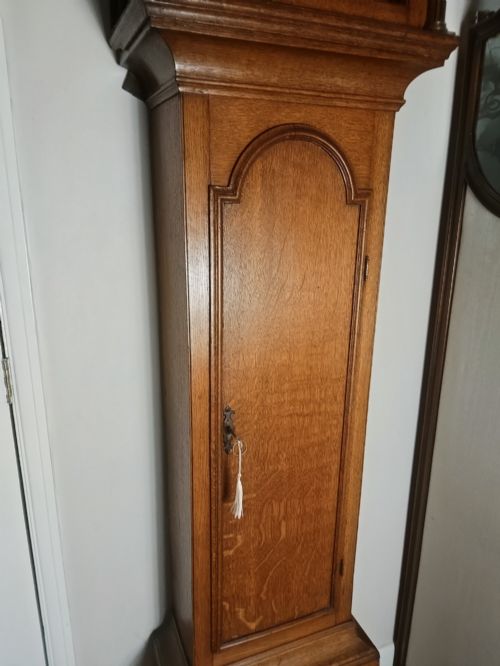
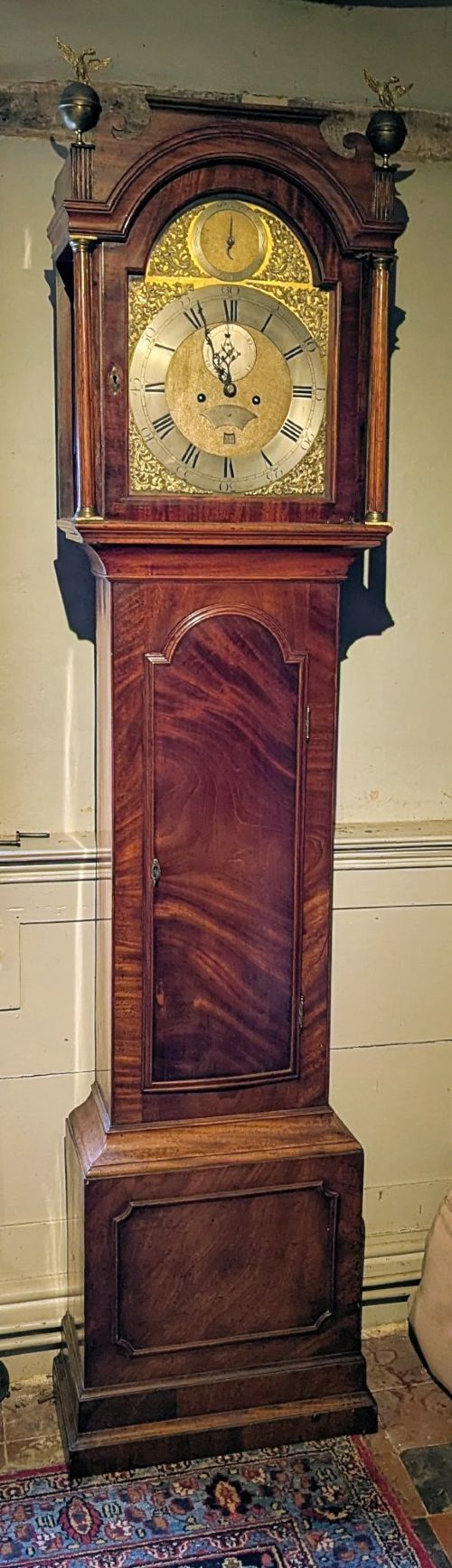
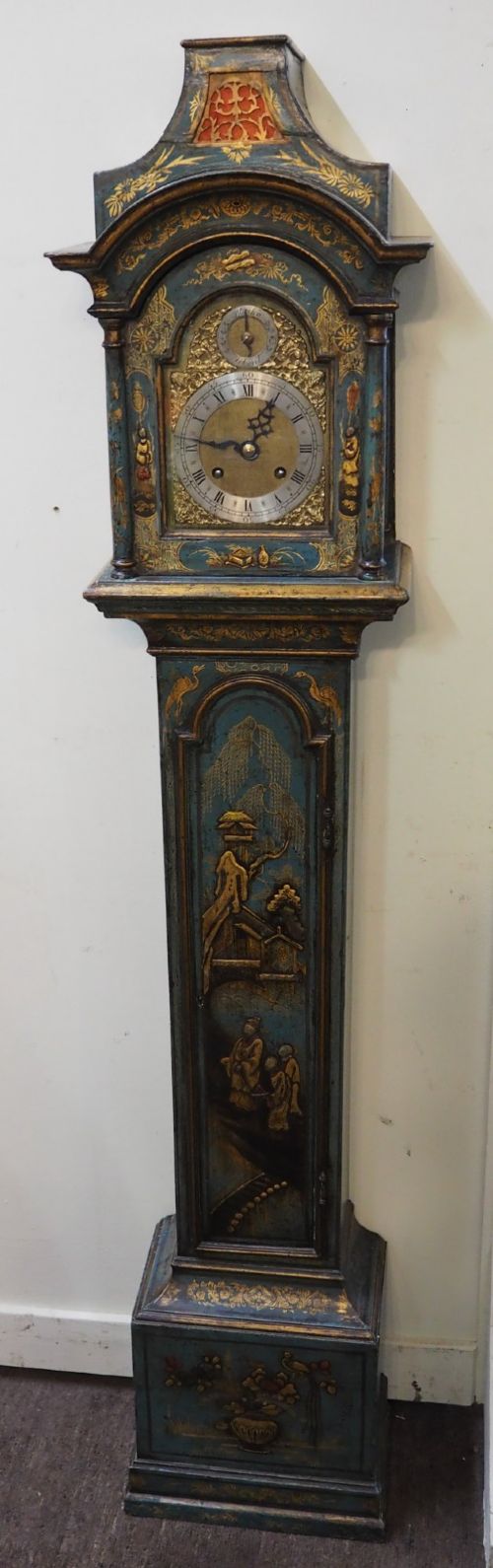
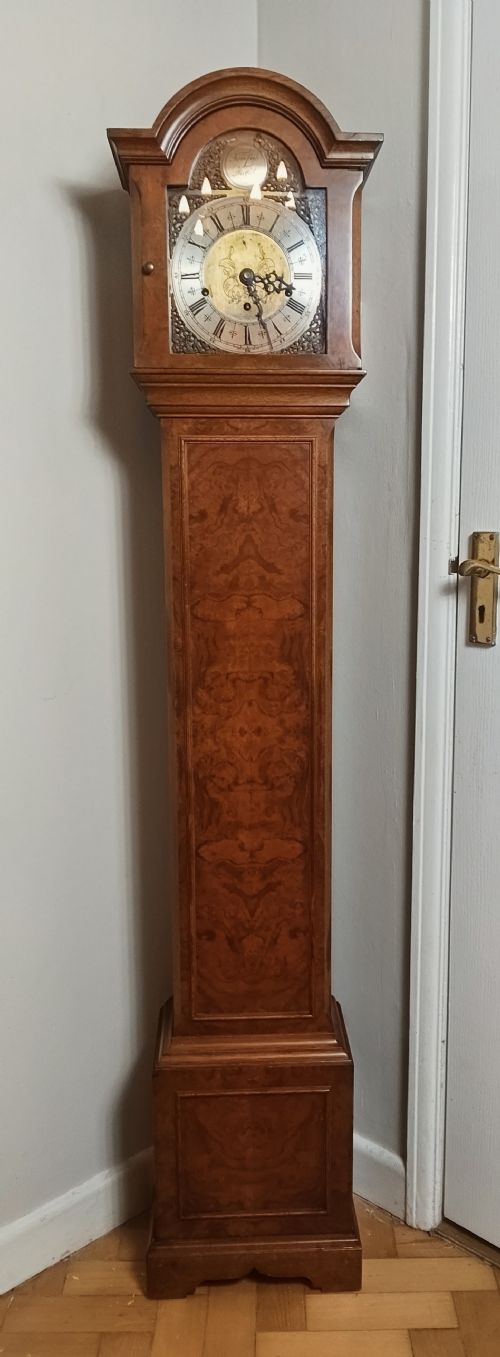

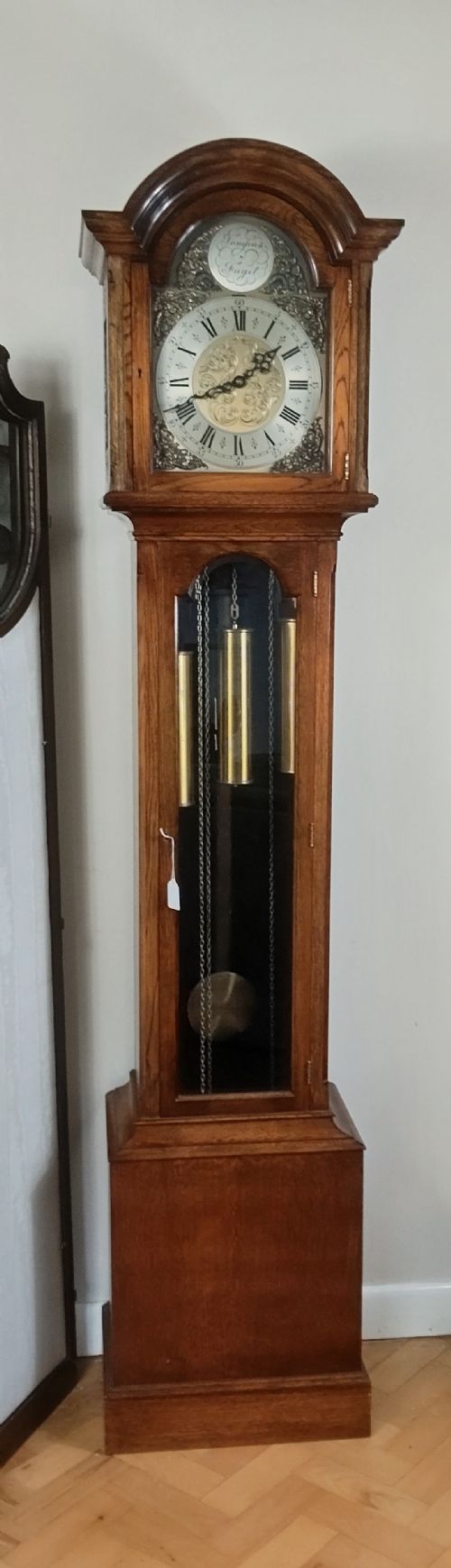
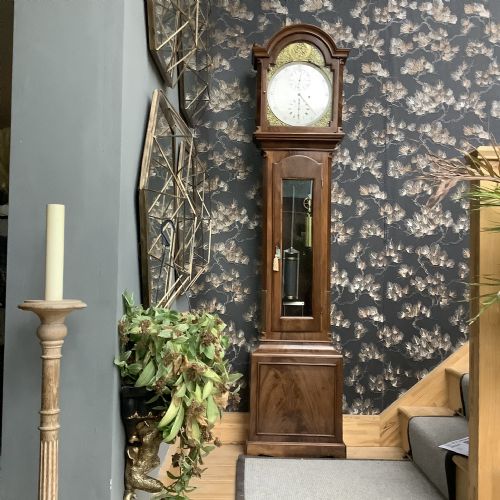


Arched Dial Floor Clock
An arched dial floor clock brings the steady rhythm of an 18th Century or Georgian interior into a room.
Arched Dial Floor Clock
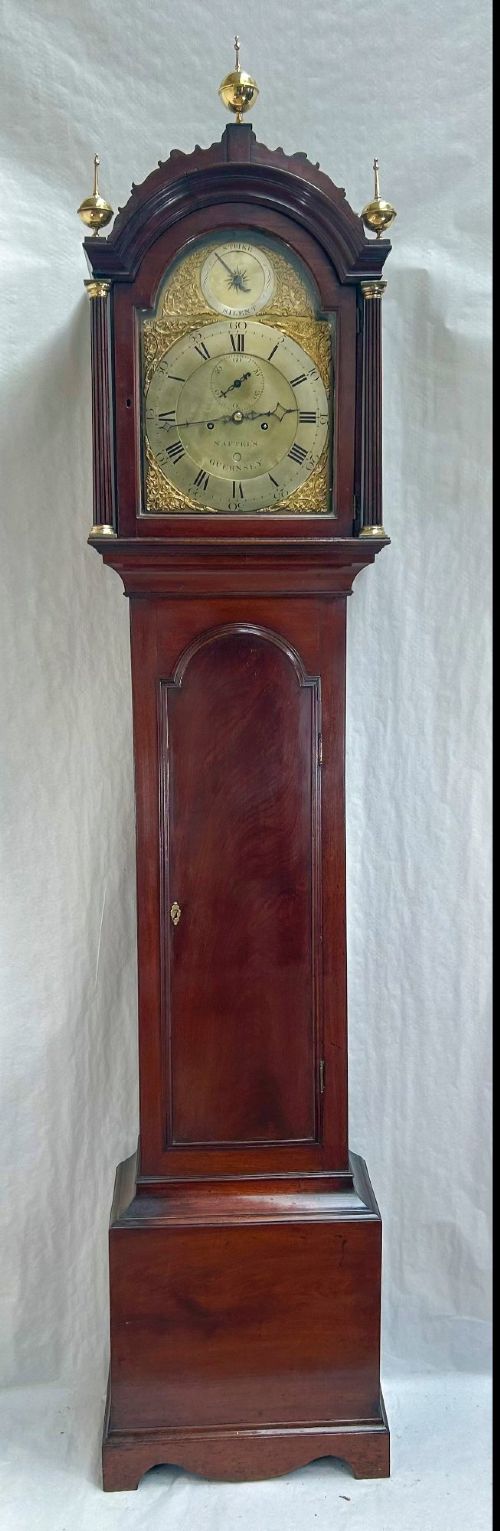
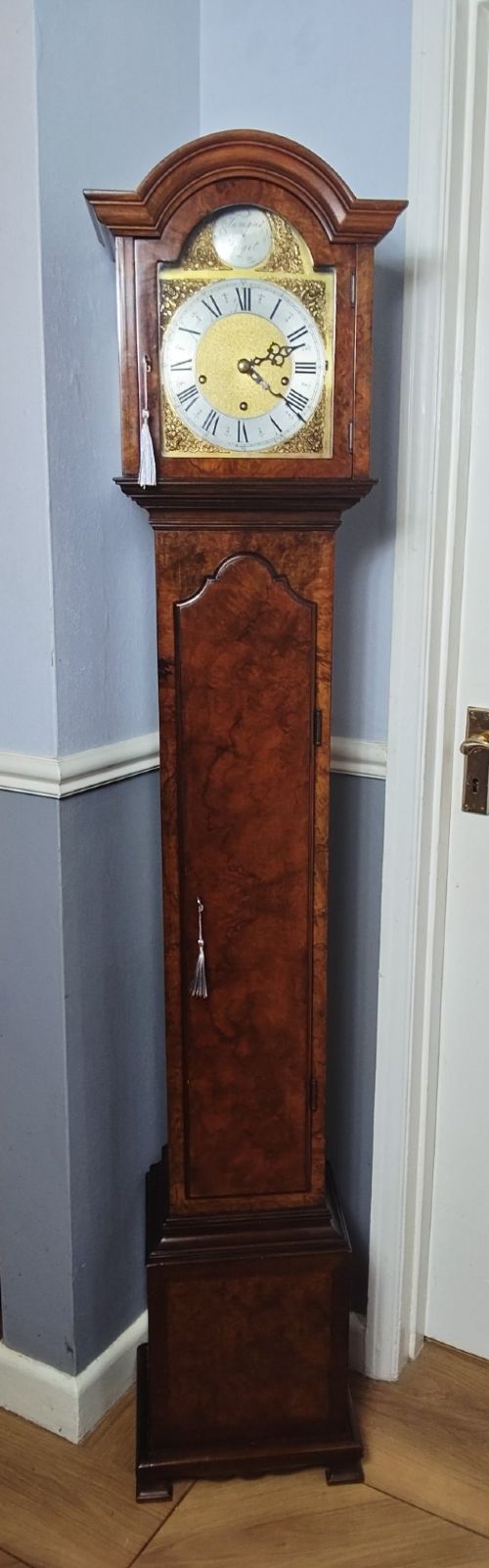
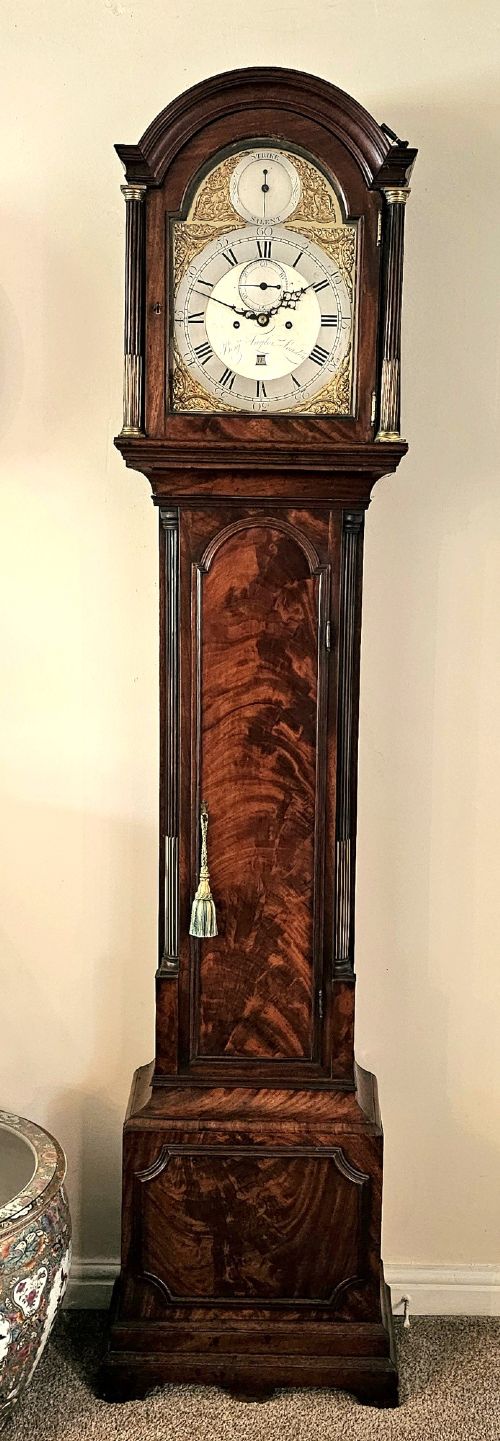
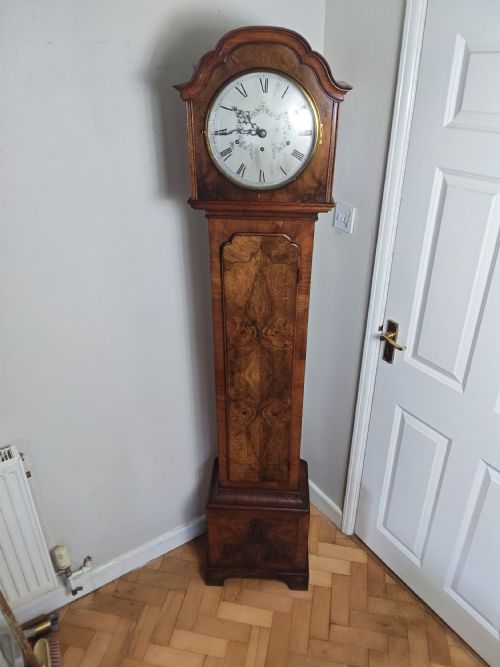
An arched dial floor clock stands upright in a tall timber case, enclosing a weight-driven or spring-driven mechanism that tells the hour and often tracks the moon or date. These tall timepieces appear most frequently as 18th Century, Georgian, and 19th Century longcase clocks, alongside smaller Edwardian and later 20th-century grandmother clocks.
Makers housed these movements in narrow wooden trunks protected by glass doors and topped with brass-faced or painted arched dials. The form ranges from grand London architectural pieces by makers such as Benjamin Taylor and Francis Perigal down to compact regional walnut and oak examples built for domestic halls.
How they were made
Cabinetmakers constructed the tall cases using native and imported hardwoods like mahogany, oak, and walnut, frequently applying figured flame mahogany or burr walnut veneers to the principal surfaces. These timbers were selected for grain pattern and stability, housing long brass pendulum rods and heavy cast weights inside the trunk.
Dial faces combined engraved brass chapter rings, spandrels, and steel hands, while later regional and 19th-century versions featured hand-painted enamel scenes within the arch. Movements utilised brass wheel trains and steel arbors, assembled by hand to regulate the strike and chime trains.
Object classifications include longcase clocks, grandfather clocks, grandmother clocks, and floor clocks alongside regional UK workshops.
What varies in quality
The sophistication of the brass or painted dial work and the crispness of the case carvings define the upper tier of these clocks. Superior examples display finely chased brass spandrels, silvered chapter rings, and secondary complications such as moon rollers or quarter-chiming gear.
Proportion and timber selection dictate the baseline of execution. Finer pieces employ thick walnut or flame mahogany veneers matched symmetrically across the door and base, whereas standard production relies on plainer oak or straightforward mahogany boards.
Gillett & Johnston·James Field·Benjamin Taylor·Elliott·Priory of Dundee·Bravingtons·Handley & Moore·William Allam·James Tregent·Edward Upjohn·Francis Perigal·William Wady
The Arched Dial Floor Clock Glossary
- Longcase clock
- A tall pendulum clock enclosed in a wooden case standing directly on the floor. These timepieces are frequently referred to as grandfather clocks.
- Grandmother clock
- A scaled-down version of the standard longcase clock, typically produced during the Edwardian period and the early 20th century. They occupy less floor space while retaining weight-driven or spring-driven movements.
- Spandrel
- An ornamental corner piece fitted into the triangular spaces surrounding a circular or arched clock dial. They are cast in brass and often chased or gilt.
- Arch dial
- A clock face featuring a curved semi-circle rising above the square chapter ring. This upper section frequently houses a moon roller or subsidiary strike-silent dial.
- Chapter ring
- The circular ring fixed to the dial face that bears the numerals for the hours and minutes. They are usually silvered brass.
Arched Dial Floor Clock: Frequently Asked Questions
What is a grandmother clock?
A grandmother clock is a smaller, slender version of the traditional longcase clock. They generally date from the 20th century and Edwardian eras, standing lower in height.
Their compact proportions allow them to fit easily into modern hallways and smaller reception rooms without dominating the space.
How do 8 day clocks work?
An 8 day clock uses suspended cast weights or spring barrels that require winding roughly once a week via a crank inserted through the dial face.
This mechanism drives the pendulum and train wheels, operating the timekeeping and any additional strike or chime functions.
Where should a floor clock stand?
A floor clock requires a stable, level surface against an interior wall to maintain the even beat of the pendulum. Placing it away from direct sunlight and drafts preserves the wood and veneer.
Solid floors prevent vibrations from interfering with the accurate operation of the internal movement.