


Apothecary Jar Vessel
An apothecary jar vessel holds centuries of medicinal history, bringing utilitarian ceramic and glass forms into domestic display.
Apothecary Jar Vessel
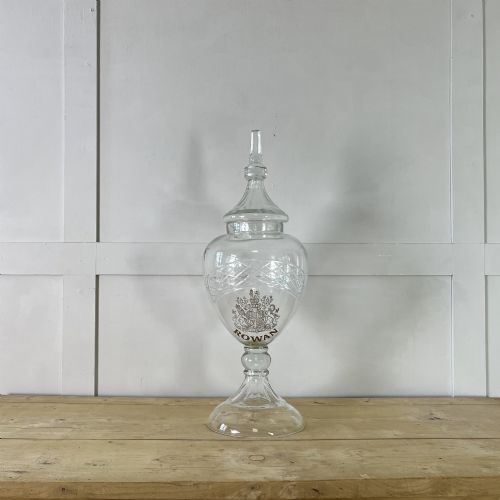
An apothecary jar vessel spans centuries of pharmacy and apothecary storage, encompassing drug jars, albarellos, carboys, and bottles. Pieces on this page trace periods from the eighteenth century through the Victorian and Edwardian eras, reflecting both English and continental origins.
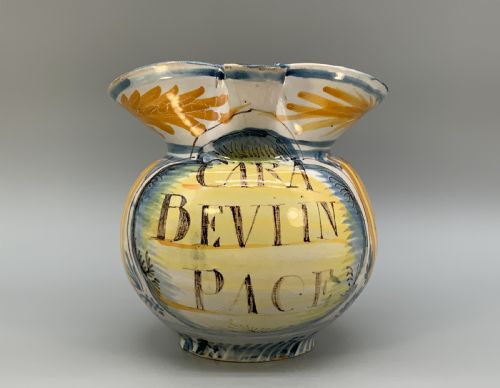
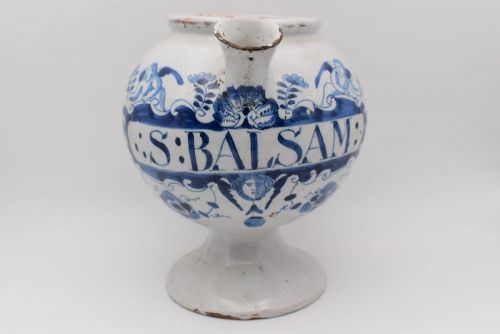
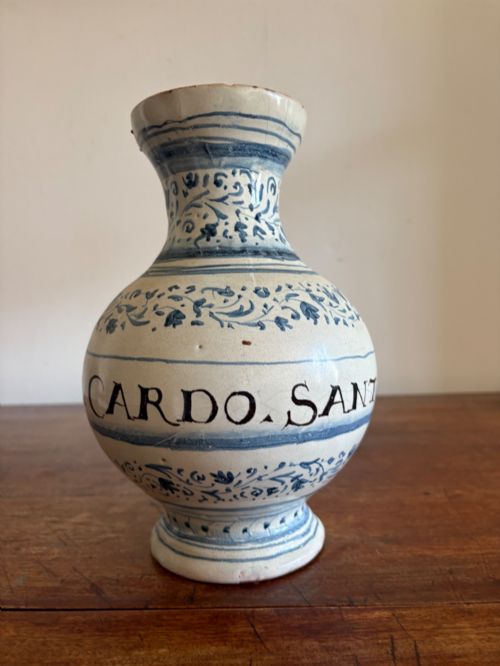
Buyers encounter earthenware, tin-glazed faience, and hand-blown or cut glass containers designed to hold dried herbs, wet medicines, and chemical compounds. Forms range from straight-sided albarellos and handled jugs to large display carboys and covered storage vessels.
Materials and technique
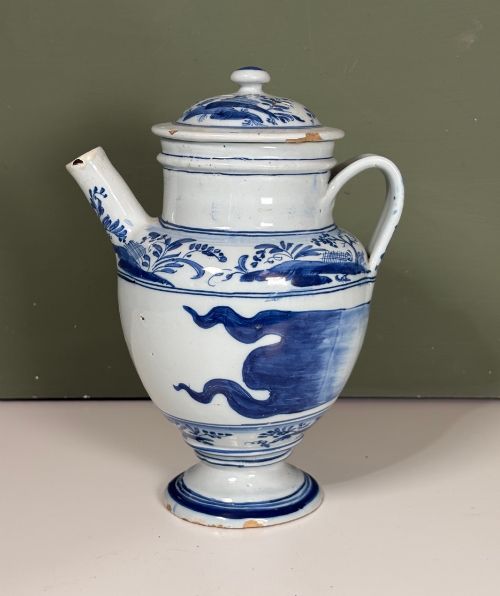
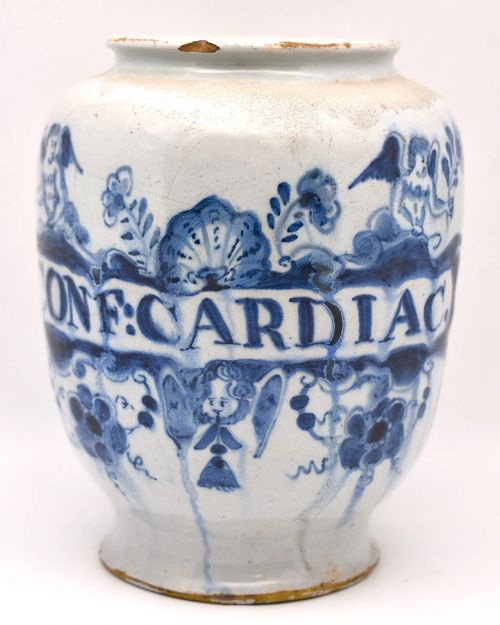
Pottery examples rely on earthenware and tin glaze, deploying blue and white pigments or polychrome manganese and yellow glazes to decorate drug labels and pictorial motifs. Many ceramic pieces demonstrate traditional maiolica and delftware techniques originating from Italian, Dutch, and English workshops.
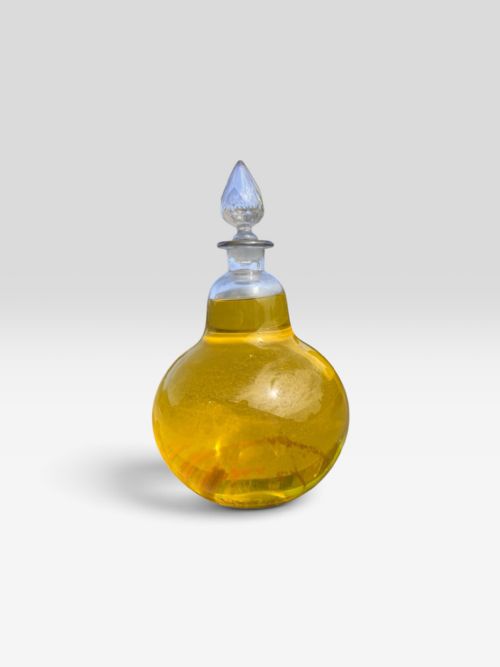
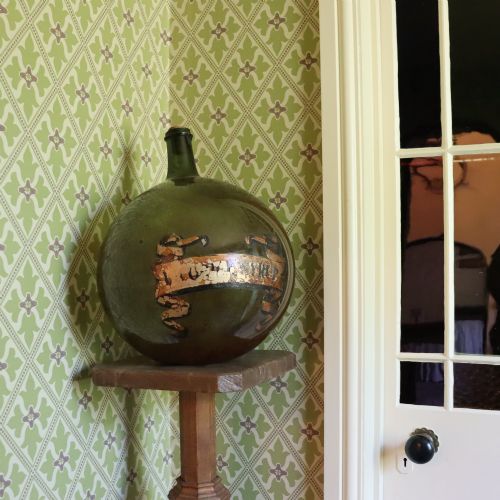
Pharmacists displayed massive glass carboys in windows so colourful liquid contents could advertise their trade to passing street traffic.
Quality factors
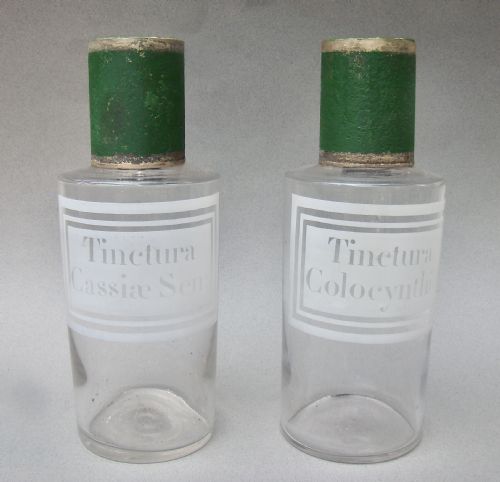
The distinction between standard containers and finer items rests upon the clarity of painted drug inscriptions, the crispness of tin glaze coverage, and the precision of glass cutting. Hand-blown glass bubbles and irregularities show individual manufacture, while painted panels reveal the skill of the decorator.
Proportion and survival of original covers dictate desirability among storage jars and albarellos. Pieces retaining clear historical labels, distinct regional palettes, and intact polychrome decoration stand apart from utilitarian vessels lacking ornamentation.
Samuel Alcock and Co
The Apothecary Jar Vessel Glossary
- Albarello
- A cylindrical earthenware jar designed for pharmacy use, often waisted to allow stacking or easy gripping. Originating in the Middle East, this form became a staple of Italian and Dutch delftware production.
- Carboy
- A large glass or earthenware vessel used to hold liquids, frequently displayed in apothecary windows to attract custom. These heavy containers are often hand-blown and measure significant heights.
- Tin glaze
- An opaque white glaze containing tin oxide, applied to earthenware before painting and firing. This technique provides a smooth surface for cobalt blue or polychrome drug inscriptions.
- Drug jar
- A ceramic container marked with specific medicinal contents, categorised as dry or wet depending on the substance stored. These pieces often feature painted cartouches naming herbal preparations.
- Faience
- European tin-glazed earthenware, particularly associated with French, Dutch, and Italian traditions. The technique supports intricate painted decoration over an absorbent clay body.
Apothecary Jar Vessel: Frequently Asked Questions
What did apothecary jars hold?
These vessels contained dry herbs, powders, syrups, and chemical preparations used by pharmacists and apothecaries in past centuries.
Containers were labelled clearly to identify specific medical ingredients required for daily compounding.
How do I date an apothecary jar?
Dating relies on material composition, glaze characteristics, and potting techniques visible across eighteenth and nineteenth-century examples.
Ceramic drug jars often display stylistic shifts in lettering and pictorial cartouches specific to Italian, Dutch, or English production periods.
Are glass and ceramic jars cleaned easily?
Glass and tin-glazed earthenware surfaces tolerate gentle washing with warm water and mild soap to remove dust.
Aggressive cleaning agents should be avoided to protect delicate enamel highlights, gold leaf, and historical surface patinas.
Why do some jars have spouts?
Vessels equipped with spouts and handles functioned as wet drug jugs for pouring liquid medicines and syrups.
These pieces typically feature wide mouths and secure covers to prevent evaporation of liquid contents.