


Yellow Majolica Vessel
A yellow majolica vessel brings striking colour and historical craft to any room, offering traditional earthenware forms painted in vibrant glazes.
Yellow Majolica Vessel
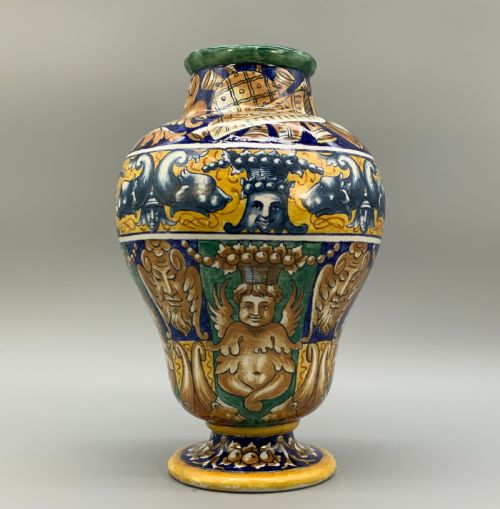
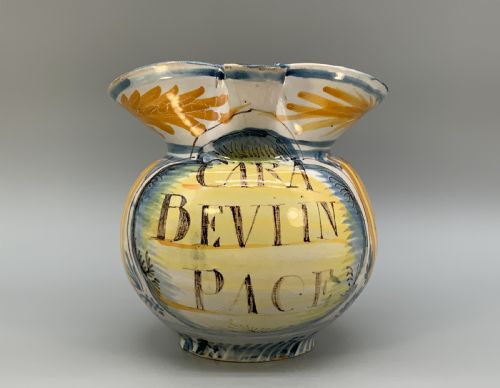
A yellow majolica vessel is typically earthenware covered in a tin glaze, spanning periods from the eighteenth century through the nineteenth century and into nineteen hundred. These pieces encompass apothecary jars, pharmacy jugs, apothecary wet drug jars, and decorative vases or urns.
The styles seen across these items include Renaissance revival, Italian baroque, and Victorian interpretations. Buyers frequently encounter nineteenth century pieces alongside eighteenth century examples and early twentieth century water vessels.
Forms range from large pharmacy albarellos to umbrella stands and covered vases. The heritage connects closely to Italian traditions and nineteenth century revival movements.
Materials and construction methods
Maker construction relies heavily on earthenware and terracotta formed into vessels, jars, and stands. These bodies are then coated in tin glaze or lead glaze to provide a smooth ground for decoration.
Surface finish is achieved through polychrome painting, sometimes incorporating manganese, yellow pigments, and metallic lustre. Firing techniques fix these tin-glazed earthenware surfaces to create durable, brightly coloured decorative objects.
Object forms include apothecary jars, pharmacy jugs, umbrella stands, and decorative vases spanning multiple centuries.
Distinctions in quality and execution
Quality separates through the precision and depth of the polychrome painting. Stronger examples display confident brushwork in yellow, manganese, and associated colours across tin-glazed earthenware surfaces.
The sophistication of the revival style influences the overall merit of a piece. Finer items demonstrate careful adherence to historical Italian baroque or Renaissance forms, whereas simpler domestic wares exhibit more robust, utilitarian execution.
Cantagalli Faience·Minton·Albert Carrier
The Yellow Majolica Vessel Glossary
- Majolica
- A type of pottery glazed with tin enamel that accepts opaque colours painted on the raw glaze before firing. This technique produced brightly coloured wares across Italy and later in Victorian Britain.
- Albarello
- A type of cylindrical earthenware jar used by apothecaries to hold drugs and ointments. These vessels often feature waisted sides for easier handling.
- Tin Glaze
- An opaque white glaze made by adding tin oxide to a lead glaze. It provides a bright surface for painting polychrome designs.
- Manganese
- A metallic oxide used in ceramics to produce deep purple, brown, or black tones in painted decoration. It frequently appears alongside yellow and polychrome pigments.
- Polychrome
- Decoration employing multiple colours on a single ceramic object. In these wares, yellow often highlights details against a tin-glazed background.
Yellow Majolica Vessel: Frequently Asked Questions
What is a yellow majolica vessel?
A yellow majolica vessel is a tin-glazed earthenware piece, such as a pharmacy jar, vase, or water vessel, decorated with coloured glazes.
These items range from eighteenth-century examples to nineteenth-century revival pieces made in Italy and Britain.
How were pharmacy jars used?
Pharmacy jars, including albarellos and wet drug jars, were utilised by apothecaries to store dry drugs, ointments, and liquids.
Their distinctive cylindrical shapes allowed them to be stored efficiently on shelves while displaying contents clearly.
How do I identify nineteenth-century pieces?
Nineteenth-century pieces often reflect revival styles such as Italian Renaissance or baroque influences. Examine the tin glaze, polychrome painting, and terracotta or earthenware body.
Makers and stylistic markers help distinguish these revival items from earlier traditional wares.
How do I clean my vessel?
Clean tin-glazed earthenware gently with a soft, dry cloth to remove dust. Avoid using water, abrasive cleaners, or chemical solvents.
Because the glaze and metallic lustre can be sensitive, minimal handling preserves the historic surface finish.