



Apothecary Balance Scales
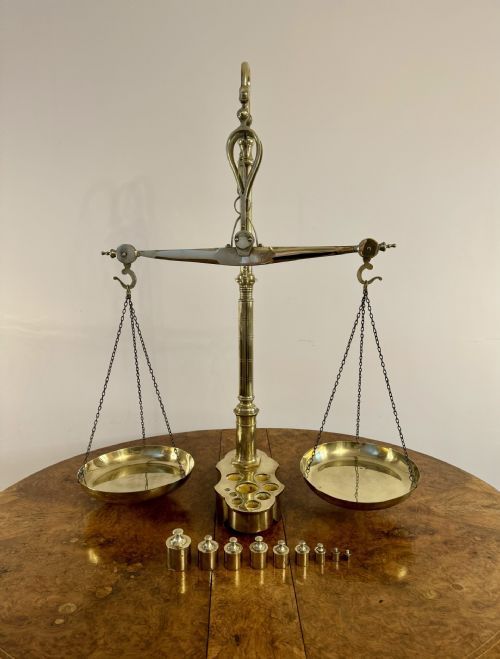
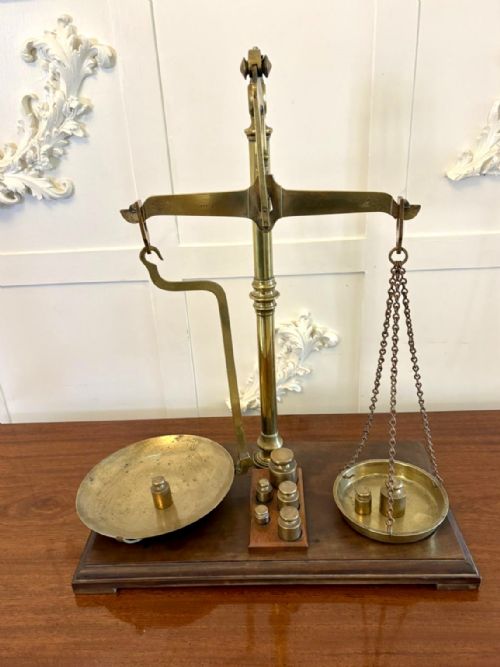
These apothecary balance scales are precision instruments of brass, mahogany, and iron designed for exact measurement, prized today for their utilitarian elegance.
Apothecary Balance Scales
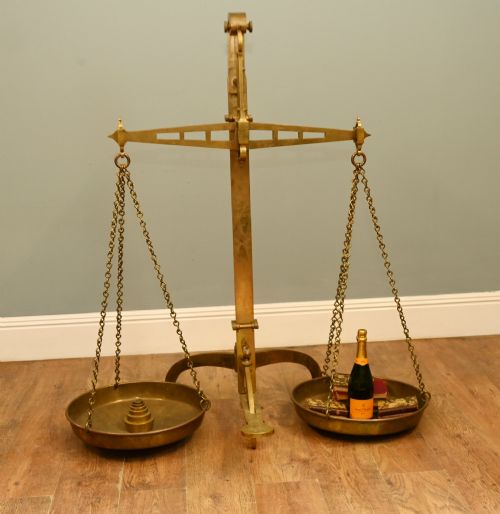
When you search for apothecary balance scales, you are looking at scientific and commercial weighing instruments that date primarily from the Victorian period through to the mid-twentieth century. The selection ranges from countertop brass and mahogany beam scales to larger verification balances and hanging designs.
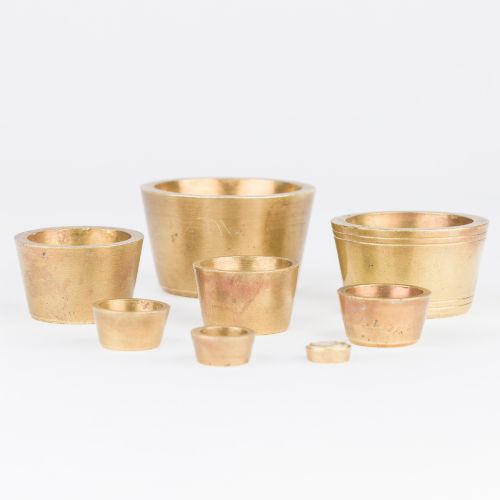
The most common versions met on this page are brass beam scales mounted on hardwood bases, often retaining their original sets of weights in wooden blocks. These pieces reflect rigorous standards of municipal and commercial measurement, having served in chemists, boroughs, and surgeries.
Object types span from simple balance scales and scale weights to precision scientific instruments and doctors scales. Styles embrace Victorian and industrial aesthetics alongside British country and Dutch traditional forms.
Materials and construction
Makers utilised bright brass for the beams, pans, and indicator pointers to resist corrosion and maintain precise weight tolerances. This metal was frequently polished to a high sheen, contrasting with the structural elements.
Bases and cabinet work were constructed from dense hardwoods such as mahogany and oak, often incorporating dovetailed drawers to house fractional weights. Iron, cast iron, and wrought iron provided the heavy structural support needed for larger bench and floor scales.
Apothecary Balance Scales Retail Price Guide 2026
Typical asking prices for apothecary balance scales among the pieces listed under this phrase on Sellingantiques today, from the lower quarter to the upper quarter. They describe what is for sale here now, not the wider market.
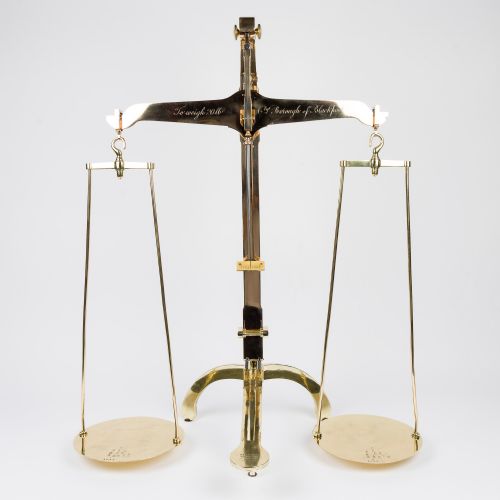
Some scales were deemed so trustworthy they were sworn into municipal service for the City of Blackpool and the City of Lancaster.
Distinctions in quality
Quality in these instruments rests on the precision of the beam movement and the integrity of the original components. Superior examples retain matching maker stamps across the beam, pans, and associated weights, indicating a cohesive, factory-matched set.
Finer pieces display crisply engraved maker signatures, robust mahogany joinery without later alterations, and sensitive pivot mechanisms that respond to the slightest differential. Lesser examples may show mismatched pans, replacement threaded screws, or worn knife-edge bearings that blunt the instrument's mechanical responsiveness.
Day & Millward·Parnall & Sons of Bristol·De Grave, Short, & Co·Oertling·Bartlett & Sons·Fairbanks Scale Co
The Apothecary Balance Scales Glossary
- Beam
- The horizontal balancing arm of the scale from which the weighing pans are suspended. It forms the central mechanical component of any precision balance.
- Troy ounce
- A system of units of mass used for precious metals and apothecary items. Sets of weights conforming to this standard are frequently found alongside these scales.
- Verification balance
- A heavy-duty scale used by municipal authorities to inspect and verify commercial weights and measures. These bear regional borough inscriptions.
- Treen
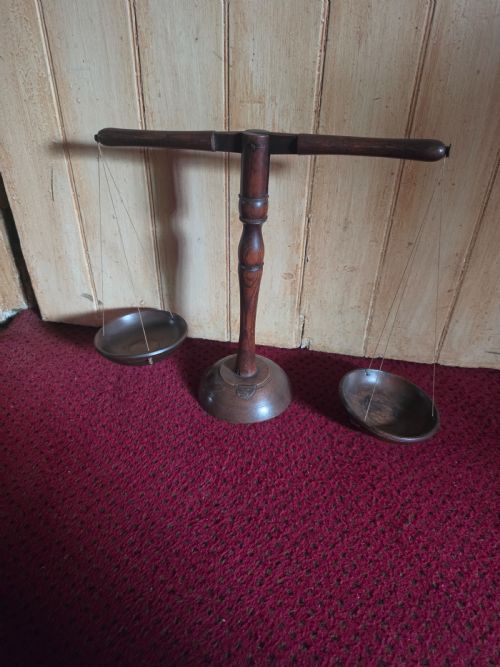
- Small domestic or scientific items made of turned or carved wood. Welsh examples appear in the historical record of these instruments.
Apothecary Balance Scales: Frequently Asked Questions
How do I date an apothecary balance?
Dating relies on a combination of material changes, case styles, and maker inscriptions stamped onto the brass beams. Victorian examples typically feature heavy mahogany bases and refined hand-engraved maker details.
Later twentieth-century versions often incorporate cast iron elements, simpler oak mountings, and stamped rather than engraved lettering. Checking for municipal verification stamps provides further chronological clues.
Are these scales still accurate?
Many of these precision instruments retain a high degree of mechanical accuracy if the central knife-edge pivots remain undamaged. They respond to minute changes in weight when properly levelled on a flat surface.
However, centuries of use and movement mean they are best regarded as decorative and collectible items rather than calibrated laboratory tools.
How should I clean brass scales?
Brass components respond best to gentle dusting and occasional light wiping with a dry or very slightly damp microfiber cloth. Heavy chemical polishing removes the aged patination that collectors value.
Wooden bases benefit from a light application of traditional beeswax to nourish the antique grain without altering the surface finish.
What is the difference between a beam scale and a counter scale?
Beam scales suspend two pans from a central pivoting arm, operating on the pure principle of equilibrium against standard weights. They prioritise extreme measurement precision.
Counter scales often use a lever platform below the pan for faster, heavier retail weighing in shops and surgeries rather than delicate apothecary work.