





Antique Ziegler Carpet
An antique ziegler carpet brings room-filling Persian artistry into a home, woven for Western tastes in the late nineteenth century.
Antique Ziegler Carpet
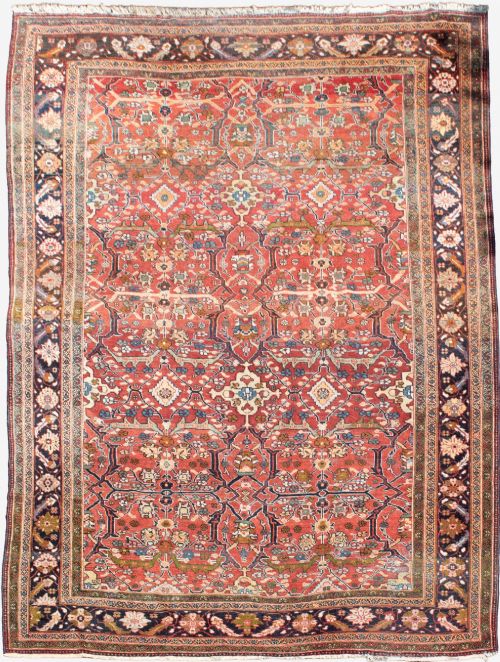
An antique ziegler carpet represents a specific commercial evolution of Persian weaving produced during the late nineteenth century, primarily in the Sultanabad and Mahal regions. These floor coverings were designed by European firms like Ziegler and Co. to suit Western domestic interiors, combining traditional Persian motifs with subdued palettes.
The pieces appearing on this page span the 1880s, 1890s, and the turn of the twentieth century, appearing both as room-sized carpets and larger formats suited to country houses. They frequently bridge the classifications of Persian Ziegler, Sultanabad, and Fereghan carpets through shared design lineage.
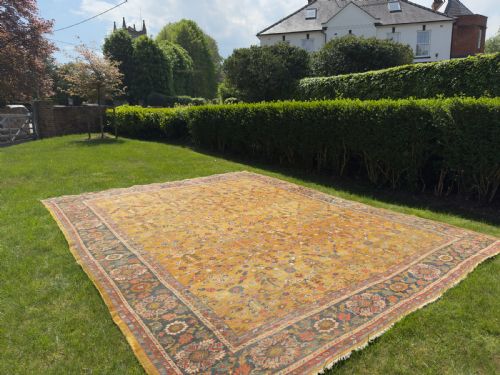
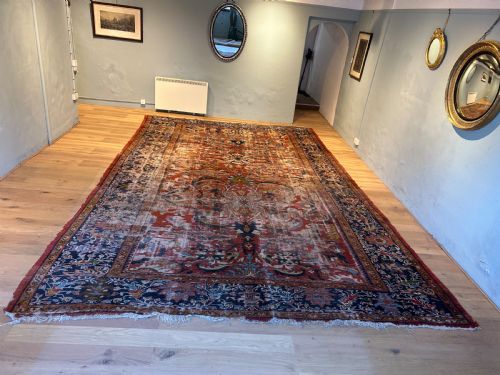
Buyers encounter these textiles in various scales, from square formats to expansive palace-sized floor coverings measuring over five metres in length. The prevalent aesthetic relies on balanced allover patterns rather than central medallions, creating an open field that complements period and modern furniture alike.
Materials and construction
These floor coverings utilise a wool pile knotted onto a cotton foundation, a sturdy construction that allowed for both fine detail and enduring service. The quality of the wool varies across regional workshops, influencing the texture and drape of the textile.
Natural and early aniline dyes created the muted terracotta, soft blues, and ivory tones characteristic of the type. Weavers employed traditional Persian knotting techniques while following specific cartoon designs supplied by Western manufacturers.
Antique Ziegler Carpet Retail Price Guide 2026
Typical asking prices for ziegler carpet among the pieces listed under this phrase on Sellingantiques today, from the lower quarter to the upper quarter. They describe what is for sale here now, not the wider market.
Victorian drawing rooms welcomed these Persian designs because their muted tones finally stopped the family retriever from looking out of place.
Variations in quality
The distinction between standard examples and the finest pieces rests upon the crispness of the drawing and the subtlety of the colour palette. Master weavers achieved greater harmonic balance in the secondary tones and greater precision in the curvilinear floral motifs.
Pile depth and wool density also divide the grade of these carpets, as does the preservation of the original outer borders and selvedges. Larger formats maintaining structural integrity throughout the field command particular attention among examples from this era.
Ziegler and Co
The Antique Ziegler Carpet Glossary
- Sultanabad
- A regional designation for carpets woven in and around the city of Sultanabad in West Persia. These pieces are closely linked to the production history of nineteenth-century trade carpets.
- Mahal
- A term describing rugs and carpets originating from the smaller village workshops surrounding Sultanabad. They typically share design characteristics with larger commercial productions of the period.
- Allover design
- A pattern arrangement where floral or geometric motifs repeat uniformly across the field without a dominant central medallion. This layout allows furniture to sit upon the textile without obscuring a central focus.
- Foundation
- The underlying structural grid of warp and weft threads that supports the knotted wool pile. In these pieces, cotton provides a stable and reliable base.
- Polonaise design
- A decorative style inspired by seventeenth-century Persian silk carpets featuring intricate floral scrolls and metallic thread work, later reinterpreted in nineteenth-century commercial weaving.
Antique Ziegler Carpet: Frequently Asked Questions
How do I style an antique ziegler carpet?
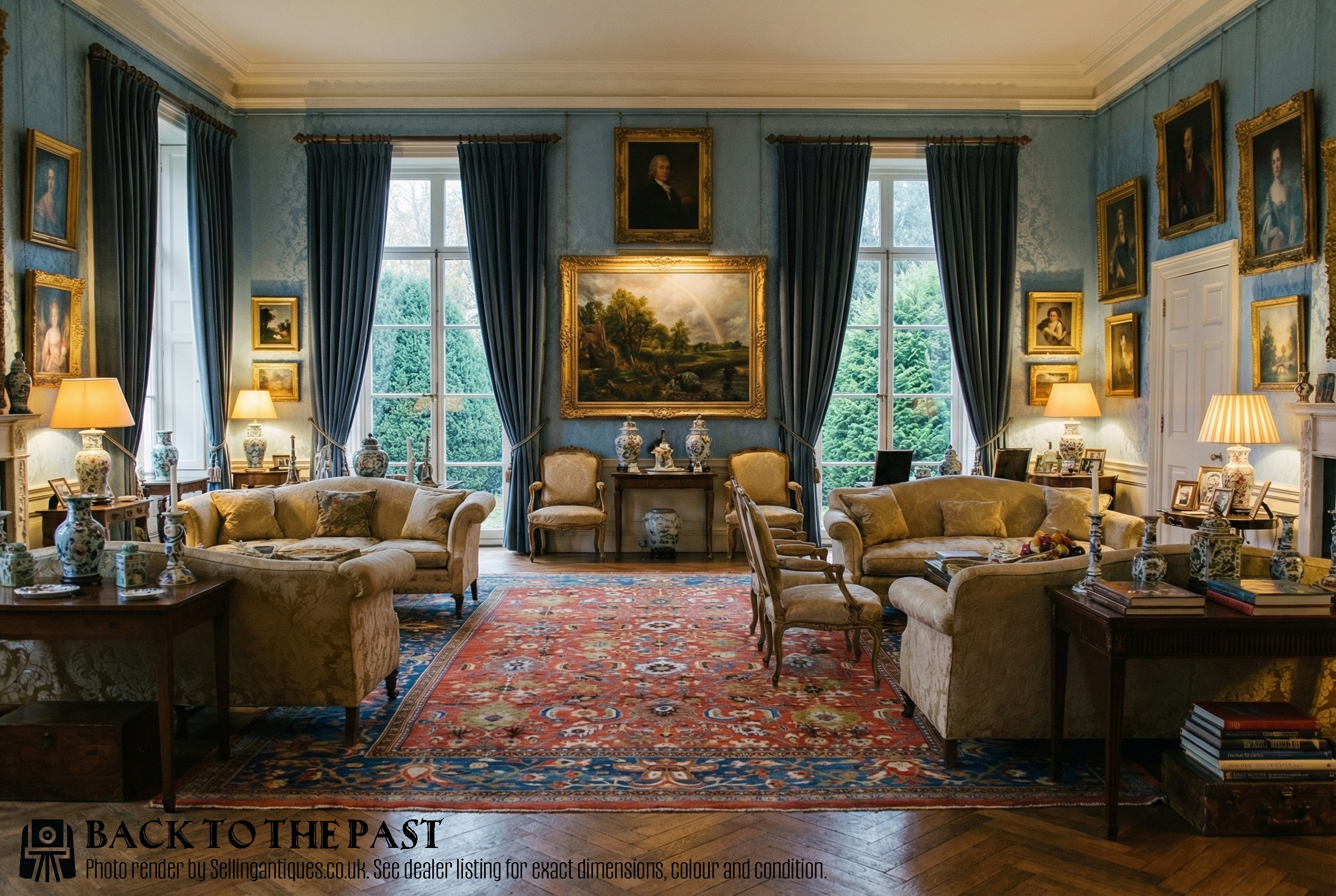
These carpets suit large reception rooms and sitting areas where their subdued palettes complement wooden floors and traditional furniture. The open compositions allow dining tables or coffee tables to sit comfortably on the field without obscuring the core design.
Because the colours tend towards soft ivories, muted reds, and gentle blues, the carpets integrate easily into neutral contemporary interiors as well as period spaces.
Where were these carpets made?
Production centred on the West Persian region of Sultanabad and its surrounding Mahal villages during the late nineteenth century. European trading firms established operations here to commission rugs specifically tailored to Western aesthetic preferences.
Local workshops employed traditional Persian weaving techniques while adapting scale and colour to meet the demands of British and European homes.
How do I tell a Ziegler from a Sultanabad?
The terms often overlap because Ziegler and Co acted as a major exporter and designer working directly within the Sultanabad region. Carpets bearing the Ziegler name typically display European-influenced colour palettes and spacious floral layouts.
Sultanabad is the broader geographical origin, encompassing various village workshops that produced similar room-sized and large-format decorative floor coverings.
Are these carpets suitable for heavy foot traffic?
The sturdy wool pile and firm cotton foundations were originally built to withstand the demands of nineteenth-century country house interiors. Regular rotation and a quality underlay help protect the foundation fibres during daily use.
Gentle vacuuming without a beating bar maintains the pile while preserving the historical integrity of the wool and natural dyes.