
Antique Writing Lowboy
When you search for an antique writing lowboy, you are looking at compact, drawer-fitted tables designed for correspondence and personal administration.
Antique Writing Lowboy
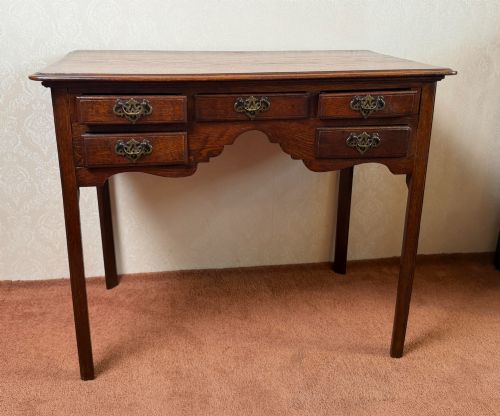
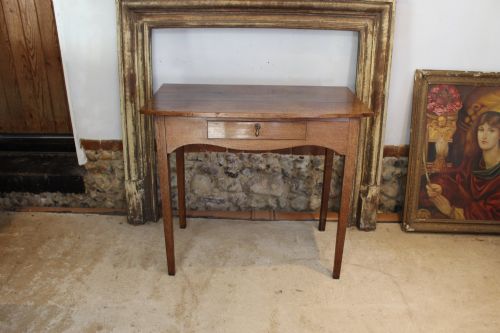
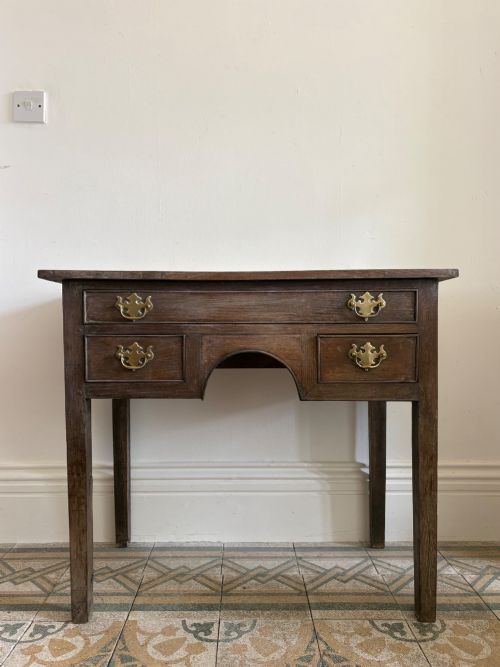
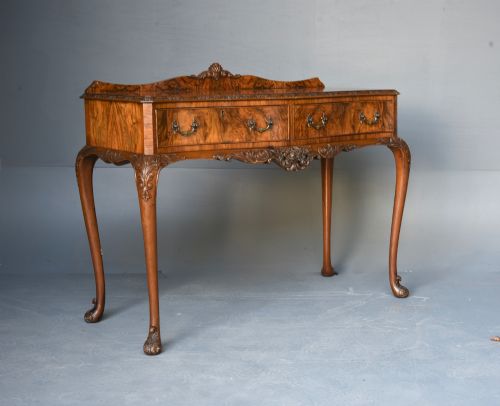
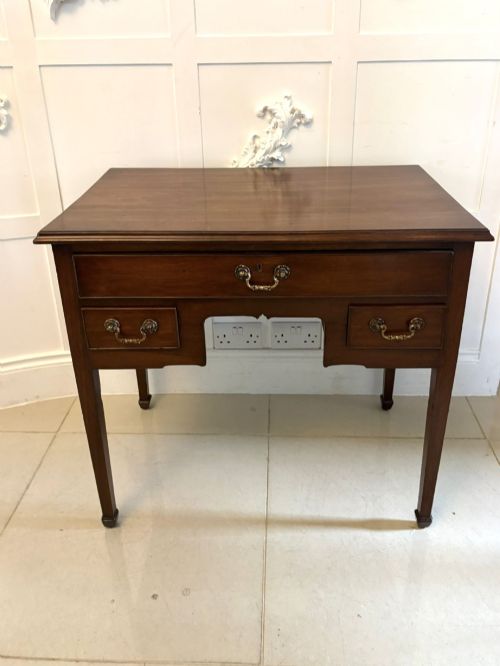
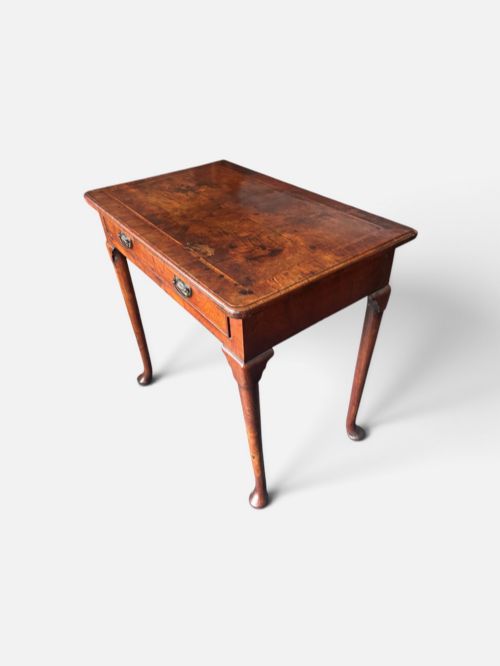
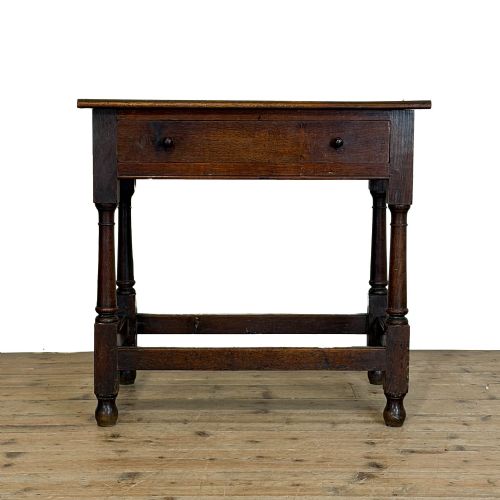
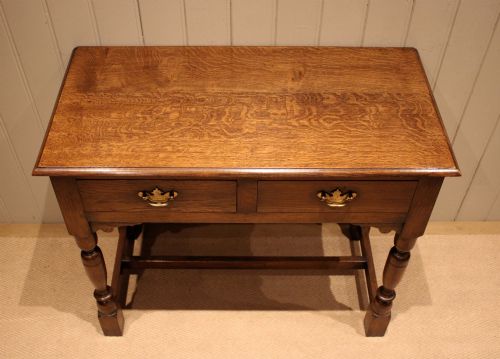
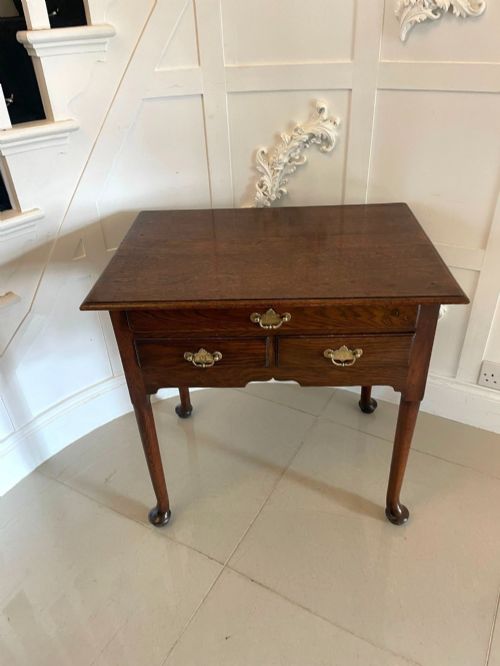
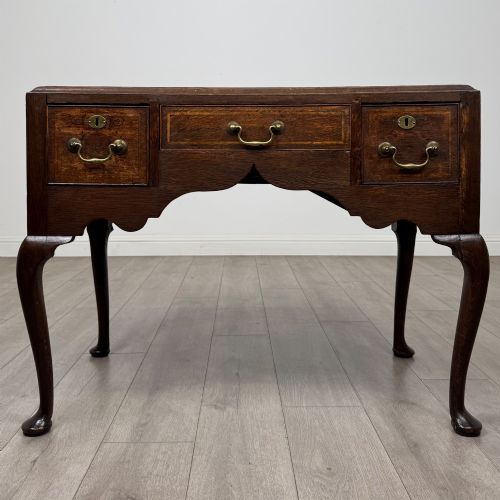
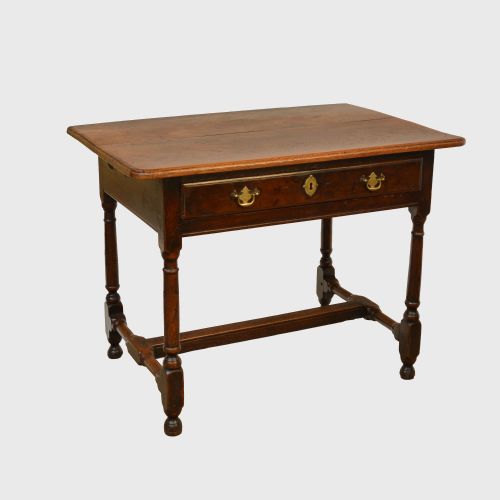
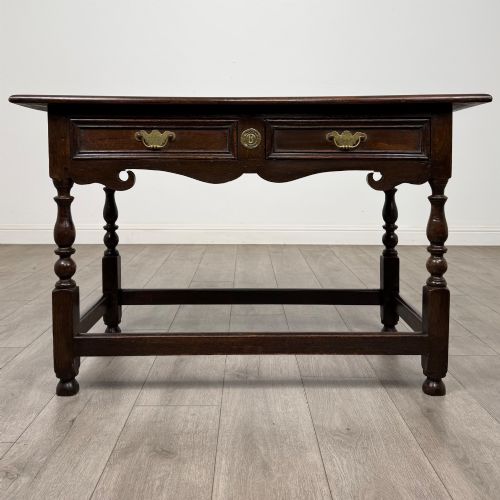
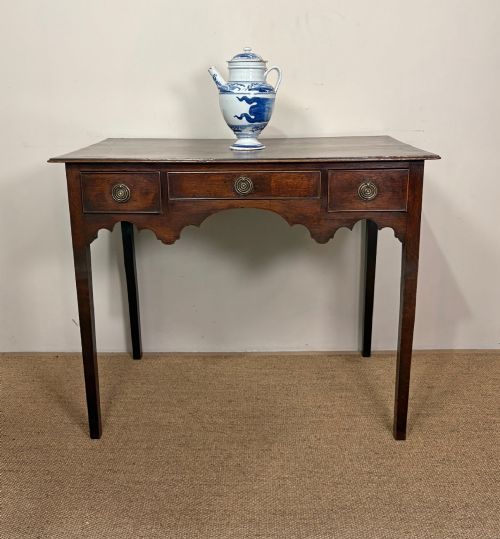
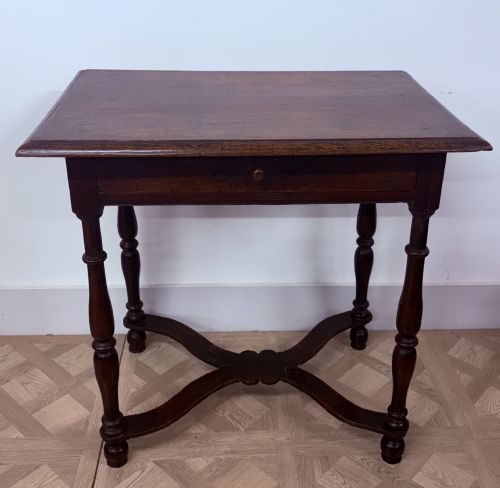
An antique writing lowboy typically presents as a small, waist-height table fitted with one, two or three drawers beneath a rectangular top. These pieces served historically for personal correspondence, grooming, or occasional ledger work before dedicated desks took over larger rooms. On this page, the form most frequently appears in 18th-century oak or mahogany from the Georgian period, often described interchangeably as side tables or dressing tables.
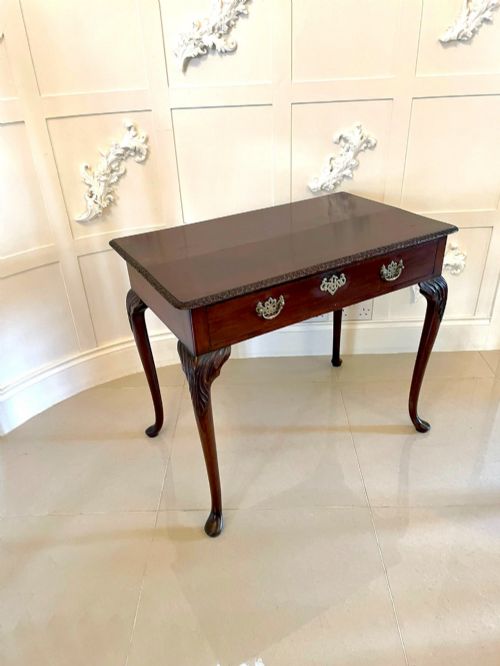
The proportions are consistently domestic, designed to sit neatly against a parlour or bedchamber wall without dominating the floor space. While many examples rely on simple cabriole or straight legs, others incorporate walnut veneers, cross-banding or modest inlay. The grouping spans periods from the late 17th century through the Georgian era and into later revival pieces, reflecting a continuous tradition of compact storage and writing surfaces.
Materials and construction
Cabinet makers relied primarily on native timbers such as oak, elm, ash and walnut for early pieces, shifting toward imported mahogany as the 18th century progressed. Secondary woods often included deal or pine for drawer linings and internal framing, while surfaces occasionally received burr walnut veneers or decorative bandings.
Drawer construction typically involved hand-cut dovetails, pointing to traditional joinery methods used to withstand daily pulling and pushing. Tops were secured to the base frames using pegged mortise and tenon joints or specialised buttons that allowed the timber to move naturally with seasonal humidity.
Listings feature timbers including oak, walnut, mahogany, elm, ash, cherry and yew across the 17th, 18th and 19th centuries.
Variations in quality
Quality reveals itself in the selection of timber figures, such as the richness of a burr walnut grain or the straightness of quarter-sawn oak rays. Finer examples display more precise dovetailing on the drawer carcasses and careful matching of veneers across the drawer fronts.
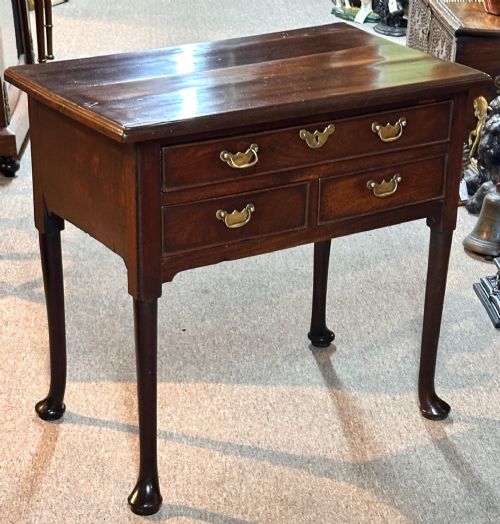
The integrity of the structural frame, including the crispness of turned legs or the elegant sweep of cabriole legs ending in pad or hoof feet, distinguishes superior work. Original brass hardware, such as batwing plates and swing handles, further elevates an example.
The Antique Writing Lowboy Glossary
- Lowboy
- A small table with drawers, standing on four legs, typically used as a writing or dressing table. It emerged in the late 17th century and remained popular through the Georgian period.
- Cabriole leg
- A furniture leg that bends outward in a convex curve and then tapers inward in a concave curve, often ending in a pad foot. This form is frequently seen on Queen Anne and Georgian examples.
- Dovetail
- A joint formed by interlocking wedge-shaped fingers, used extensively in drawer construction. Hand-cut variations indicate older craftsmanship.
- Cross-banding
- A decorative border technique where veneer strips are laid running perpendicular to the main grain of the surface. It adds visual framing to drawer fronts and tabletops.
- Quarter-sawn
- Timber cut radially from the growth rings, producing a stable board with prominent fleck patterns. This cut is common in better quality oak furniture.
Antique Writing Lowboy: Frequently Asked Questions
What is an antique writing lowboy?
An antique writing lowboy is a small, freestanding table featuring one to three drawers beneath a writing surface. They were built primarily during the 17th and 18th centuries for domestic tasks like letter writing and record keeping.
Because of their compact size, they function well today as hallway tables, dressing tables, or compact desk spaces in smaller rooms. Their drawer arrangements provide practical concealed storage while maintaining a light, open silhouette.
How were lowboys used historically?
Historically, these tables served multi-purpose roles in bedchambers, parlours, and dressing rooms. Owners used the surface for writing letters, applying cosmetics, or organising small personal valuables inside the drawers.
They sat comfortably against walls or beneath windows where natural light aided writing. Their portability allowed servants to move them between rooms as household needs shifted throughout the day.
How do I distinguish between periods?
Distinguishing periods relies on observing timber choices, leg shapes, and hardware styles. Late 17th-century pieces often feature sturdy oak construction with straightforward rectangular framing and early turned supports.
Georgian examples frequently showcase mahogany or walnut, introducing refined cabriole legs, bracket feet, or sophisticated drawer configurations. Edwardian or 1920s iterations often emulate these earlier styles using modern machine-cut joinery.
Can I use a lowboy as a modern desk?
Using a lowboy as a modern desk is entirely possible, provided you check the kneehole clearance underneath the drawer rails. Many historical tables were built lower than contemporary desks, so matching them with a low chair or stool is essential.
Their shallow depth makes them ideal for laptops and notebooks, though they lack the cable management and deep storage of modern office furniture.