



Antique Workshop Stool
An antique workshop stool brings real utilitarian grit into a modern room, built for trades like silversmithing, machining, and jewelling.
Antique Workshop Stool
When you search for an antique workshop stool, you are looking at sturdy seating built for nineteenth and early twentieth century trades, including machinist, jeweller, and cutler roles. These pieces reflect the functional demands of mills, laboratories, and factories, showing clear traces of daily labour in their surfaces.
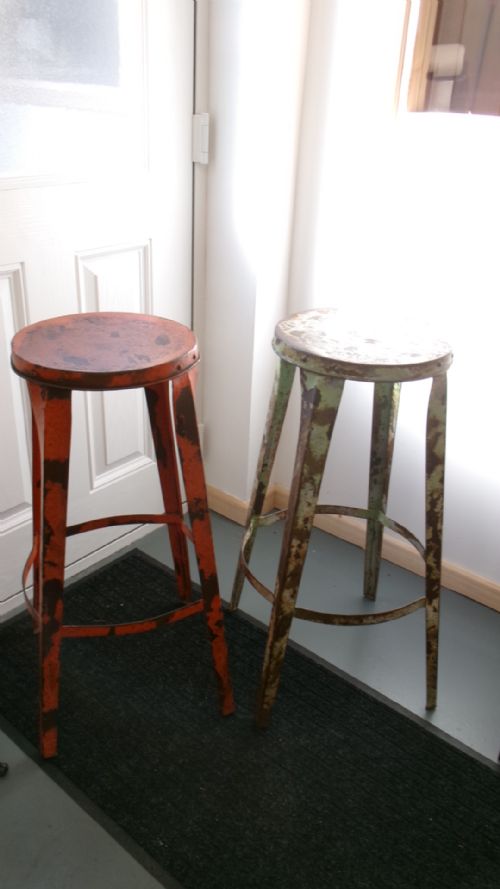
The versions you are most likely to meet on this page span the Victorian era up to the 1930s, embracing styles from industrial utility to vernacular country and Art Deco. Forms range from revolving wooden tops on cast iron bases to riveted metal bar stools and specialised mill worker designs.
Many items derive from specific industrial makers or occupations, such as Birmingham jeweller's stools and Singer or Evertaut workshop chairs. Their survival depends entirely on how heavily they were used on the factory floor or in the artisan's workshop.
Materials and construction
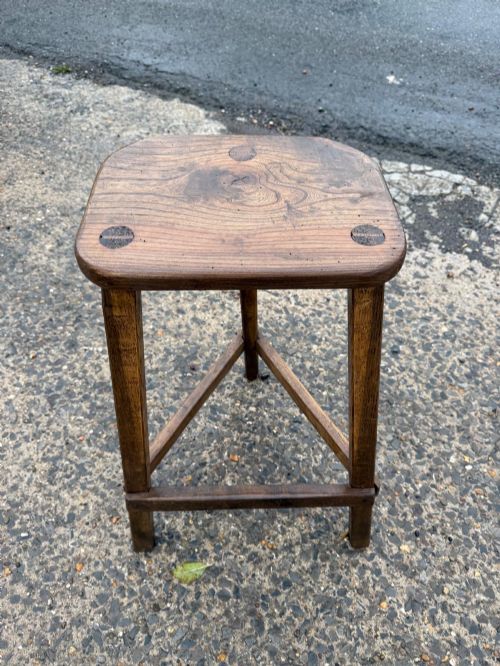
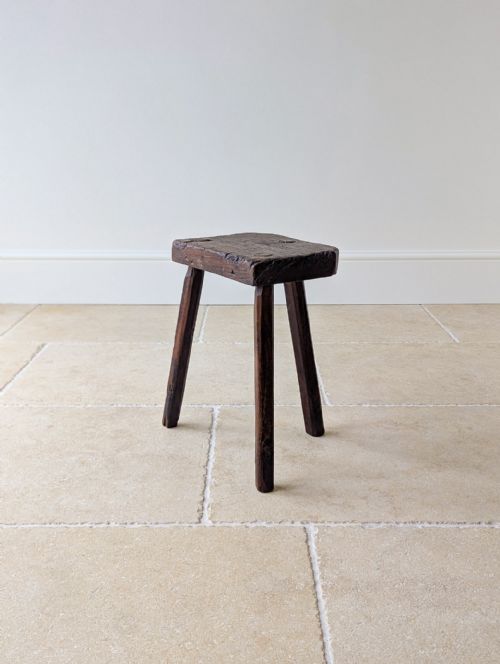
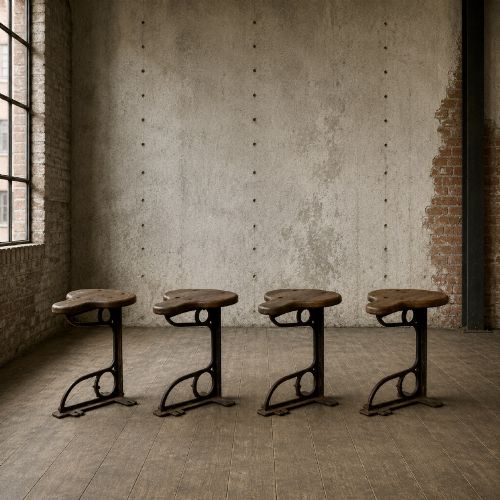
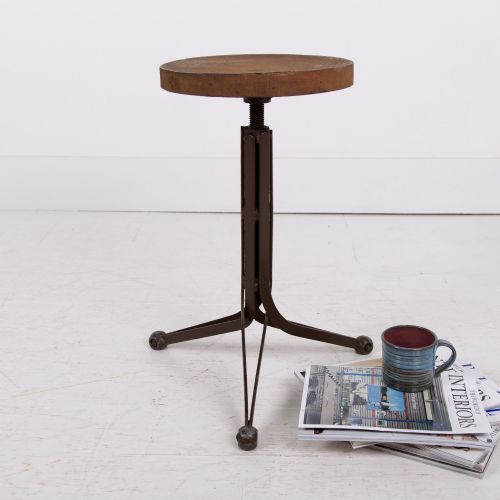
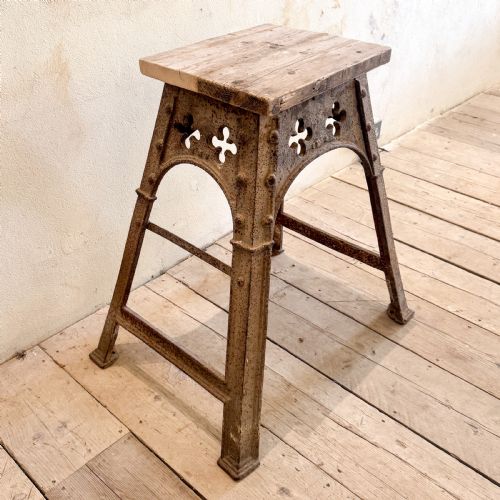
These stools combine heavy cast iron and steel frames with timber seats shaped from elm, ash, oak, pitch pine, or plain timber. Metal components often feature riveted joints and screw mechanisms designed to let the seat revolve.
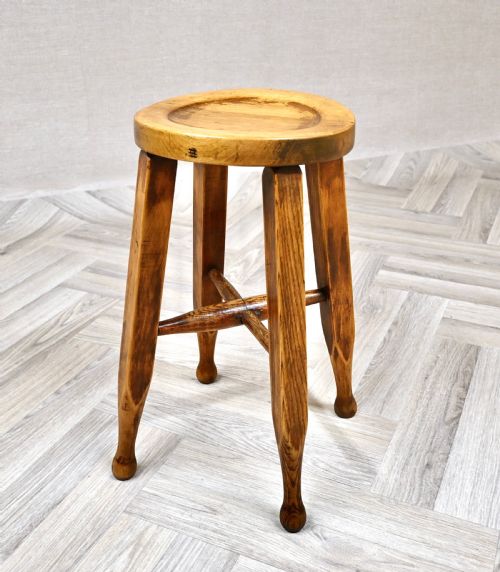
Wooden seats are frequently dished or saddled to provide comfort during long hours at a workbench. Paint finishes, where they survive, show the original protective layers applied in the workshop or factory.
Many machinist stools bear the faint, glossy elbow grease of Victorian artisans who spent decades leaning into their work.
Judging quality in industrial seating
Quality in an antique workshop stool lies in the integrity of its mechanical parts, such as a smoothly operating revolving screw or a solid, heavy cast iron base that provides absolute stability. Lighter domestic copies lack the robust engineering required for heavy industrial trades.
The character of the timber seat also separates standard pieces from finer examples, particularly where the grain of elm or ash has worn smoothly around the deep depressions of the seat. Maker identification marks stamped into the iron or wood add distinct weight to a piece.
Singer·Evertaut
The Antique Workshop Stool Glossary
- Cast iron
- A strong, heavy alloy poured into moulds to form rigid bases and legs. It provides the industrial weight characteristic of factory seating.
- Pitch pine
- A durable, resinous softwood utilised for heavy-duty furniture and flooring. It ages to a deep, warm tone with pronounced grain patterns.
- Revolving stool
- A seat mounted on a threaded spindle or central screw that allows the height to be adjusted by spinning the top. This mechanism was essential for workers shifting positions at heavy machinery.
- Vernacular country
- Domestic or trade furniture built by local craftsmen using regional materials without grand stylistic pretensions. These pieces prioritize direct utility over academic design.
- Industrial utility
- A functional aesthetic born from the manufacturing requirements of the nineteenth and early twentieth centuries. Every component serves a strictly practical purpose.
Antique Workshop Stool: Frequently Asked Questions
What trades used workshop stools?
These stools supported workers across various rigorous occupations, including machinists, silversmiths, jewellers, and mill workers. Cutlers and laboratory technicians also utilised specialised seating designed for long hours at specific benches.
Each trade required slightly different heights, stability levels, and mobility, which explains the diverse range of forms found in industrial furniture.
How do I date an antique workshop stool?
Dating relies on observing the combination of materials, fastening methods, and manufacturing styles visible in the piece. Victorian and nineteenth century examples often feature heavy turned timber and simpler iron frames, while 1920s and 1930s pieces introduce riveted metal and branded factory components.
Patina on the wood and wear on the cast iron bases also help indicate the age and intensity of use.
Are revolving workshop stools adjustable?
Many workshop stools feature a central threaded iron screw that allows the wooden seat to spin upward or downward for height adjustment. This mechanism was vital for workers sharing shared benches or adjusting to different machinery.
Over decades of use, these screws develop a smooth action that helps distinguish period engineering from modern reproductions.
How do I clean an industrial stool?
Maintenance involves preserving the historic surface by dusting timber and applying a microcrystalline wax to protect dry wood and aged metal. Scrubbing away paint splashes or natural wear diminishes the character accumulated through decades of trade use.
Keeping the metal dry prevents further oxidation while maintaining the authentic patina of the workshop.