
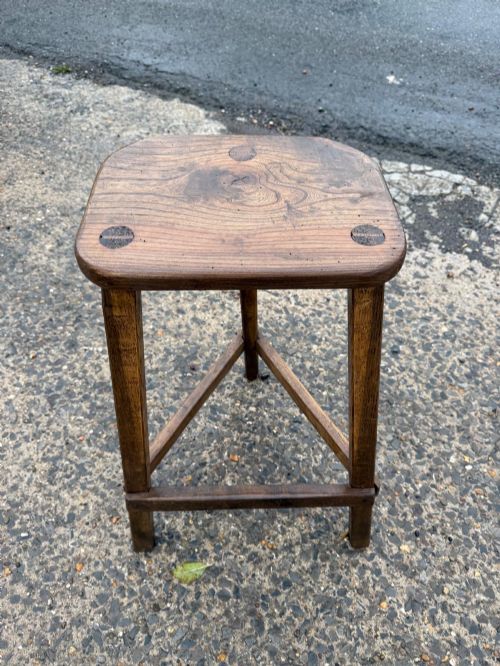


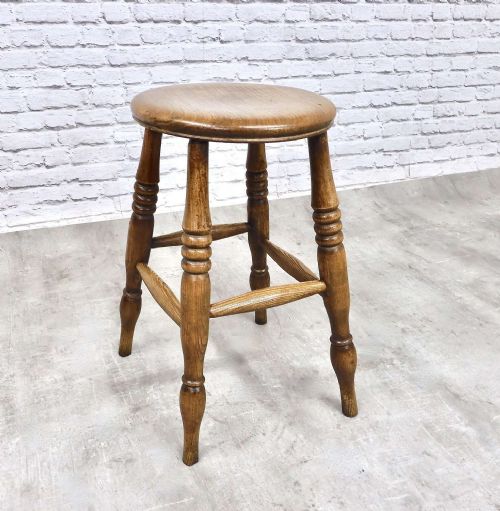


Industrial Wooden Stool
These industrial wooden stool examples bring honest utility and robust character into a modern interior.
Industrial Wooden Stool
An industrial wooden stool is a utilitarian seat built for workshops, factories, railways, and laboratories during the nineteenth and twentieth centuries. These pieces were designed entirely for function, prioritising sturdy construction over decorative flourish for daily labour.
Buyers seeking an industrial wooden stool will encounter forms originating from the nineteenth century, Edwardian era, and the nineteen-thirties. The selection includes mill worker seats, machinist stools, and bar stools, alongside related workshop seating and library steps.
Most examples combine timber seats with metal frames or swivel mechanisms built to endure heavy daily use. Their enduring appeal lies in this unpretentious practicality and the rich patina earned from decades of actual service.
How they were made
Maker construction relies heavily on durable timbers such as oak, elm, pine, beech, walnut, and general timber matched with iron and steel structural components. These materials were chosen specifically to withstand the rigours of industrial environments without failing.
Working mechanisms on adjustable pieces incorporate iron screw threads and swivel joints that allowed workers to alter height with ease. Seats were frequently shaped from solid blocks of timber or paired with leather elements for basic utility.
Materials appearing across these listings include oak, iron, elm, pine, beech, timber, leather, and steel.
What varies in quality
Quality in an industrial wooden stool rests in the integrity of its original mechanism and the density of its timber. Examples with smooth, working height adjustments and tight joints demonstrate superior workshop origin compared to domestic imitations.
The depth of wear on the wooden seat surface indicates the authenticity of its working life. Pieces retaining their original paint or untreated timber grain hold greater character than those stripped and heavily modernised.
The Industrial Wooden Stool Glossary
- Machinist stool
- A workshop seat designed for artisans and machine operators, often featuring a metal screw adjustment. These were built to endure long hours in demanding industrial settings.
- Swivel mechanism
- The rotating joint allowing the seat top to turn independently of the base. This allowed workers greater mobility while seated at benches.
- Mill worker stool
- A heavy-duty seating form created for textile mills and industrial plants. They typically display robust timber construction designed for factory floors.
- Evertaut
- A notable mid-twentieth-century maker known for producing durable industrial workshop chairs. Their pieces incorporated steel framing for maximum longevity.
Industrial Wooden Stool: Frequently Asked Questions
What is an industrial wooden stool?
An industrial wooden stool is a functional seat originally utilised in factories, mills, railways, and workshops during the nineteenth and twentieth centuries.
These pieces were built strictly for utility, combining timber seats with metal frames to withstand heavy daily use.
How do I use an industrial wooden stool at home?
These pieces function well as kitchen seating, breakfast bar perches, or standalone decorative accents in a workspace.
Their robust construction allows them to handle daily domestic seating without losing their historical character.
How are different periods identified?
Nineteenth-century examples often display simpler fixed or basic screw mechanisms with heavily worn elm or pine tops.
Nineteen-thirties pieces, such as those by Evertaut, frequently incorporate more complex steel framing and industrial componentry.
Did these stools feature adjustable heights?
Many workshop and machinist examples include threaded iron columns that allow the seat to be raised or lowered.
This adjustability was essential for workers operating different machines or sitting at varying workbench levels.