


Antique Wool Saddle Bag
An antique wool saddle bag brings nomadic heritage into modern interiors through rich regional patterns and durable utility.
Antique Wool Saddle Bag
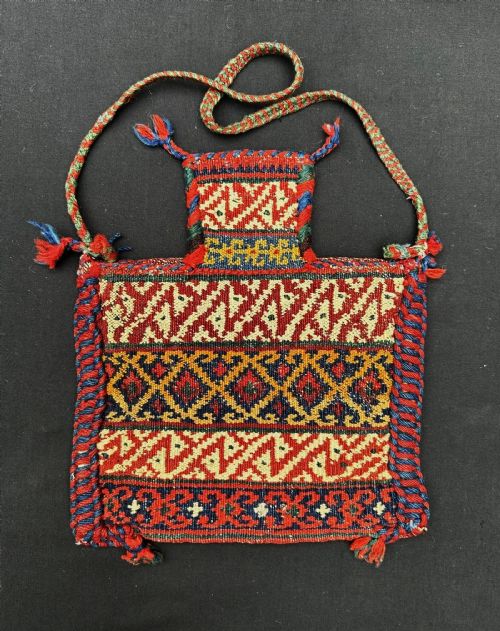
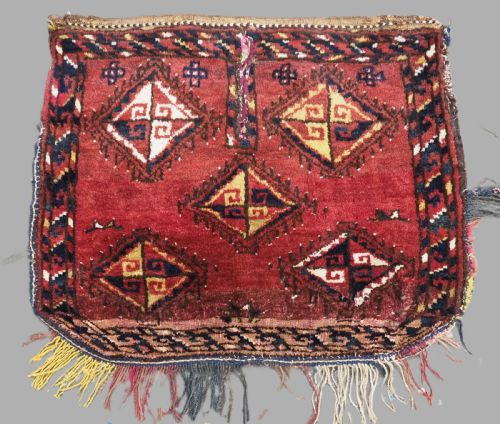
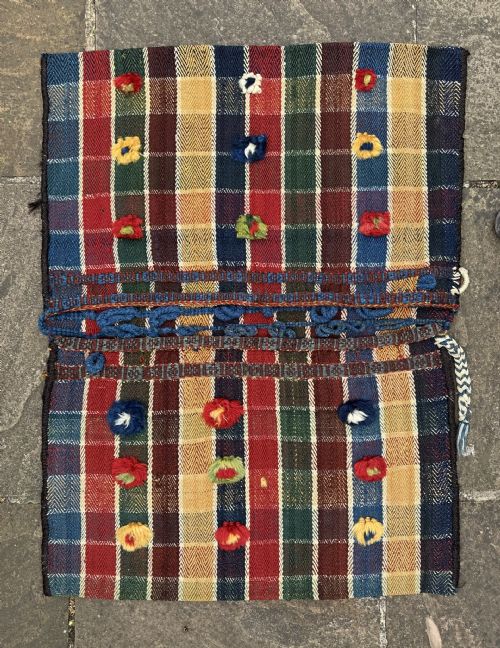
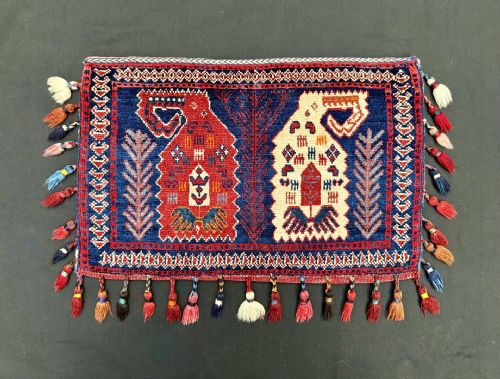
When someone searches for an antique wool saddle bag, they find woven textiles created by tribal nomadic groups across Persia, Anatolia, and Central Asia during the nineteenth and early twentieth centuries. These pieces encompass complete pairs, single faces, and smaller vanity or pipe bags designed originally for practical transport on animals. The examples met most frequently on this page originate from tribes such as the Afshar, Qashqa'i, and Shahsavan, representing distinct regional aesthetics.
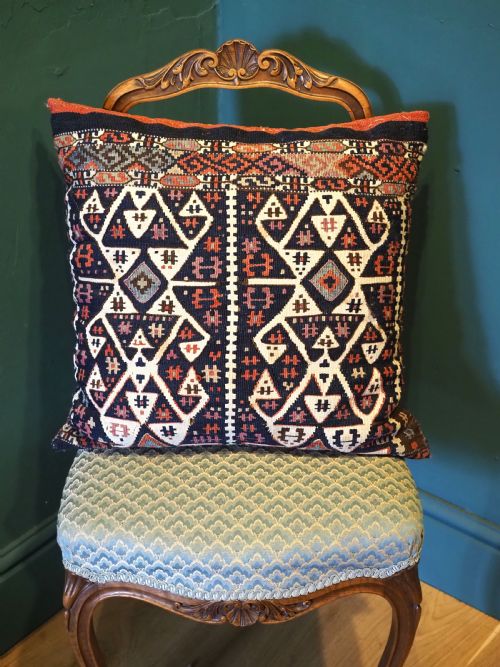
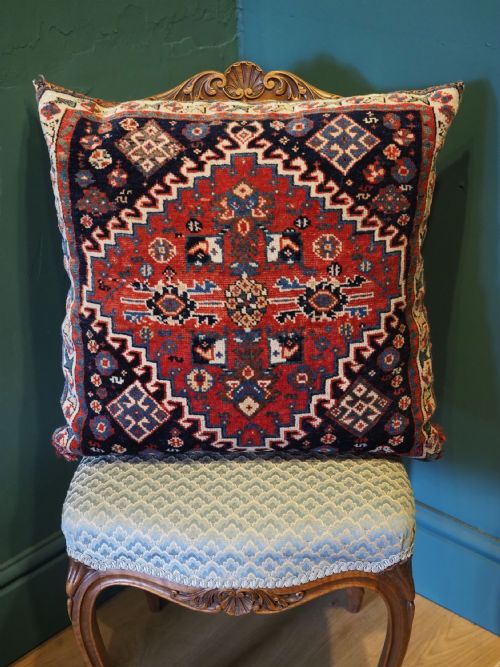
The utility of these items dictates their physical form, typically featuring geometric motifs, boteh designs, or repeating guls woven to withstand daily nomadic life. Many survive as isolated bag faces or converted cushions, while others retain their original plain weave backs or complete double-pouch construction. Their enduring appeal lies in the fusion of utilitarian function with intricate tribal artistry passed down through generations.
How they were made
Nomadic weavers relied predominantly on hand-spun wool for the pile and foundation, supplemented by cotton and occasionally metal threads for structural reinforcement or detail. Natural dyes extracted from local plants and minerals provided the deep colour palette, yielding subtle variations in tone across the surface of each textile. Leather additions frequently reinforced high-wear edges and closure points on functional bags.
Techniques varied by region and tribal tradition, encompassing standard pile knotting alongside flat-woven kilim and Soumak structures. The Soumak technique involved wrapping supplementary weft threads over the warp to create a textured, durable surface characteristic of specific Caucasian and Persian pieces. These methods ensured the finished container could endure the harsh rigours of migration and animal transport.
Listings feature pieces spanning from eighteen-fifty to nineteen-twenty, showcasing traditional Persian, Anatolian, and Caucasian tribal artistry.
What varies in quality
The quality of an antique wool saddle bag rests primarily in the fineness of the weave and the lustre of the wool utilised by the weaver. Superior examples display tightly packed knots or precise flat-weaving alongside resilient, luminous wool that retains its natural oils and depth of colour. Consistency in the natural dye saturation throughout the piece signals careful preparation and superior materials.
Design execution and completeness also divide the standard from the exceptional within this category. Pieces that survive intact with both pouches, original plain weave backs, or robust leather elements command greater interest due to their scarcity. Furthermore, crisp geometry and well-balanced tribal motifs reflect the higher skill of master weavers within specific nomadic groups.
The Antique Wool Saddle Bag Glossary
- Khorjin
- The traditional Persian term for a double-pouch saddle bag used by nomadic tribes for transport. These items were slung across pack animals during seasonal migrations.
- Soumak
- A flat-weave technique where coloured weft threads wrap over and under the warp to produce a sturdy, textured surface. This method creates crisp diagonal lines without cutting pile.
- Gul
- A repeating medallion or floral-like octagonal motif frequently found in Central Asian and Turkmen weaving. Each tribal group utilised distinct variations of this design.
- Boteh
- A traditional pear-shaped or almond motif with a curved upper end, representing a floral sprout or cypress tree. This symbol appears extensively across Persian tribal textiles.
- Kilim
- A flat-woven textile produced by tightly interweaving warp and weft strands without creating a pile. Many saddle bag faces and cushions utilise this technique for lighter structure.
Antique Wool Saddle Bag: Frequently Asked Questions
What is a saddle bag face?
A saddle bag face is the decorated front panel of a nomadic container that has been separated from its backing over time. These panels are often preserved as decorative rugs or wall hangings.
Collectors prize them for displaying the primary aesthetic and intricate tribal motifs without the bulk of the original storage compartments.
How were these bags used?
Nomadic tribes utilised these double-pouch bags to transport personal possessions, grain, and household goods across pack animals during seasonal migrations. They hung balanced across the backs of horses, donkeys, or camels.
Once settled in camp, the bags served as domestic storage containers inside tribal tents.
How do I live with one?
These textiles adapt well to modern interiors when displayed as wall hangings, table covers, or converted into decorative floor cushions. Their durable wool construction handles everyday environments when kept out of direct, harsh sunlight.
Gentle vacuuming with a screen attachment helps maintain the fibres without damaging the historic weave.
How do I identify tribal origins?
Tribal origins are identified through specific combinations of colour palettes, structural techniques, and characteristic geometric or medallion motifs. For instance, Shahsavan pieces often feature Soumak work, while Afshar items display distinct boteh patterns.
Regional dyeing traditions and wool preparation further narrow down the specific group of nomads who created the textile.