




Antique Woodland Scene
An antique woodland scene brings the quiet of the forest indoors through nineteenth-century oils, delicate watercolours, and woven tapestries.
Antique Woodland Scene
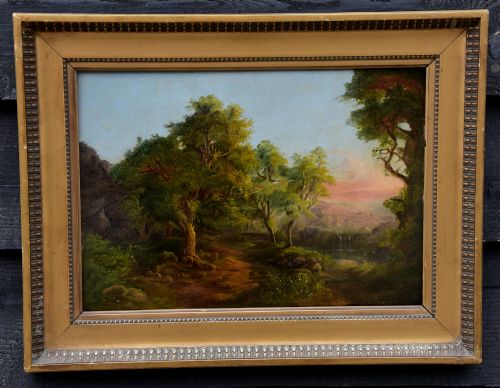
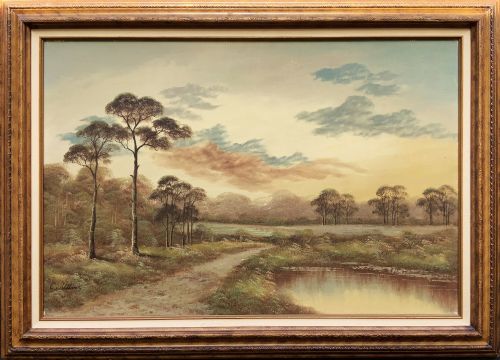
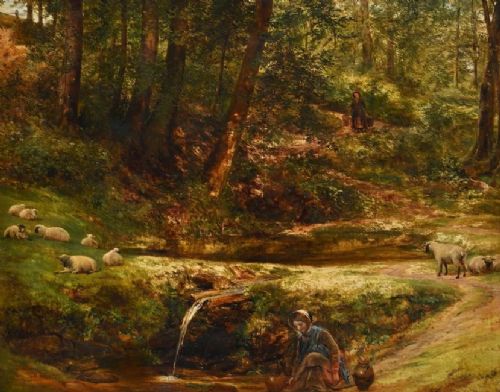
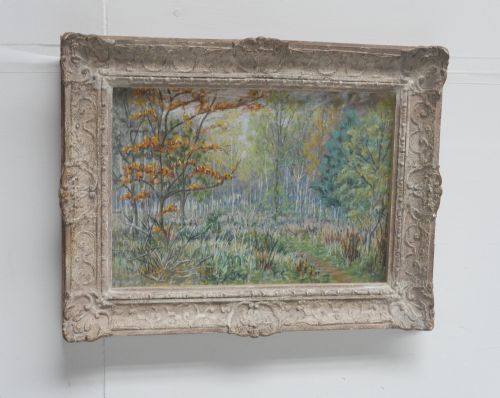
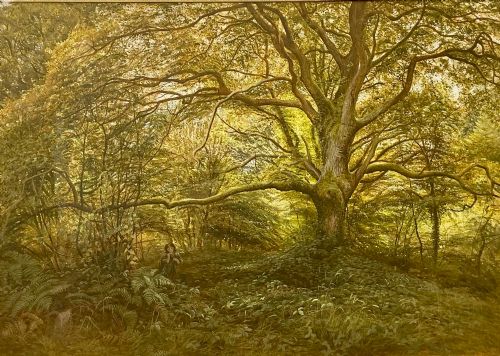
An antique woodland scene takes many visual forms across this selection, appearing most frequently as framed oil paintings and watercolours on paper or canvas. These works record forested riverscapes, quiet country lanes, and dense tree canopies painted from the nineteenth century through the mid-twentieth century.
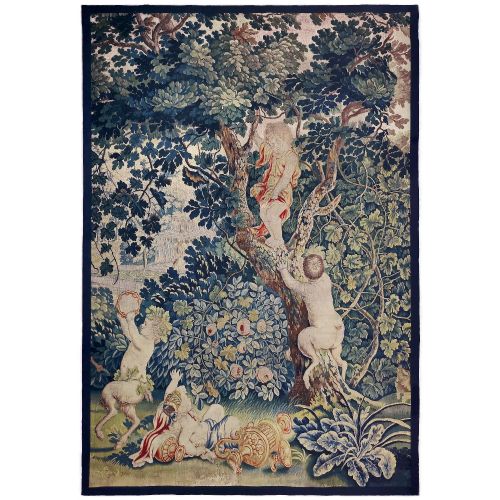
Beyond painted works, buyers encounter larger textile pieces such as seventeenth and eighteenth-century Flemish verdure tapestries depicting lush foliage and pastoral trees. Decorative objects also emerge occasionally, including porcelain such as a Royal Vienna chocolate cup painted with allegorical forest views.
The aesthetic ranges from Victorian naturalism and traditional realism to post-century impressions, capturing seasonal shifts from autumn leaves and bluebell woods to snowy winter landscapes.
How They Were Made
Makers utilised traditional mediums, applying oil paint and watercolour onto stretched canvas, prepared wood boards, and heavy paper. Painters built texture through layered brushwork, while textile artisans wove verdure tapestries on looms using intricate threads to render dense plant life.
Support materials varied by period, with nineteenth-century works commonly resting on canvas or board, and later twentieth-century pieces utilising pastel and oil on modern surfaces. Ceramic items like porcelain cups received detailed hand-painted overglaze decoration for their miniature forest motifs.
Antique Woodland Scene Retail Price Guide 2026
Typical asking prices for woodland scene among the pieces listed under this phrase on Sellingantiques today, from the lower quarter to the upper quarter. They describe what is for sale here now, not the wider market.
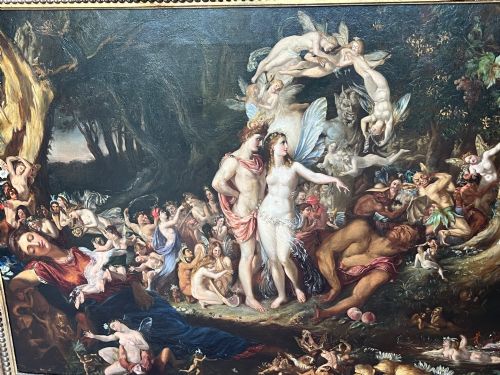
Fairies, sheep drovers, and children gathering firewood occasionally share the woods with passing cattle.
What Varies in Quality
Quality rests upon the artist's command of light, shadow, and natural depth within the forest setting. Finer paintings demonstrate subtle tonal control in rendering foliage and water reflections, whereas simpler works rely on rigid compositions.
Materials and preservation dictate longevity, with well-preserved canvases and tightly woven tapestries retaining richer pigments and structural integrity over centuries.
Sir Joseph Noel Paton·William H Myers·Richard Redgrave·Arthur Herbert Rigg·James Mallard Bromley·David Watts·Alfred Grey·John Wright Oakes·Walter Follen Bishop·James Proudfoot·Rowland Henry Hill·Bonomi Edward Warren·Edmund George Warren·Charles James Adams·George Graham·Charles Edward Holloway·Edward H Holder·George F Wetherbee·Charles Edward Wilson
The Antique Woodland Scene Glossary
- Verdure tapestry
- A woven wall hanging dominated by lush foliage, trees, and plant life, often produced in Flanders during the seventeenth and eighteenth centuries. These large panels brought exterior garden and forest views into grand interior rooms.
- Watercolour painting
- Artworks created using water-soluble pigments on paper supports, prized for their translucent washes of colour. Artists used this medium to capture soft light filtering through branches.
- Oil on canvas
- Pigments bound in drying oil applied to a woven fabric stretched across a wooden frame. This combination allowed artists to build rich textures and deep chromatic layers.
- Victorian naturalism
- An artistic movement focusing on the detailed, realistic depiction of the natural world without idealisation. Works in this style record trees, rivers, and wildlife with botanical and topographical accuracy.
Antique Woodland Scene: Frequently Asked Questions
What is an antique woodland scene?
An antique woodland scene is a painted, woven, or decorative artwork depicting trees, forests, and rural landscapes created before the mid-twentieth century. These pieces capture the changing seasons and natural scenery through the eyes of historical artists and craftspeople.
Buyers select these works to bring traditional pastoral beauty and historical depth into domestic interiors.
How do I hang a large tapestry?
Large tapestries require even weight distribution across a sturdy metal rod or wooden baton inserted through a hanging sleeve sewn onto the reverse. This method prevents stretching and protects the ancient fibres from undue tension.
Keep woven wall art away from direct sunlight and damp walls to preserve the integrity of the threads.
How do I date a woodland painting?
Dating relies upon examining the canvas support, the framing style, the pigments used, and any artist signatures or dates inscribed on the front or reverse. Historical records and exhibition labels often provide further confirmation of a painting's origin.
Stylistic cues such as Victorian naturalism or impressionist brushwork also point toward specific decades.
Where should I display my painting?
Paintings on canvas or paper need stable indoor environments with moderate humidity and protection from direct, harsh sunlight. Interior walls away from heat sources and radiators ensure the oil or watercolour pigments remain stable.
Proper placement enhances the room's decor while safeguarding the artwork from environmental damage.