





19th Century Landscape on Board
A 19th century landscape on board brings the quiet observation of the countryside directly into a room through oil paint applied to wooden panels.
19th Century Landscape on Board
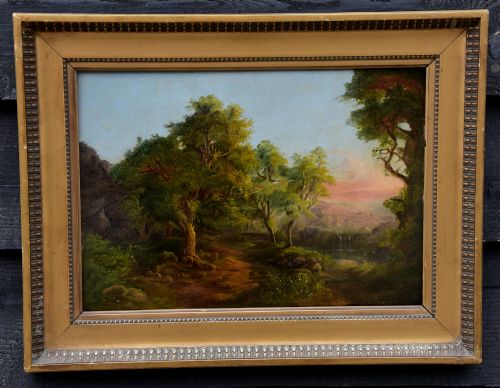
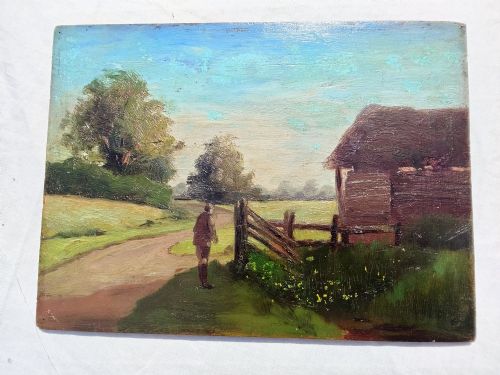
A 19th century landscape on board is a small or medium painted panel capturing rural scenery, woodland views, river scenes or coastal settings. These works range from naive folk art pieces to accomplished studies by named British and European painters working across the Victorian era. Buyers searching for a 19th century landscape on board will find that wood panels and wooden boards served as a direct, stable alternative to stretched canvas for outdoor sketching and studio painting.
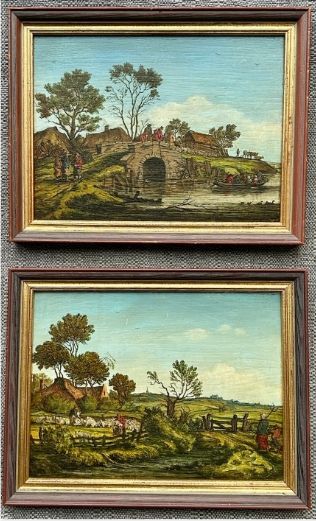
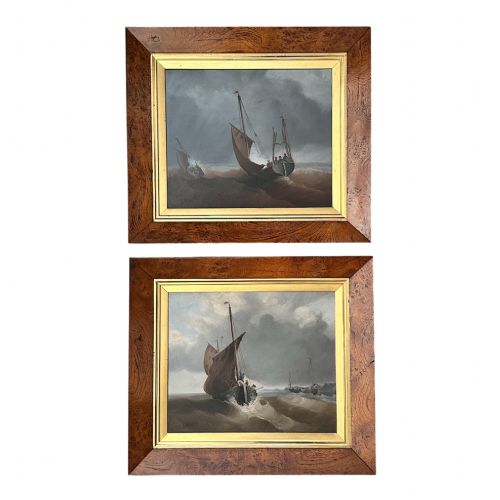
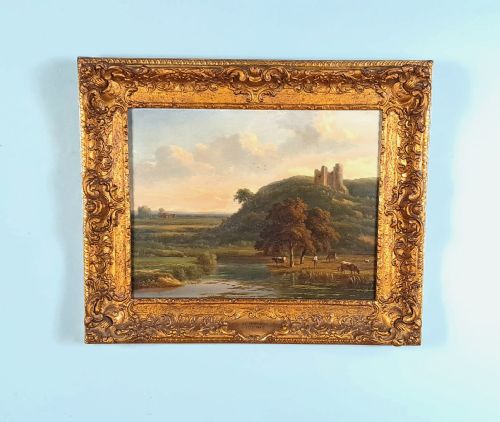
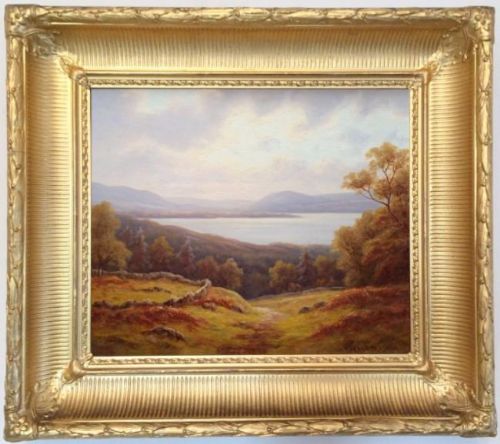
The most common examples on this page are oil paintings executed directly on wooden boards or panels, frequently housed in period giltwood frames. Subjects vary from English school woodland views and cottage scenes to Flemish style compositions and maritime coastal vistas. Painters often utilised the rigid surface of the board to capture fine detail with oil paint without the give of fabric.
Dating primarily from the nineteenth century, these panels reflect the stylistic shifts from Georgian traditions through high Victorian landscape painting up to the turn of the twentieth century. The selection includes works by listed artists alongside anonymous regional pieces depicting topographical subjects and rural life.
Materials and construction
These works rely on oil paint applied to prepared wooden boards, panels, or sometimes canvas later laid onto board for structural support. Painters prepared the wooden surface with gesso or a priming layer to create a smooth, durable ground that held the oil pigments securely over decades.
Framing forms an integral part of the physical object, with many surviving in period giltwood frames that complement the tones of the oil paint. The combination of dense wood panels and oil medium protects the integrity of the pigment, preventing the sagging often found in stretched canvas works.
19th Century Landscape on Board Retail Price Guide 2026
Typical asking prices for 19th century landscape on board among the pieces listed under this phrase on Sellingantiques today, from the lower quarter to the upper quarter. They describe what is for sale here now, not the wider market.
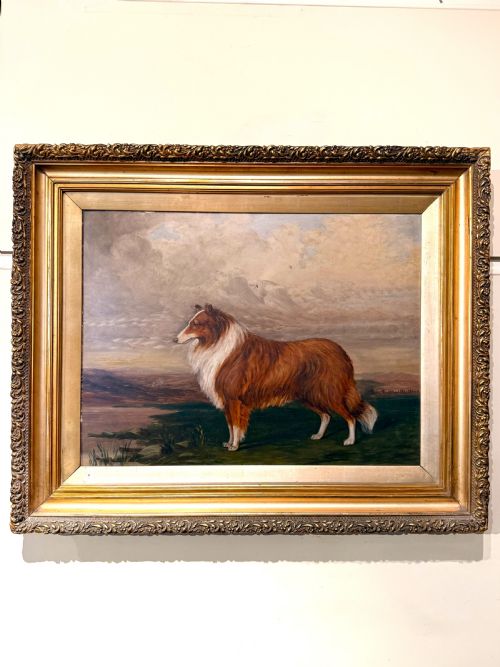
Several Victorian dogs and mischievous peasants gaze out from these wooden boards as if interrupting a peaceful afternoon stroll.
Judging quality and handling
Quality in these works rests upon the confidence of the brushwork, the balance of the composition, and the handling of natural light within the landscape. A superior piece displays assured draftsmanship and atmospheric depth, whether created by a recognised academic painter or a skilled member of the British or Flemish school.
The preservation of the original paint surface and the compatibility of the frame also dictate the standing of an individual board. Works showing subtle tonal graduation and careful observation of foliage, water, or sky distinguish themselves from simpler decorative examples.
John Moore of Ipswich·T C Hofland·Miles Birkett Foster·George Hilditch·Antonietta Brandeis
The 19th Century Landscape on Board Glossary
- Board
- A rigid flat piece of wood or panel used as a direct support for oil paint instead of woven canvas. Artists favoured wooden boards for quick outdoor studies and durable finished paintings.
- Oil paint
- A slow-drying paint made by mixing pigments with a drying oil such as linseed. This medium allows for rich colour blending and deep impasto textures on wooden panels.
- Gesso
- A white paint mixture consisting of a binder mixed with chalk, gypsum, or pigment used to prepare wood surfaces before painting. It creates a smooth, absorbent ground for oil layers.
- Giltwood
- Wood carved and covered with a thin layer of gold leaf or gold paint. Period frames utilise this material to enhance the visual weight of nineteenth-century paintings.
- Flemish school
- A grouping of artists working in the tradition of Flanders who specialised in detailed landscapes and panel paintings. Their influence appears across various nineteenth-century continental works.
19th Century Landscape on Board: Frequently Asked Questions
Why did artists paint on board instead of canvas?
Wooden boards provided a rigid, portable surface that required no stretching and withstood the rigours of outdoor sketching. Painters could easily pack small panels into travel boxes for work on location.
This stability also made boards popular for studio work where a firm backing prevented the cracking associated with aged fabric canvases.
How do I care for a nineteenth-century oil painting on board?
Keep the panel away from direct sunlight, damp environments, and sudden temperature fluctuations that might cause the wood to warp or the paint to craze. Dust the surface gently with a soft, dry brush without applying pressure.
Display the work on a stable interior wall using appropriate hardware attached to the frame rather than the wooden panel itself.
Are these paintings usually signed by the artist?
Many works bear signatures, monograms, or contemporary inscriptions on the front or reverse, while others remain entirely anonymous. Unsigned pieces frequently originate from regional English or European schools where the maker's identity was secondary to the scene.
Attributions for unsigned works rely on stylistic comparisons, brush technique, and framing details characteristic of specific periods.
What subjects are most common in these landscapes?
Traditional rural views, woodland streams, pastoral cottage scenes, and coastal maritime vistas dominate the nineteenth-century selection. Topographical views of specific rivers and towns also appear frequently among these painted panels.
Artists recorded both idealized pastoral ideals and specific local geography influenced by the prevailing tastes of the Victorian era.