
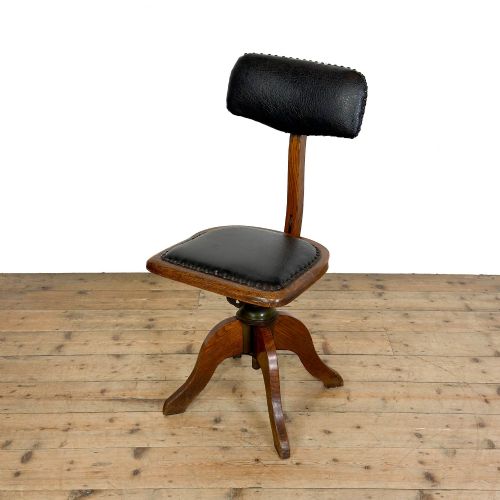
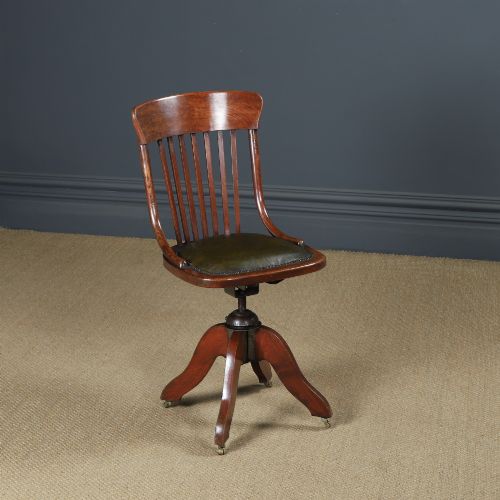
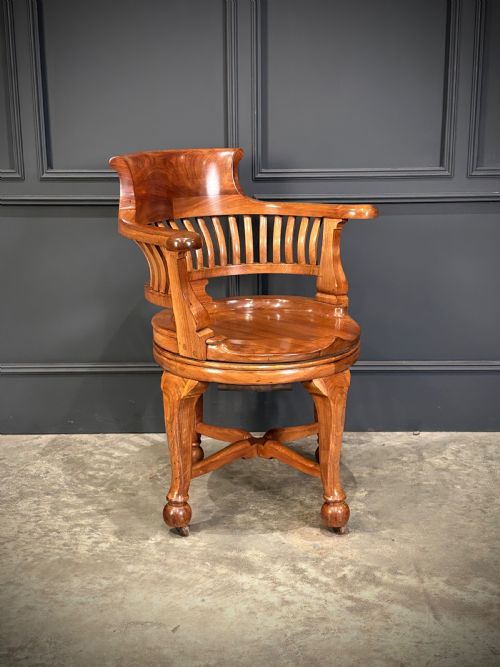
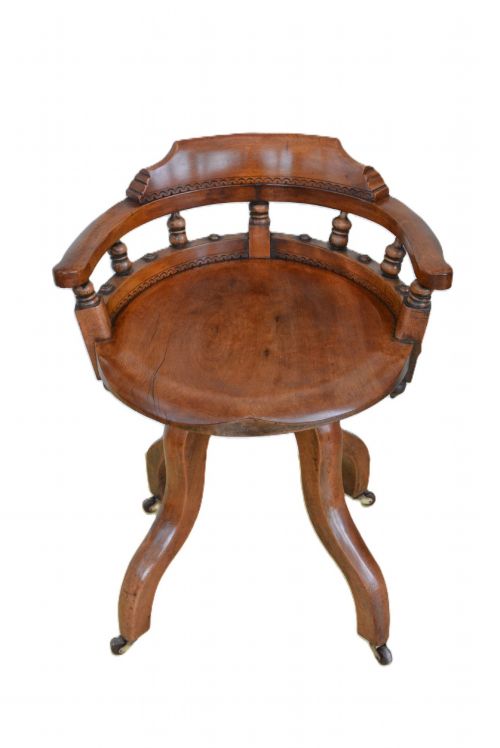
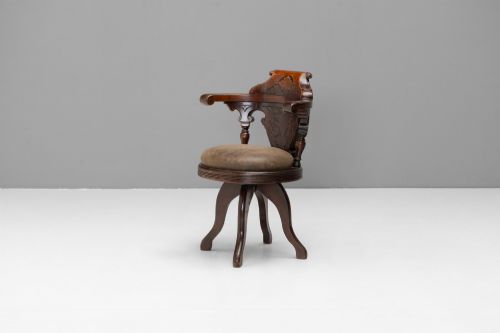


Antique Wooden Swivel Chair
An antique wooden swivel chair brings mechanical ingenuity and solid timber together for the working desk.
What an antique wooden swivel chair is
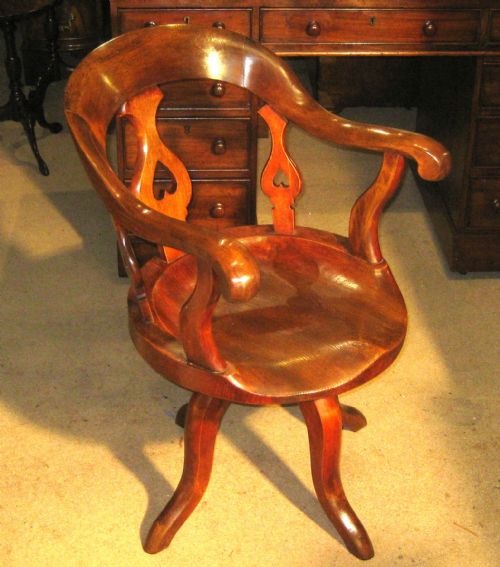
An antique wooden swivel chair is a desk chair designed to rotate and support long hours of administrative work. These pieces combine traditional cabinet-making with early mechanical swivel actions intended for offices and studies.
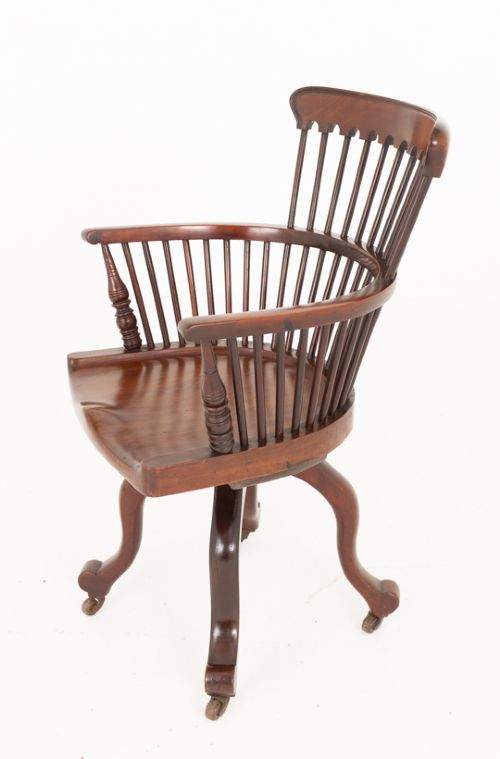
The versions most likely to appear on this page date from the Victorian and Edwardian periods, stretching from the late nineteenth century into the early twentieth. They span forms such as revolving desk chairs and swivel office armchairs.
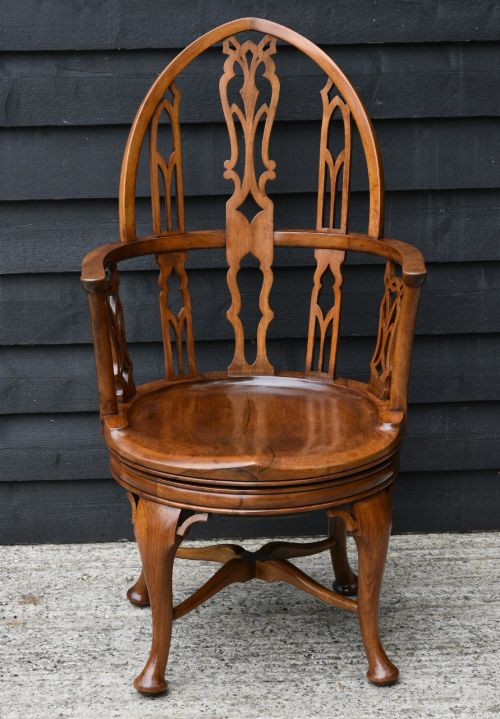
Makers built these chairs from sturdy timbers including oak, beech, mahogany, and walnut, frequently pairing them with leather or hide seats. Styles range from plain utility designs to more decorative Gothic Revival interpretations.
How they were made
Joiners constructed these desk chairs using solid hardwoods like oak, beech, mahogany, and walnut to withstand daily pivoting and movement. Iron and brass components formed the undercarriage mechanisms that allowed the seat to rotate smoothly above a central base.
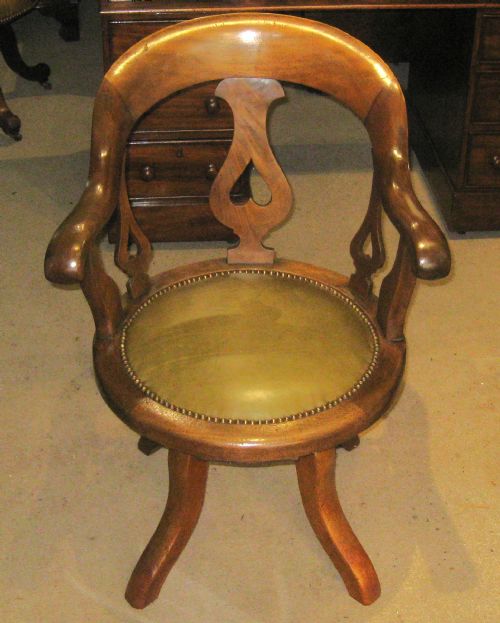
Upholsterers fitted many of these revolving seats with tan hide or leather inserts for comfort during extended periods at a desk. Cabinet-makers shaped arms, backs, and legs to reflect prevailing Victorian and Edwardian tastes, including Gothic Revival details.
Retail Price Guide 2026
Typical UK retail prices for wooden swivel chair, calculated from the Sellingantiques database of over a million retail prices indexed since 2003. This retail price guide relies exclusively on Sellingantiques data; no external sources or auction records are used, so the figures do not describe the wider market.
Listings feature pieces spanning the Victorian and Edwardian eras, predominantly built from oak, beech, and mahogany with leather seats.
What varies in quality
The distinction between standard office seating and finer examples rests upon the selection of timber and the ambition of the design. Solid mahogany and walnut variants with detailed turning demonstrate greater workshop investment than simple utilitarian beech frames.
Mechanical execution also separates the ordinary from the exceptional in revolving furniture. Chairs that integrate robust brass and iron swivel actions with well-balanced bases maintain a superior physical presence in a room.
The Antique Wooden Swivel Chair Glossary
- Revolving desk chair
- A seating form fitted with a central pivot mechanism allowing the user to turn in a complete circle while seated at a table.
- Tan hide
- A natural leather upholstery material used to cover seat pads on office armchairs for durability.
- Gothic Revival
- A nineteenth-century design style drawing inspiration from medieval architectural motifs, visible in pointed arches and heavy timber mouldings.
- Solid mahogany
- A dense, durable tropical hardwood favoured by cabinet-makers for its rich grain and resistance to warping.
Frequently Asked Questions
What is an antique wooden swivel chair?
An antique wooden swivel chair is a functional desk seat built with a rotating mechanism during the nineteenth or early twentieth century. They were designed for offices and studies where mobility around a workspace was necessary.
These pieces rely on timber frames made of oak, beech, mahogany, or walnut. Many include leather or hide upholstery on the seat for added comfort.
How do I identify a Victorian swivel chair?
Victorian examples often feature darker hardwoods like solid mahogany or walnut, sometimes displaying Gothic Revival stylistic influences. They date from the mid-nineteenth century up to nineteen hundred.
Construction methods from this era typically involve visible joinery and heavy iron or brass undercarriages. The proportions are usually robust to support the mechanical pivoting system.
What are Edwardian swivel chairs like?
Edwardian swivel chairs generally date from the first decade of the twentieth century and often incorporate lighter woods like beech and oak. They maintain the practical revolving function while reflecting slightly simpler domestic or office aesthetics.
These chairs frequently appear with tan hide seats and mahogany framing. Their design tends towards refined proportions compared to earlier Victorian seating.
How were these chairs used originally?
These chairs served as functional seating for clerks, writers, and professionals working at large desks or partner tables. The swivel action allowed users to reach different parts of a workspace without moving the entire piece of furniture.
Their robust timber construction ensured they could endure the daily physical strain of pivoting and shifting weight in busy offices.