
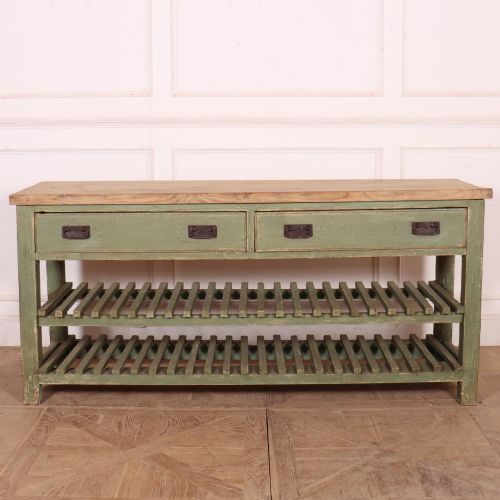
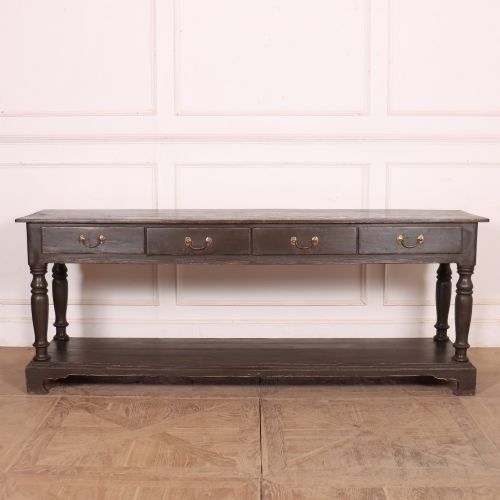
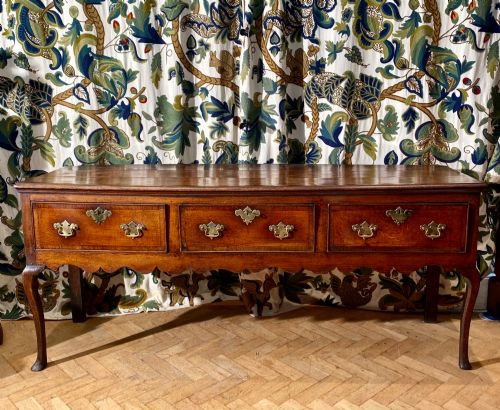
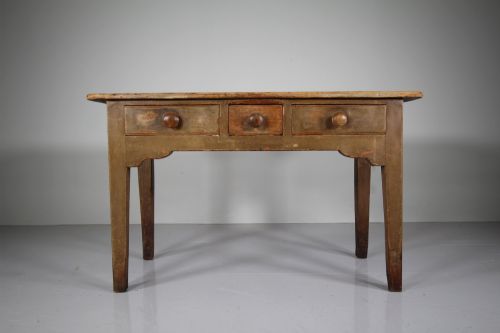
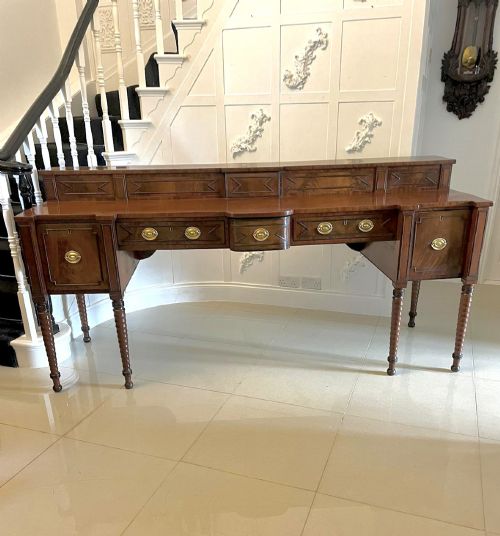
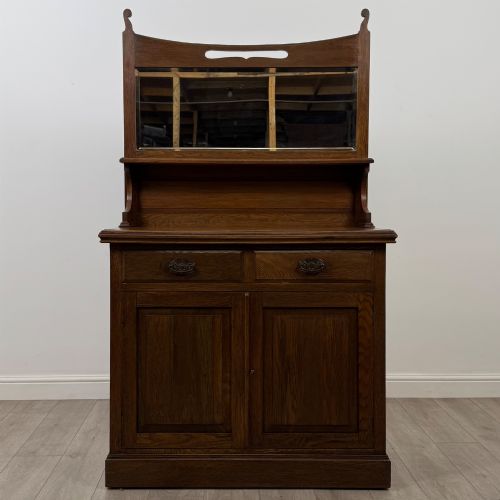
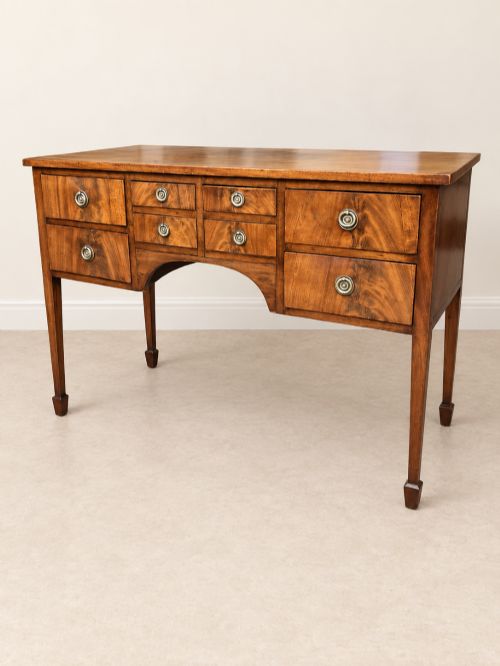
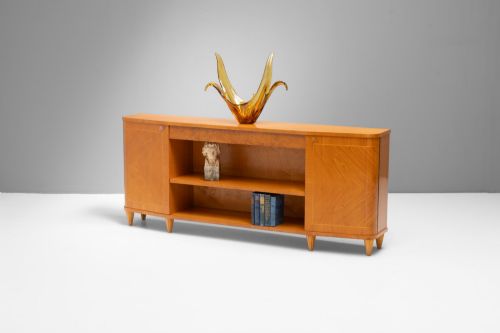
Antique Wooden Sideboard Table
An antique wooden sideboard table serves dining rooms and hallways with generous proportions, marrying timber craftsmanship with daily utility.
Antique Wooden Sideboard Table
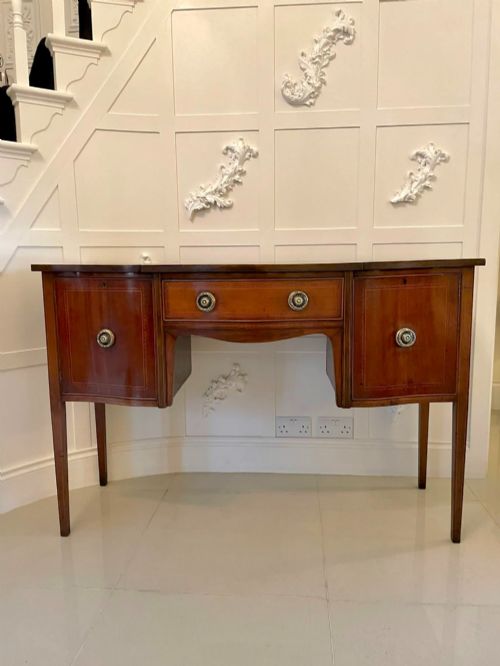
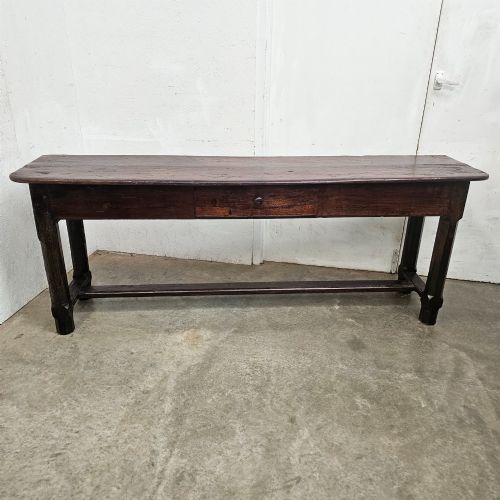
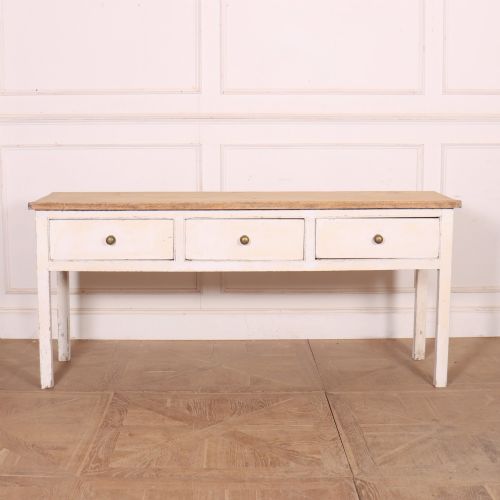
An antique wooden sideboard table encompasses diverse forms including serving tables, buffet servers, potboard dresser bases, and console tables designed for dining and storage. These pieces emerge from centuries spanning the Georgian, Victorian, and Edwardian eras, reflecting changing domestic habits across British and continental households.
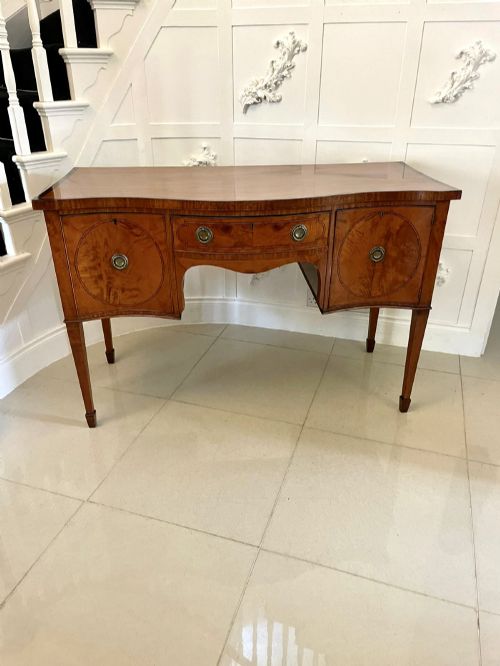
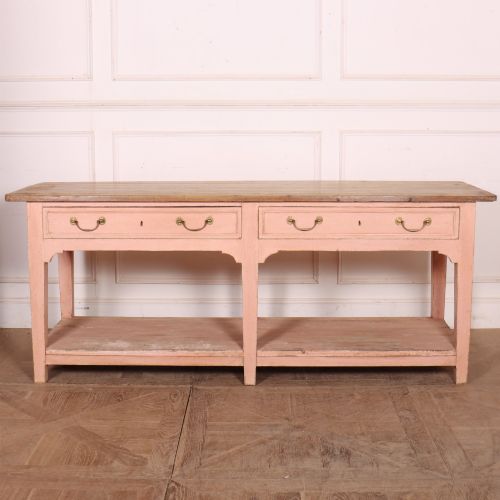
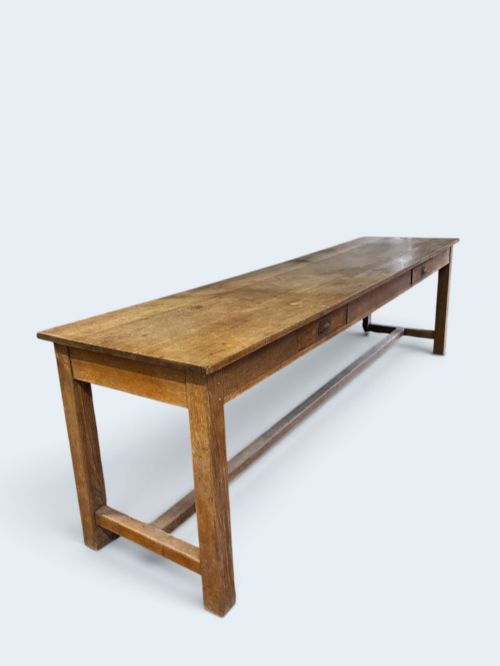
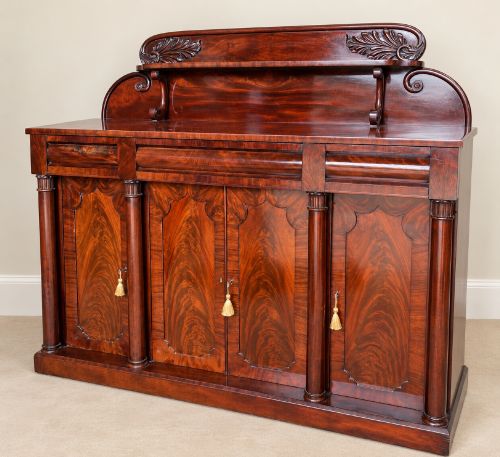
Buyers browsing this selection frequently encounter mahogany bow-front or serpentine shapes alongside sturdy oak country dressers and walnut serving tables. The assortment captures both formal reception room furniture and rustic kitchen or farmhouse preparations.
Origins vary from provincial workshops producing solid oak and pine to urban cabinet makers working with satinwood inlay and fine mahogany veneers. Each object demonstrates the specific regional building traditions of its period, whether Scottish, Lancashire, or broader English country workshops.
Materials and Technique
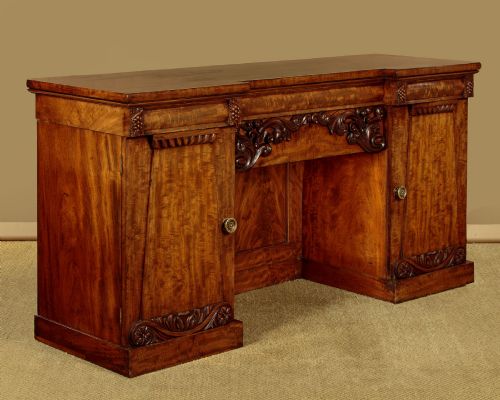
Cabinet makers relied primarily on hardwoods such as mahogany, oak, and walnut, often complemented by secondary timbers like pine and structural iron or brass hardware. Timber selection dictated the structural capability of the piece, allowing for heavy carving in Victorian buffets or smooth curved fronts in Regency and Georgian formats.
Construction techniques combined traditional joinery with decorative surface treatments, utilising satinwood inlay, geometric mouldings, and hand-rubbed patinas. Glass inserts and brass fittings completed the functional assembly of doors, drawers, and display surfaces.
Early bakers used solid pine prep tables for kneading dough before these heavy work surfaces happily retired into modern country kitchens.
Judging Quality
Quality rests upon the selection of timber and the precision of the joinery, distinguishing utilitarian kitchen pieces from formal parlour furniture. Superior examples exhibit well-figured mahogany veneers, crisp carving, and harmonious proportions across breakfront or serpentine facades.
The integrity of secondary timbers, original hardware, and the depth of the natural patina further separate standard cabinet work from exceptional exhibition items. Subtle details like geometric mouldings and well-preserved inlay work indicate higher craftsmanship.
M. D. Miller & Sons
The Antique Wooden Sideboard Table Glossary
- Potboard dresser base
- A low kitchen or dining table featuring an open lower shelf traditionally used for storing pots and pans. This form appears frequently in early oak and country pieces.
- Serpentine shaped
- A front contour characterised by a convex central section flanked by two concave curves. Cabinet makers utilised this profile to add visual movement to high-status sideboards.
- Bow-fronted
- A convex, outward-curving front elevation popular during the Georgian and Regency periods. This shape softens the room's geometry while maximising interior drawer space.
- Satinwood inlay
- Contrasting light-toned wood inserted into a darker primary timber to create decorative borders and motifs. It highlights elite cabinet work from the late eighteenth and nineteenth centuries.
- Breakfront
- A cabinet design where the central section projects forward from the flanking wings. This architectural arrangement creates depth and structure on formal dining room pieces.
Antique Wooden Sideboard Table: Frequently Asked Questions
What is an antique wooden sideboard table?
An antique wooden sideboard table is a functional furniture piece designed for dining rooms or living spaces to hold serving dishes, cutlery, and linens.
These items range from formal mahogany breakfronts to rustic oak potboard dresser bases originating across the eighteenth, nineteenth, and early twentieth centuries.
How do I date an antique wooden sideboard table?
Dating relies on observing timber choices, construction methods, and prevailing decorative styles such as Georgian curves, Victorian carving, or Edwardian inlay.
Secondary woods, drawer linings, and hardware styles provide additional physical evidence regarding the exact period of manufacture.
Where should I place a sideboard table?
These tables traditionally anchor dining room walls, serving meals or displaying silver, ceramics, and table lamps during gatherings.
Their substantial storage capacity also makes them practical additions to large hallways and drawing rooms for organising everyday items.
What woods were used for antique sideboards?
Cabinet makers predominantly utilised mahogany, oak, and walnut for primary visible surfaces, valuing their strength and grain patterns.
Pine, satinwood, and various fruitwoods also appear frequently for drawer linings, secondary structures, and decorative inlay work.
How do I care for antique wood furniture?
Maintain antique wooden surfaces by keeping them away from direct heat sources and fluctuating humidity that can cause timber to split.
Apply traditional wax sparingly and polish with a soft cloth to preserve the natural patina developed over centuries of use.