


Vintage Marble Top Buffet
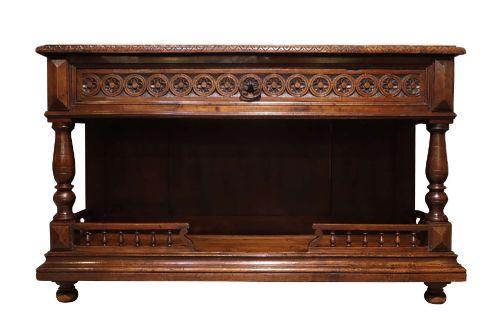
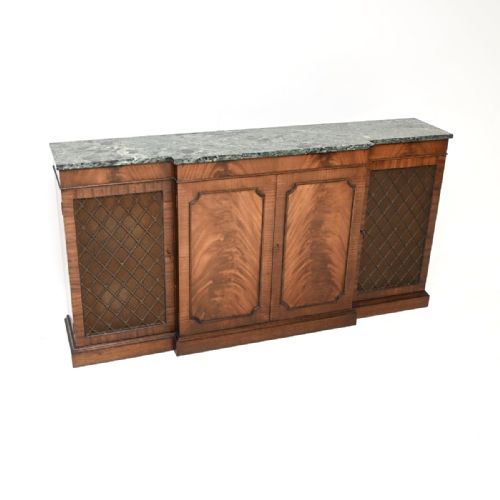
A vintage marble top buffet brings solid stone and rich timber together, offering a heavy working surface and deep storage for the dining room.
Vintage Marble Top Buffet
A vintage marble top buffet combines heavy stone slabs with substantial timber cabinetry, serving as a functional storage piece for dining rooms and living spaces. Buyers searching for a vintage marble top buffet will encounter various forms across this page, ranging from French Provincial cupboards to Victorian walnut credenzas and Art Deco sideboards.
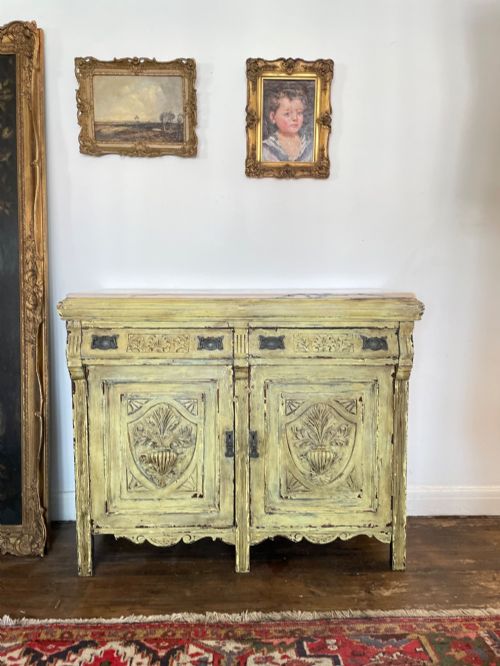
Regional variations appear clearly within the listings, moving from English painted dresser bases to elaborate continental pieces with marquetry and ormolu mounts. Buyers find everything from large four-door sideboards to compact commodes and side cabinets topped with pink or white marble.
Materials and construction methods
Cabinet makers utilised dense hardwoods like mahogany, walnut, and kingwood as the structural foundation for these sideboards, often applying burr walnut or flame mahogany veneers to exterior surfaces. Marquetry and parquetry inlay work further decorated the timber carcasses on finer continental examples.
Heavy marble slabs form the distinctive top surface, paired occasionally with cast brass or ormolu mounts and key escutcheons. Joinery methods relied on traditional cabinet-making techniques to support the considerable weight of the stone tops over spacious cupboards and drawers.
Listings feature pieces spanning the eighteenth, nineteenth, and twentieth centuries, executed in walnut, mahogany, and kingwood with marble surfaces.
Distinctions in construction and finish
Quality separates simple utilitarian storage from master cabinet work through the precision of the marquetry inlay and the selection of figured wood veneers like birds eye maple. Superior pieces display meticulous parquetry patterns and integrated ormolu mounts that complement rather than crowd the timber.
The grade and thickness of the marble slab define the upper tier of production, alongside the structural integrity of the underlying mahogany or walnut frame. Finer examples maintain smooth drawer operation and intact original key hardware alongside well-fitted stone surfaces.
The Vintage Marble Top Buffet Glossary
- Buffet
- A sideboard or cabinet used for storing and serving food, typically placed in a dining room. These pieces provide surface space above enclosed cupboards.
- Marquetry
- Decorative veneer applied to furniture in geometrical patterns or pictorial scenes using various coloured woods. This technique requires exceptional precision from the cabinet maker.
- Ormolu
- Gilt bronze mounts applied to furniture for decoration, popular in French furniture design. The technique involves treating brass or bronze with a gold amalgam.
- Credenza
- A sideboard or cabinet without legs, originally developed in Italy during the Renaissance. Victorian versions often include glass doors and delicate woodwork.
- Parquetry
- A geometric mosaic of wood pieces used for decorative floors and furniture surfaces. It creates repeating patterns across cabinet doors and tabletops.
Vintage Marble Top Buffet: Frequently Asked Questions
How do I clean the marble top?
Wipe the stone surface using a soft cloth dampened with warm water and a neutral soap. Avoid acidic cleaners or harsh chemicals that can etch the polished finish.
Dry the marble thoroughly after washing to prevent water spots. Spills should be blotted immediately rather than wiped to stop staining.
Can the marble slab be removed?
Most marble tops simply rest on the wooden base under their own substantial weight. This allows the stone to be lifted off separately for easier transport and placement.
Some period pieces secure the marble with hidden brackets or mortar, so check the fixing method before attempting to lift the slab.
Where should I place a heavy sideboard?
Position the piece against a sturdy load-bearing wall to support the combined weight of the timber frame and marble top. Ensure the floor is level so the doors hang straight and drawers close evenly.
Keep the cabinet away from direct heat sources and strong sunlight to protect the wood veneers and prevent timber movement.