
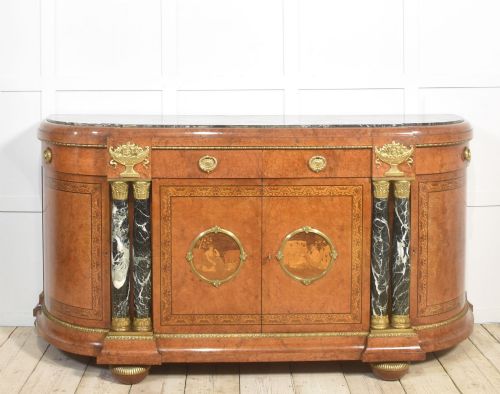


French Marble Top Server
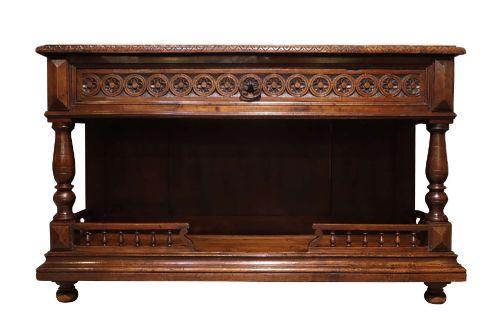
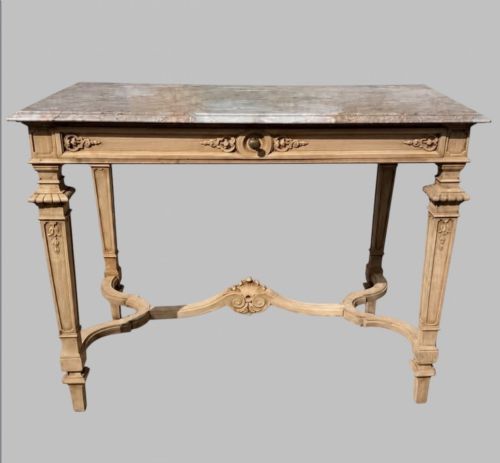
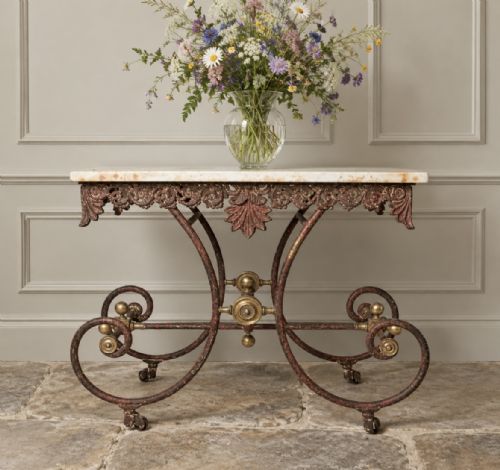
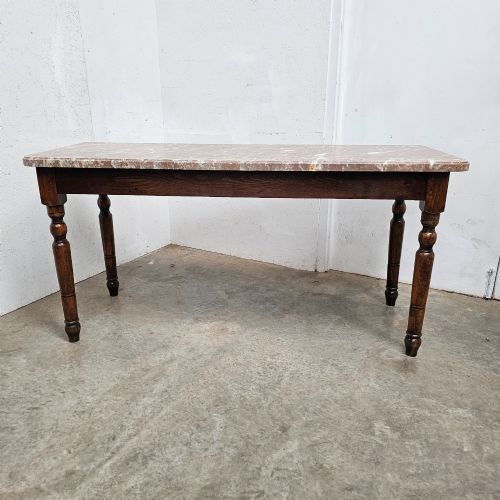
A french marble top server brings solid stone and warm timber together, offering a functional surface for serving or display.
French Marble Top Server
A french marble top server unites useful storage with a cool stone surface, appearing in forms ranging from console tables and side tables to large sideboards, buffets, and cabinets. These pieces span the eighteenth century through to the art deco period, drawing on regional vernacular designs as well as formal revival styles.
The pieces on this page are most commonly nineteenth-century sideboards, buffets, and console tables. Walnut and mahogany form the primary structure of these servers, whilst the inset marble provides a durable working surface designed for practical domestic use.
How they were made
Cabinetmakers constructed the main bodies of these servers using hardwoods such as walnut, mahogany, and oak, occasionally selecting birds-eye maple or burr walnut for decorative veneer surfaces. Heavy marble slabs were cut and polished to fit precisely into the top of the timber frame.
Ornate mounts cast in brass and ormolu were frequently added to corners and door frames, particularly on revival and empire pieces. Carved details appeared directly on the timber framework of provincial and renaissance style cabinets.
Some metamorphic buffets hide clever mechanisms, transforming an ordinary serving table into something entirely unexpected.
What varies in quality
The distinction between standard examples and finer pieces lies in the selection of timber veneers and the weight of the marble top. Robust cabinet construction using solid walnut or mahogany paired with thick, well-figured marble elevates a server.
The refinement of cast brass and ormolu mounts, alongside the crispness of hand-carved elements on the wooden frame, separates ordinary utility items from superior workshops.
Krieger of Paris
The French Marble Top Server Glossary
- Ormolu
- Gilded bronze or brass mounts used for decorative enrichment on furniture. These accents catch the light and frame the timber doors.
- Chiffonier
- A tall sideboard or cabinet featuring shelves and cupboards. This form provides enclosed storage beneath the stone surface.
- Console table
- A table designed to stand against a wall, frequently topped with marble. Such pieces support serving dishes or display items.
- Buffet
- A low sideboard used for food preparation and storage. Cabinets of this type often house multiple doors and interior shelving.
- Etagere
- A piece of furniture with open shelves for displaying objects. These tiered tables offer lighter display options alongside solid servers.
French Marble Top Server: Frequently Asked Questions
How are these servers used?
These pieces function primarily as serving surfaces, side tables, or display cabinets in dining rooms and living spaces. The stone top provides a durable area for placing dishes or decorative objects.
Enclosed cupboards and drawers beneath the surface store tableware, linens, and dining accessories. Their varied heights and widths allow them to fit narrow hallways or spacious dining areas alike.
What woods were used?
Cabinetmakers relied heavily on walnut and mahogany for the main carcase and drawer construction. Oak also appears in earlier and provincial examples.
More decorative surfaces feature birds-eye maple and burr walnut veneers. Timber choices typically reflect the period and regional workshop traditions of the piece.
How do I date a piece?
Dating relies on stylistic clues, construction methods, and materials associated with specific periods like the nineteenth century or the art deco era. Revival styles often borrow design elements from earlier reigns.
Details such as ormolu mounts, brass hardware, and carving techniques help narrow down the decade of production. Documentation or maker stamps, when present, provide exact origins.
Are the marble tops original?
Marble slabs were fitted to these tables and sideboards to serve as practical, heat-resistant surfaces. Most pieces retain their fitted stone tops.
Variations in marble colour and veining are typical of natural stone used across different French workshops. The weight and edge profile of the marble generally match the era of the timber base.