



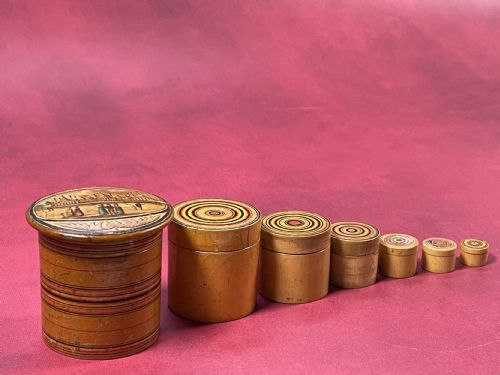


Antique Wooden Pill Box
An antique wooden pill box brings small-scale timber craftsmanship into daily use, offering pocket-sized storage shaped by Georgian and Victorian hands.
Antique Wooden Pill Box
An antique wooden pill box encompasses small lidded containers and treen items originating across the eighteenth and nineteenth centuries. These pocket-sized vessels served various personal uses including holding medicinal pills, snuff, or small trinkets.
The selections encountered here span multiple distinct styles such as Georgian, Regency, and Victorian treen alongside regional European examples like French Empire and Scandinavian country pieces. Makers utilised diverse forms ranging from circular table boxes to intricate stacking pots and turned containers.
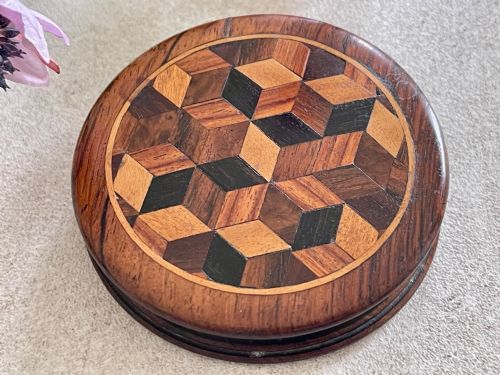
Buyers meet specimens fashioned from various timbers including walnut, boxwood, rosewood, ebony, laburnum, and birch. Many examples incorporate decorative elements like Tunbridge ware mosaic patterns, engine-turned geometric decoration, and fine carving.
How they were made
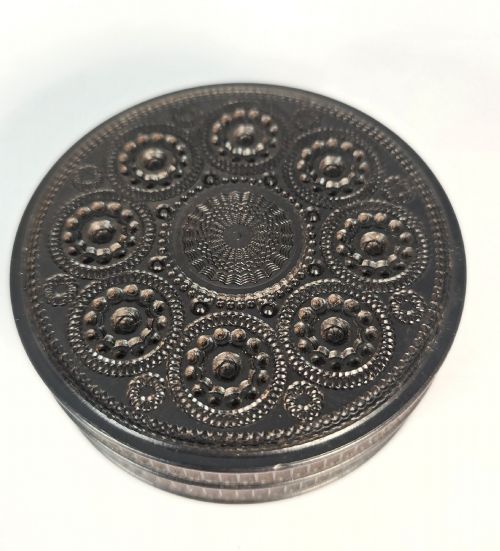
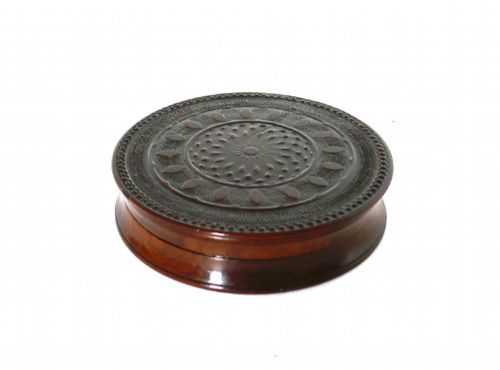
Cabinetmakers and turners shaped these objects using dense hardwoods and fruitwoods on lathes or with hand-carving chisels. Engine-turning produced precise geometric surface patterns on materials like ebony and laburnum.
Inlayers applied mixed wood veneers and specimen woods to create contrasting geometric designs, notably seen in Tunbridge ware white ware boxes and mosaic stacking pots. Pressed maple techniques and specialised tortoiseshell work additionally decorated the exterior surfaces.
What varies in quality
Execution of decorative detail separates standard turned treen from superior examples, particularly where engine-turned precision or fine hand-carving appears. The crispness of geometric patterns in Tunbridge ware inlay indicates the maker's skill.
Selection of materials influences the piece, with dense timbers like boxwood, ebony, and burr walnut showing superior grain definition. The precision of the lid fit and the condition of delicate veneer work determine the overall integrity of the construction.
The Antique Wooden Pill Box Glossary
- Treen
- Small handmade wooden domestic objects produced from the sixteenth century onwards. This term encompasses turned containers, small boxes, and treen items made for everyday use.
- Engine-turned
- A method of mechanical ornamentation using a lathe to cut precise geometric patterns into wood or metal. This technique creates uniform decorative textures across cylindrical surfaces.
- Tunbridge Ware
- Woodware decorated with mosaic patterns formed from tiny coloured wood blocks arranged in pictorial or geometric designs. It originates from the town of Tunbridge Wells in Kent.
- Specimen woods
- A collection of various native and exotic timbers utilised within a single object to display contrasting natural colours. These woods appear frequently in mosaic and inlaid box construction.
- Pill rounder
- A specialised wooden tool used by apothecaries to shape medicinal pill masses into uniform spheres. These sets comprise grooved boards matching the required pharmaceutical dimensions.
Antique Wooden Pill Box: Frequently Asked Questions
What were antique wooden pill boxes used for?
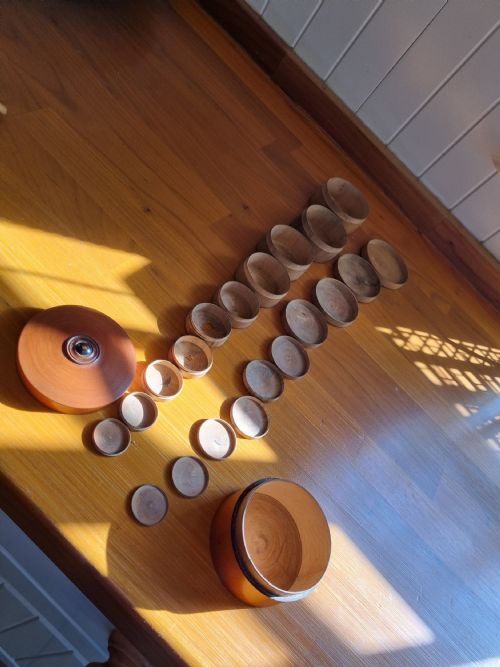
These small containers held personal medications and pills for daily transport in pockets or waistcoats. Apothecaries also utilised specialised wooden tools and multi-container sets for dispensing remedies.
Beyond medicine, many of these small vessels served as snuff boxes or decorative trinket holders. Their portable nature made them common personal accessories throughout the Georgian and Victorian periods.
How do I identify a Georgian box?
Georgian boxes typically display restrained classical proportions with simpler timber turning or early inlay techniques. They rely on the natural grain of woods like walnut or mahogany rather than heavy surface decoration.
Later Victorian examples often introduce denser ornamentation, including engine-turned patterns, Tunbridge ware mosaics, or elaborate carving. Comparing the decorative technique against known period styles helps determine the likely date.
How should I clean antique wooden boxes?
Dust the exterior gently with a dry, soft cloth to remove surface particles without disturbing delicate veneers or old finishes. Avoid applying water, modern polishes, or harsh cleaning agents directly to the wood.
Preserve the existing patina by occasionally applying a minimal amount of appropriate conservation wax if the timber appears dry. Keeping the boxes away from direct sunlight and extreme humidity protects the historic wood and glue.
What is Tunbridge ware?
Tunbridge ware describes wooden items decorated with mosaic veneers assembled from thousands of tiny tinted wood squares. These microscopic tiles create detailed geometric borders or pictorial views of castles and flowers.
Makers sorted numerous British and exotic timber species to achieve natural colour variations without using artificial dyes. Stacking pots and small lidded boxes frequently showcase this specialised Kentish craftsmanship.