






Antique Wooden Medicine Box
An antique wooden medicine box is a fitted chest of bottles and scales that brings the quiet authority of the Georgian or Victorian dispensary into a modern room.
Antique Wooden Medicine Box
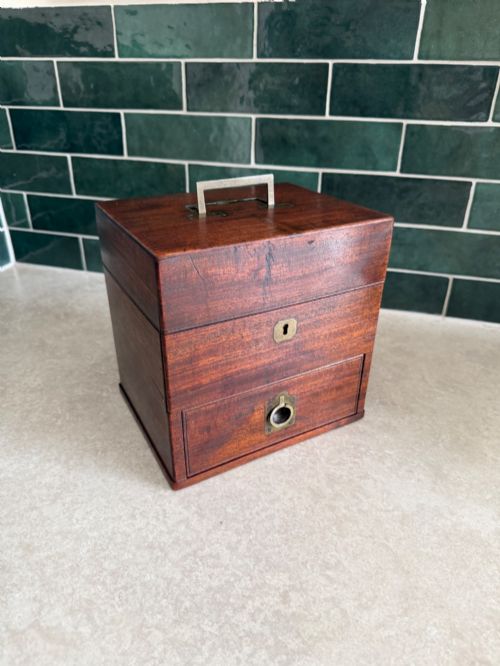
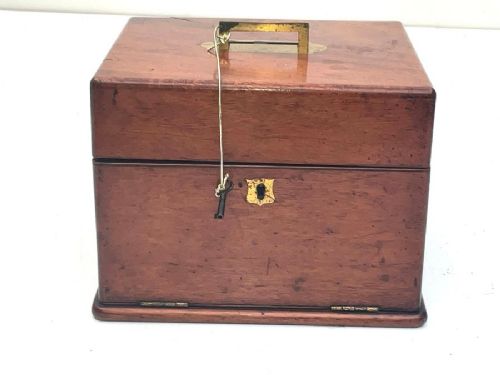
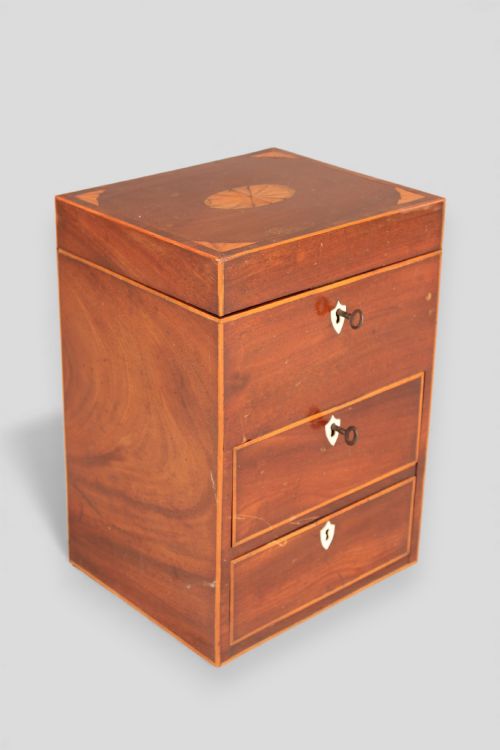
An antique wooden medicine box gathers together the portable pharmacies of the Georgian, Regency, and Victorian eras, taking the form of fitted chests, apothecary cabinets, and campaign cases. These pieces were designed to hold remedies, glass bottles, and scales securely for travel or household use.
You are most likely to meet mahogany boxes from the Georgian and Regency periods, often fitted with original bottles and brass hardware. Alongside these, 19th-century variants include wall-hanging cabinets, table cabinets, and specialised veterinary chests.
The materials reflect the practical and decorative needs of the period, combining robust woods with velvet linings, bone implements, and iron locks. Each piece tells the story of domestic and travel medicine before the age of mass-produced pharmaceuticals.
How they were made
Makers utilised dense timbers like mahogany and oak to construct the carcasses of these boxes, ensuring the heavy weight of glass bottles could be supported safely. These woods were often polished or inlaid to suit the domestic interiors of the 18th and 19th centuries.
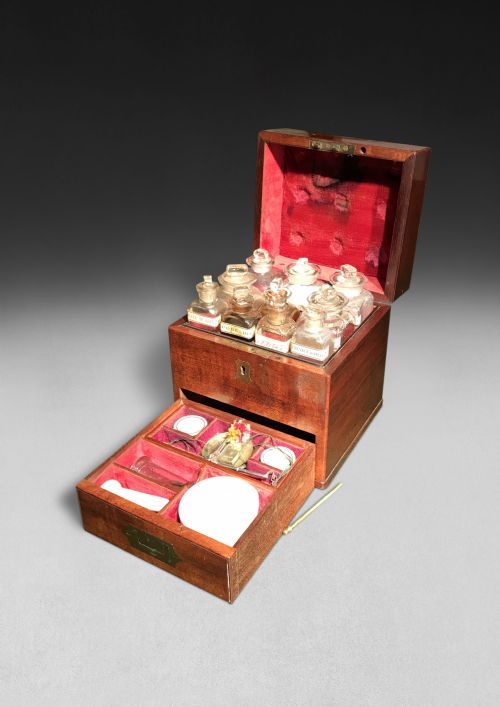
Internal partitions and velvet-lined compartments were meticulously fitted to hold fragile apothecary bottles in place during transport. Brass handles, hinges, and campaign mounts were integrated to provide durability and secure locking mechanisms.
Antique Wooden Medicine Box Retail Price Guide 2026
Typical asking prices for wooden medicine box among the pieces listed under this phrase on Sellingantiques today, from the lower quarter to the upper quarter. They describe what is for sale here now, not the wider market.
Some miniature campaign boxes contain hidden compartments beneath the primary bottle tier designed for secret powders.
What varies in quality
The distinction between a standard box and a superior one lies in the completeness of the original fittings and bottles. Boxes retaining their original glassware, bone measures, and working locks demonstrate a higher degree of preservation.
Cabinetmaking detail separates fine pieces from simpler examples, visible in the precision of the internal dividers, the quality of the mahogany or burr walnut grain, and the integration of brass campaign hardware.
The Antique Wooden Medicine Box Glossary
- Apothecary box
- A fitted wooden chest designed to store medicines, scales, and compounding equipment. These boxes range from small portable campaign cases to larger table cabinets.
- Campaign box
- A piece of portable furniture fitted with recessed brass handles and corner brackets for travel. They were built for military officers or travellers on long journeys.
- Fitted interior
- An internal arrangement of wooden partitions, drawers, and velvet-lined slots made to secure specific glass bottles and pharmaceutical tools. The complexity of these fittings often indicates the quality of the piece.
- Wall cabinet
- A hanging wooden cupboard designed to be mounted in a dispensary or home to store medical supplies. These pieces often feature glazed doors or carved panels.
Antique Wooden Medicine Box: Frequently Asked Questions
What did they keep inside?
These boxes held glass bottles filled with tinctures, powders, and pills, alongside scales, mortars, and pestles for compounding remedies at home or on the road.
Many examples still retain remnants of their original contents or the specialised glass vessels required by 18th and 19th-century practitioners.
How were they used?
Owners used them as portable pharmacies to treat family members, servants, or travelling companions before local chemists were readily available.
The fitted compartments ensured that delicate glassware and poisonous substances remained secure and organised during transit.
How do I date a box?
Dating relies on timber choice, hardware style, and the shape of the glass bottles housed within the interior. Georgian and Regency pieces typically show finer mahogany construction and specific bottle mouth styles compared to later Victorian variants.
Examining the construction of the dovetails and the design of the brass campaign mounts also helps narrow down the decade of manufacture.
Are the bottles usually original?
Survival rates vary, with some boxes retaining their full complement of labelled glass bottles while others have lost them over centuries of use.
Finding a box with its complete set of matched bottles and original stoppers is a notable mark of preservation.
How do I clean the wood?
Maintain the polished wooden surface using a traditional beeswax applied sparingly with a soft cloth to nourish the grain. Avoid modern liquid polishes that can degrade the historic finish and accumulate in carved or inlaid details.