




Georgian Wooden Medicine Chest
A georgian wooden medicine chest is a fitted travelling pharmacy that brings tactile, apothecary history directly into your interior.
Georgian Wooden Medicine Chest
A georgian wooden medicine chest represents a functional container for medical preparations, designed during the Georgian, Regency, and nineteenth century periods.
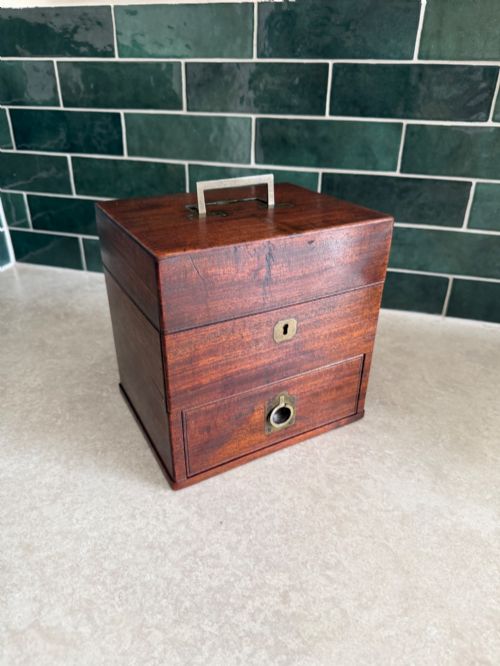
These pieces primarily manifest as apothecary boxes, chests of drawers, and apothecary cabinets intended to hold bottles and implements.
You are most likely to encounter compact mahogany boxes and fitted chests originating from the late eighteenth and early nineteenth centuries.
How they were made
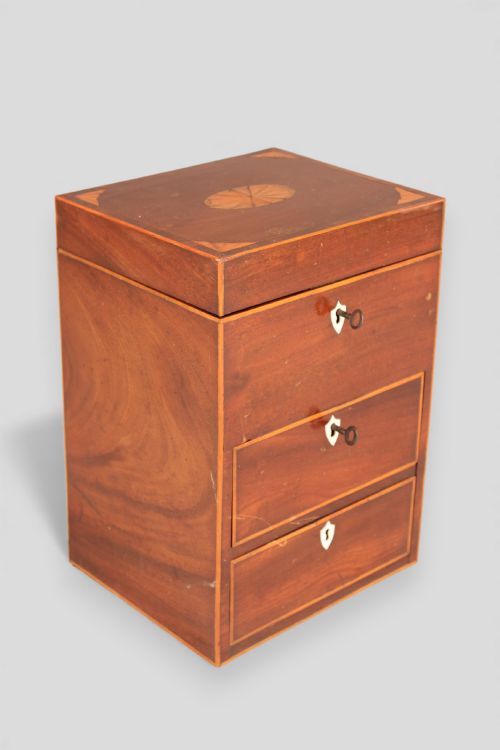
Carpenters constructed these boxes predominantly in mahogany, frequently incorporating boxwood inlay for decorative contrast on the exterior surfaces.
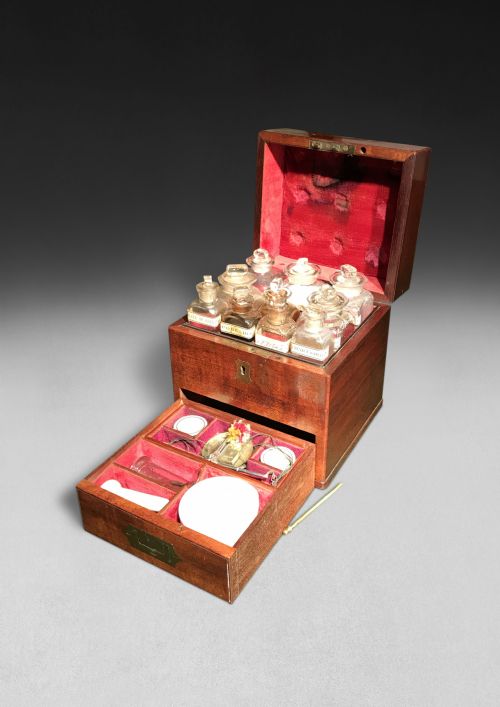
Interiors often feature fitted compartments lined with velvet to secure fragile glass bottles and instruments safely during travel.
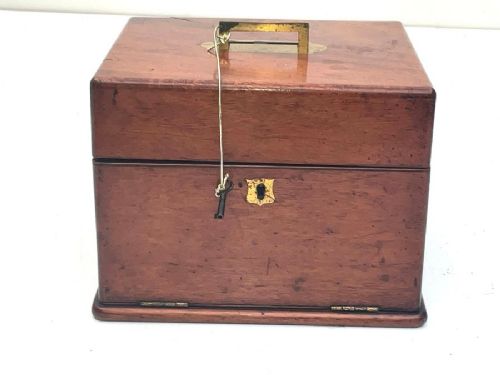
Metal components such as brass handles and iron fixtures provided structural durability and secure transport for the chemist's case.
Listings feature mahogany as the primary wood, complemented by brass, velvet, bone, and boxwood inlay.
What varies in quality
The standard of a georgian wooden medicine chest rests upon the preservation of its original internal contents, such as glass bottles and fittings.
Superior examples display refined cabinetmaking through precise boxwood inlay and robust brass hardware rather than utilitarian construction.
The Georgian Wooden Medicine Chest Glossary
- Apothecary box
- A portable container specifically designed to house medicinal bottles, scales, and related chemical ingredients.
- Campaign box
- A sturdy portable chest engineered for travel, frequently equipped with recessed brass carrying handles.
- Boxwood inlay
- A contrasting light wood technique used to create decorative geometric lines across dark mahogany surfaces.
- Fitted interior
- An internal wooden framework partitioned precisely to hold specific glass bottles and small pharmaceutical accessories.
Georgian Wooden Medicine Chest: Frequently Asked Questions
What did a georgian wooden medicine chest hold?
These chests held glass bottles containing medicines, powders, and liquids, alongside scales and mixing tools.
Travellers and physicians relied on them to dispense remedies while away from permanent apothecary shops.
How do I date a medicine chest?
Dating relies on stylistic clues like boxwood inlay, period brassware, and overall cabinet construction.
Pieces span from the mid eighteenth century through the Regency era and into the nineteenth century.
Were these chests meant for travel?
Many examples functioned as campaign boxes built with sturdy handles for transport on journeys.
Others remained stationary in domestic settings as chemist cabinets or tabletop chests of drawers.
Do original bottles add value?
Finding a chest with all original glass bottles intact provides a complete historical record of its contents.
Some examples survive empty, reflecting only the fitted interior framework designed by the cabinetmaker.