




Fitted Pharmacy Box
A fitted pharmacy box is a compartmented travel case for medical bottles and scales, prized for its clever internal engineering and survival of original contents.
Fitted Pharmacy Box
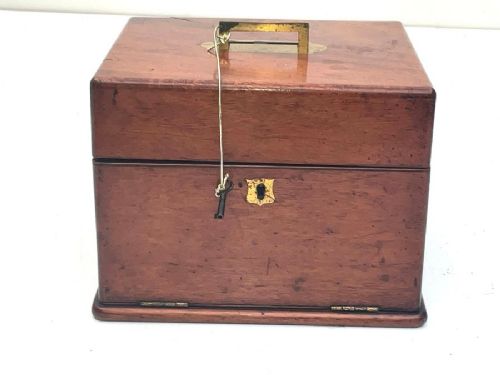
A fitted pharmacy box is a specialised chest designed to hold medicines, bottles, and scales securely during travel. These pieces emerge primarily from the Georgian, Regency, and Victorian periods.
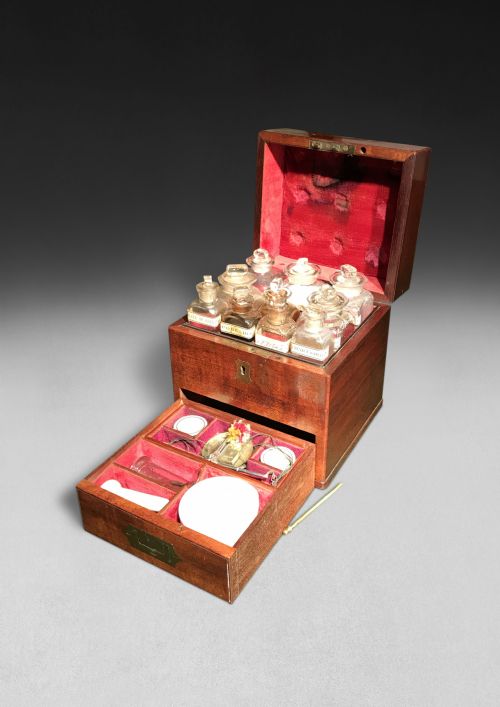
Buyers will most frequently encounter mahogany apothecary cases and travelling chests fitted with glass bottles and lower drawers. These items span various forms including miniature campaign boxes and medicine chests.
The construction reflects domestic and military medical needs of the eighteenth and nineteenth centuries. Each box organises liquid remedies and dry ingredients into compact, transportable units.
Materials and construction
Makers utilised dense timbers such as mahogany to build the structural carcass and drawers of a fitted pharmacy box. Brass fittings, including carrying handles and corner brackets, reinforce the exterior for transit.
Interiors frequently feature velvet linings to cushion fragile glass bottles alongside paper labels and ceramic components. Leather elements and fitted compartments secure the contents tightly against movement.
Current listings span the Georgian, Regency, and Victorian eras, utilising mahogany, brass, glass, velvet, paper, ceramic, and leather.
Judging quality in pharmacy boxes
Quality rests upon the completeness of the original internal fittings and whether glass bottles survive intact. Finer examples retain their original paper contents, ceramic jars, and lower storage drawers.
The refinement of the exterior woodwork, such as delicate inlay work on mahogany surfaces, distinguishes superior pieces. Robust brass hardware and precise internal partitioning indicate high craftsmanship.
The Fitted Pharmacy Box Glossary
- Apothecary box
- A fitted container for medicinal bottles and scales used by practitioners and travellers. These boxes date from the Georgian and Victorian eras.
- Campaign case
- A portable chest built for military or travel use with flush brass handles. Such cases prioritised durability and compact storage on the move.
- Medicine chest
- A larger variant of the pharmacy box designed to hold an extensive assortment of remedies. These chests often incorporate bottom drawers for scales and mortars.
- Mahogany
- A durable, reddish-brown tropical hardwood favoured for high-quality nineteenth-century furniture and boxes. It resisted warping during travel.
Fitted Pharmacy Box: Frequently Asked Questions
What is a fitted pharmacy box?
A fitted pharmacy box is a wooden chest divided internally to hold glass medicine bottles, scales, and compounding tools safely. These containers were essential for doctors, travellers, and households during the Georgian and Victorian periods.
They combine secure storage with portable design, featuring brass hardware for transport. Many examples include sliding lids or hidden drawers for powders and instruments.
How were these boxes used?
Practitioners and affluent travellers used them to dispense and administer medicines while away from permanent apothecaries. The fitted compartments kept fragile glass bottles upright during journeys.
Lower drawers typically housed scales, measuring glasses, and mortar equipment. This setup allowed immediate preparation of remedies on campaign or at country estates.
How do I date an apothecary box?
Dating relies on timber choices, brass hardware styles, and construction techniques visible in the woodwork and linings. Georgian and Regency examples often feature plain mahogany with recessed brass campaign handles.
Victorian pieces may incorporate decorative inlay work and varied internal velvet or paper arrangements. The presence of specific bottle types further helps narrow the period of manufacture.
Are original bottles usually included?
Many surviving boxes retain a substantial number of their original glass bottles, sometimes with intact paper labels. Complete sets with matching bottles and jars are particularly sought after by collectors.
Some pieces have lost elements over time or contain later replacement bottles. Examining the fit within the wooden dividers helps determine originality.