

Antique Wooden File Drawers
These antique wooden file drawers organise papers with period craft, spanning Georgian banks to Edwardian cabinets.

Antique Wooden File Drawers
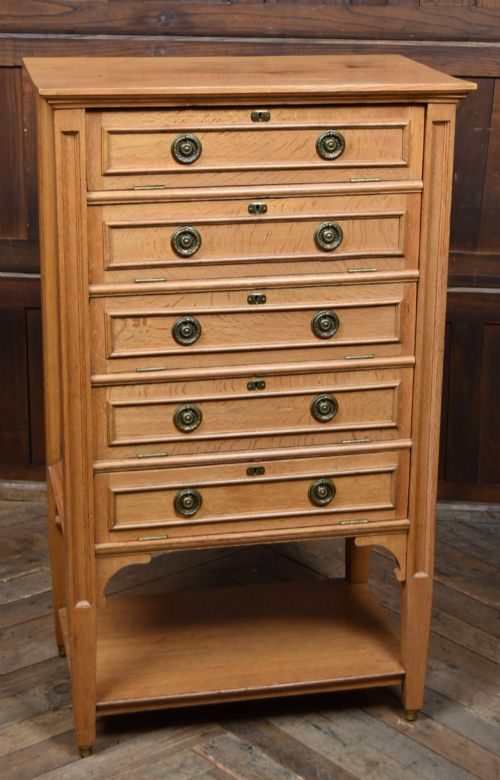
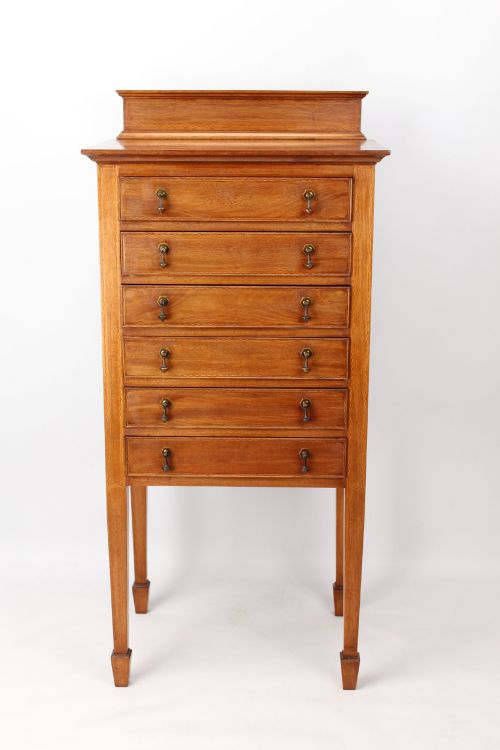
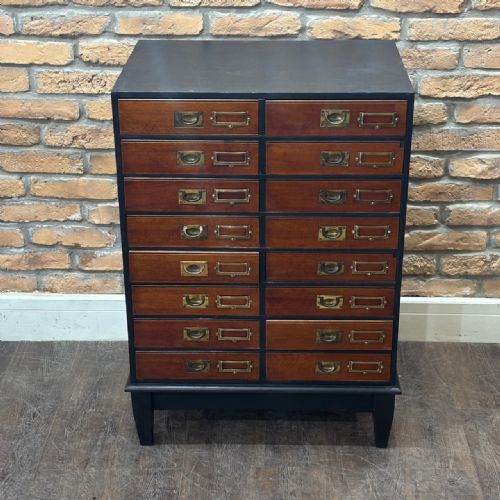
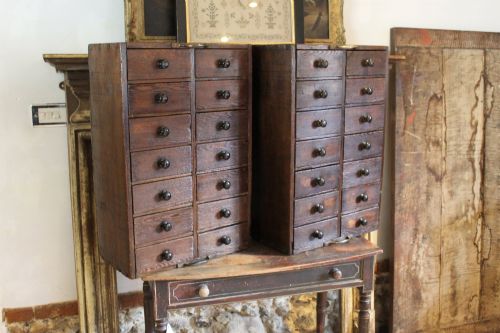
When you search for antique wooden file drawers, you encounter sturdy storage solutions built to hold documents, music, and correspondence. The selections range from compact desk organisers and music cabinets to substantial banks of drawers and multi-drawer filing units.
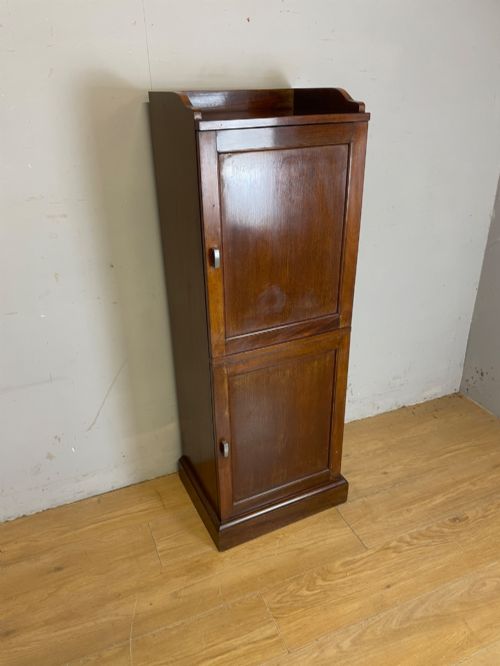
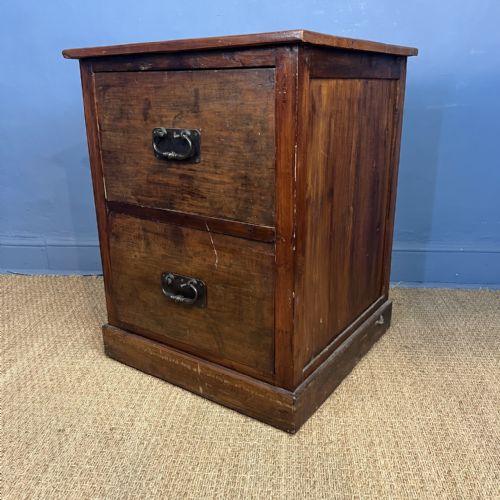
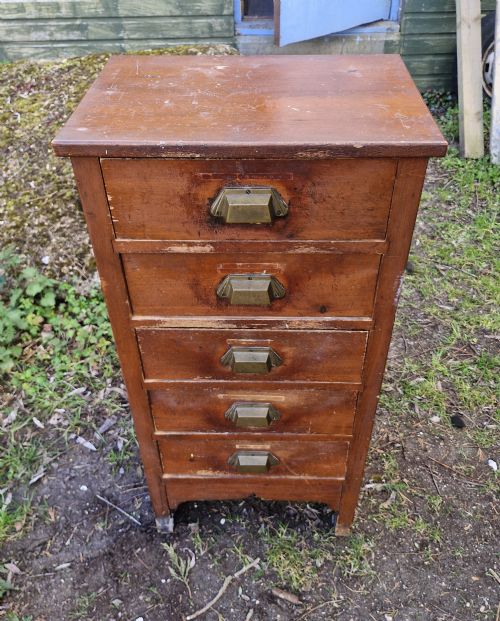
The version you are most likely to meet on this page is an early twentieth-century oak or mahogany filing cabinet, often dating from the Edwardian era or the 1920s. These office and library pieces were constructed to withstand heavy daily use while maintaining a formal aesthetic.
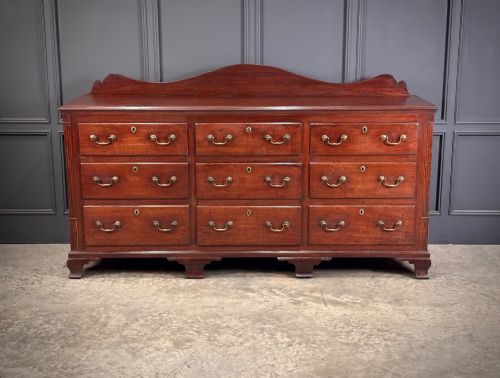
Other frequent forms include nineteenth-century walnut and teak chests, alongside specialist pieces like Amberg's patent letter files and Arts and Crafts collectors cabinets. Georgian and eighteenth-century examples appear as large mahogany banks of drawers adapted for storage.
Materials and Construction
Cabinet makers utilised solid hardwoods like mahogany, oak, walnut, and teak, alongside softer pine for internal carcases and backing boards. These timbers provided the structural integrity required to support numerous sliding drawers under regular office loads.
Joinery relied on traditional techniques such as dovetailed drawer construction and panelled sides to ensure durability. Brass handles, label holders, and patent locking mechanisms were fitted to the exterior to aid retrieval and security.
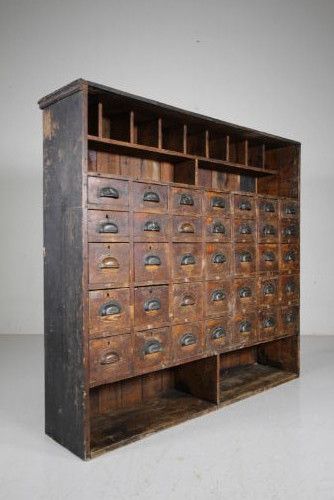
Object forms range from library card indexes and music cabinets to sixty-four-drawer office banks.
Distinctions in Quality
The distinction between standard office utility and finer craftsmanship rests in the selection of figured timber veneers, refined mouldings, and integrated locking systems like tambour fronts or Wellington locking bars. Superior examples display thoughtful proportions and specialised hardware that elevate industrial utility into refined furniture.
Constructional depth dictates longevity, separating pieces assembled with robust framing from simpler utility boxes. Original brass fittings, well-mated drawer runners, and untouched surface patination distinguish pieces that retain their architectural integrity from those altered over decades of office service.
Maple and Co·D Napier and Sons
The Antique Wooden File Drawers Glossary
- Wellington Chest
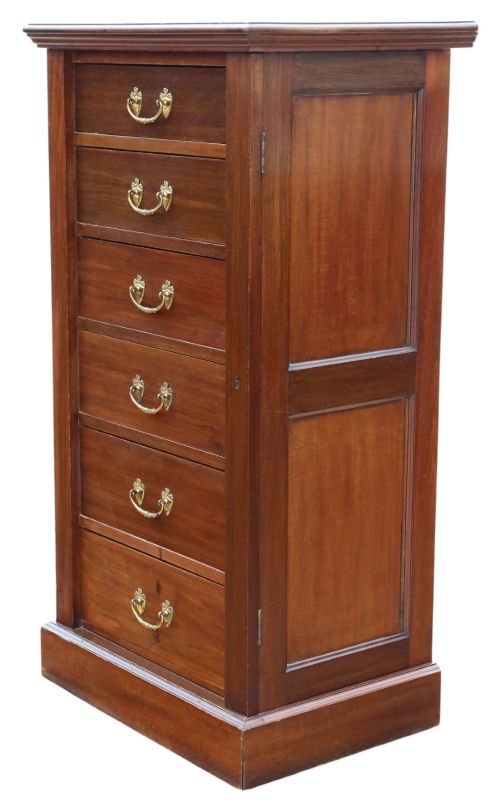
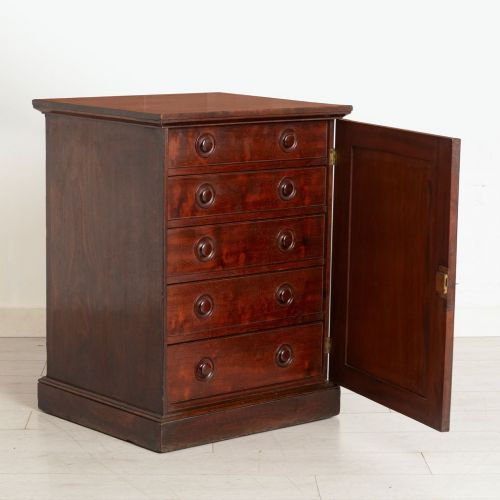
- A tall, narrow chest of drawers secured by a hinged locking stile on one side that fastens with a key. This design originated in the nineteenth century to secure private papers.
- Tambour Front
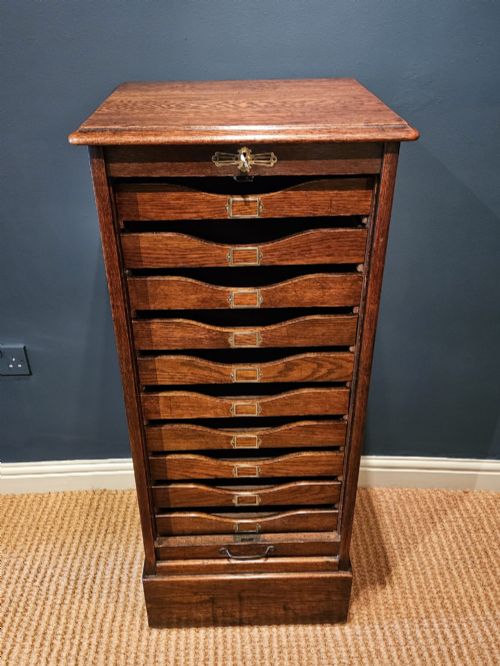
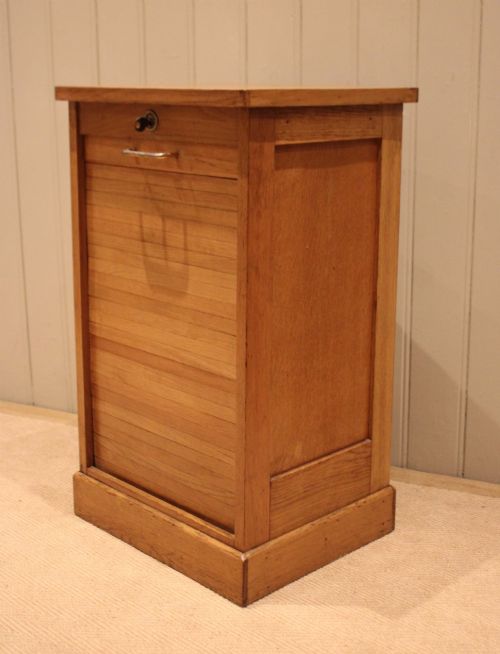
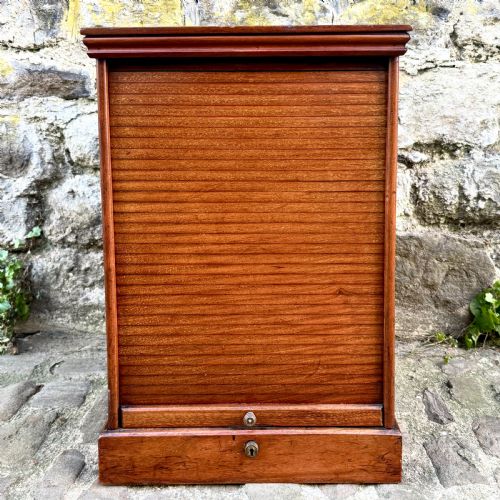
- A flexible sliding shutter formed of narrow slats of wood glued to a canvas backing, used to conceal interior filing slots. It runs in tracks cut into the cabinet sides.
- Bank of Drawers
- A multi-tiered set of numerous small or medium drawers arranged in columns and rows. These units served commercial offices, libraries, and workshops.
- Patent Letter File
- A specialised storage cabinet containing internal spring-clip mechanisms or drop-front boxes for filing correspondence alphabetically or chronologically. Amberg's patent is a prominent example found in period offices.
- Plan Chest
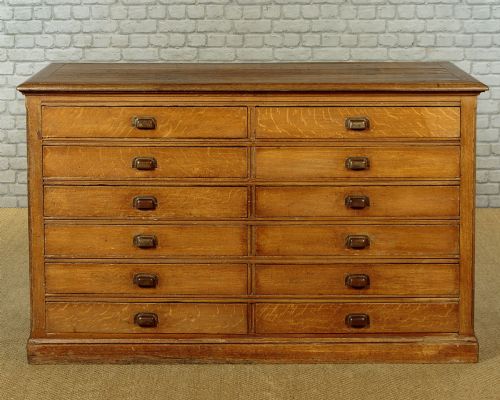
- A wide, shallow set of drawers designed originally to store architectural blueprints and large maps flat. They utilise heavy timber construction to support broad paper sheets.
Antique Wooden File Drawers: Frequently Asked Questions
What documents fit into these cabinets?
Period cabinets accommodated letters, invoices, and library cards within customized internal slots and shallow drawers. Many twentieth-century designs suit modern paper sizes with slight adjustments.
Specialised units like music cabinets and plan chests held sheet music and large technical drawings respectively. Buyers often repurpose these compartments for modern stationery and craft materials.
How do tambour doors operate?
Tambour doors run on internal wooden or metal tracks cut into the frame of the cabinet. The flexible slatted shutter slides smoothly around a corner to reveal the interior file slots.
Proper maintenance involves keeping the tracks clean and applying suitable wax to ensure the wooden slats glide without binding. These mechanisms required precise carpentry to construct.
Where were these cabinets used?
These pieces served primarily in professional offices, legal practices, libraries, and administrative headquarters. Banks, post offices, and railway companies also relied on multi-drawer units to manage paperwork.
Smaller desk organizers and music cabinets found a place in domestic parlours and studies. Their robust construction suited commercial environments.