


19th Century Letter Cabinet
A 19th century letter cabinet keeps your desk tidy with the clever compartments and drawers that Victorians relied upon for their daily correspondence.

19th Century Letter Cabinet
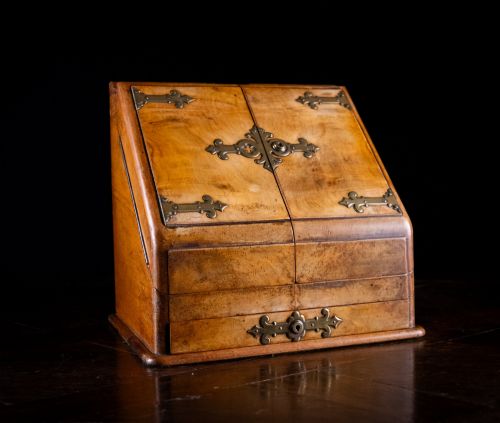
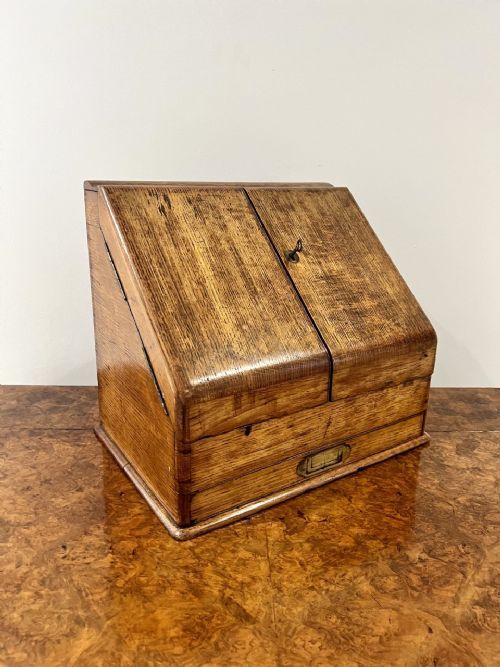
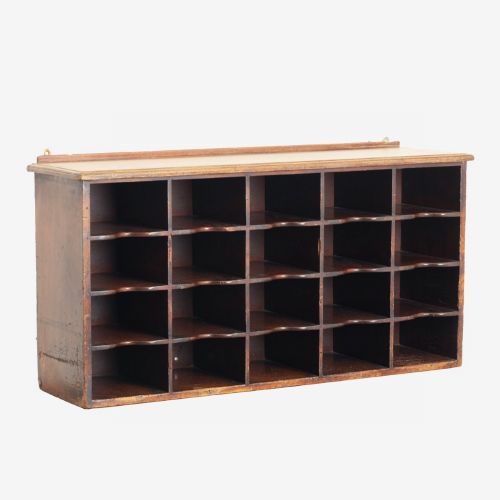
A 19th century letter cabinet is a practical piece of desk furniture designed to organise incoming mail, stationery, and writing implements. The forms on this page range from compact stationery boxes and correspondence boxes to large filing cabinets and desktop pigeon holes.
The objects serve as functional desk accessories that evolved to meet the increasing administrative demands of homes and offices during the period. Their primary purpose remains sorting letters, papers, and documents in an orderly manner.
How they were made
Cabinet makers utilised dense hardwoods such as mahogany, oak, walnut, and exotic coromandel and olivewood to construct the outer carcasses. These timber choices provided the durability needed for heavy daily use on busy desks.
Brass mounts, hinges, and locks reinforce the corners and secure the opening panels, while glass panels occasionally feature on front doors or display sections. Traditional Japanese lacquer techniques appear on imported pieces from the Meiji period, offering a distinct surface finish.
Amberg patented American letter files so securely that owners centuries later still hunt for the missing keys.
What varies in quality
The standard of timber selection and interior arrangement sets the finer examples apart from standard commercial pieces. Superior items feature beautifully figured walnut, mahogany, or coromandel with carefully fitted internal divisions for stationery and pens.
Hardware quality also dictates the tier of the piece, with heavy brass mounts, working locks, and patented mechanisms indicating superior manufacture. The integration of specialised filing systems or intricate lacquer work elevates certain cabinets above plain utility boxes.
Houghton and Gunn
The 19th Century Letter Cabinet Glossary
- Stationery box
- A desk accessory designed specifically to hold writing paper, envelopes, and small office supplies. These containers often feature sloping lids or vertical compartments.
- Pigeon holes
- Open compartments arranged in rows inside a desk or cabinet for sorting letters and documents. They provide quick access to active correspondence.
- Coromandel
- A dense, heavily grained exotic timber imported from Asia and used for luxury Victorian boxes and cabinets. Its dark colour and striking patterns make it highly decorative.
- Meiji Period
- The era in Japanese history from eighteen sixty-eight to nineteen twelve that produced exported lacquerware found in European interiors. Pieces from this time display meticulous surface decoration.
- Patented letter file
- An office storage system designed under a specific mechanical patent to organise commercial correspondence. Amberg's patent cabinets represent this functional category.
19th Century Letter Cabinet: Frequently Asked Questions
What is a 19th century letter cabinet used for?
These pieces were originally designed to sort incoming mail, store writing paper, and keep important documents organised on a desk. They provide a practical way to manage correspondence in a study or home office.
Today, they serve the exact same purpose while adding period character to a workspace. You can use the internal compartments for letters, notebooks, and modern stationery.
How do I date a 19th century letter cabinet?
Dating relies on observing the timber choices, construction methods, and stylistic cues present in the piece. Pieces from the eighteen-sixties and seventies often feature rich mahogany or walnut, while later items might show lighter oak.
Patents marked on the hardware, such as filing systems from nineteen hundred, provide precise manufacturing dates. Maker signatures or stamps on the locks and brasses also help pinpoint the era of production.
Are these cabinets suitable for modern desks?
Their compact footprints make them ideal for placing on top of modern writing desks or sideboards. They offer vertical storage without taking up excessive surface workspace.
Using one allows you to conceal clutter like bills, stamps, and stationery inside traditional compartments. The mix of wood tones adds warmth and texture to contemporary interiors.
What is the difference between a letter box and a stationery box?
A letter box typically includes a slot on top for posting mail into a secure internal compartment, acting much like a household post box. They were common in country houses and large offices.
By contrast, a stationery box opens up to reveal upright dividers specifically proportioned for blank paper and envelopes. Both fulfill desk organisation duties but handle mail flow differently.