


Antique Wooden End Table
An antique wooden end table brings compact surface space and period character to a room.
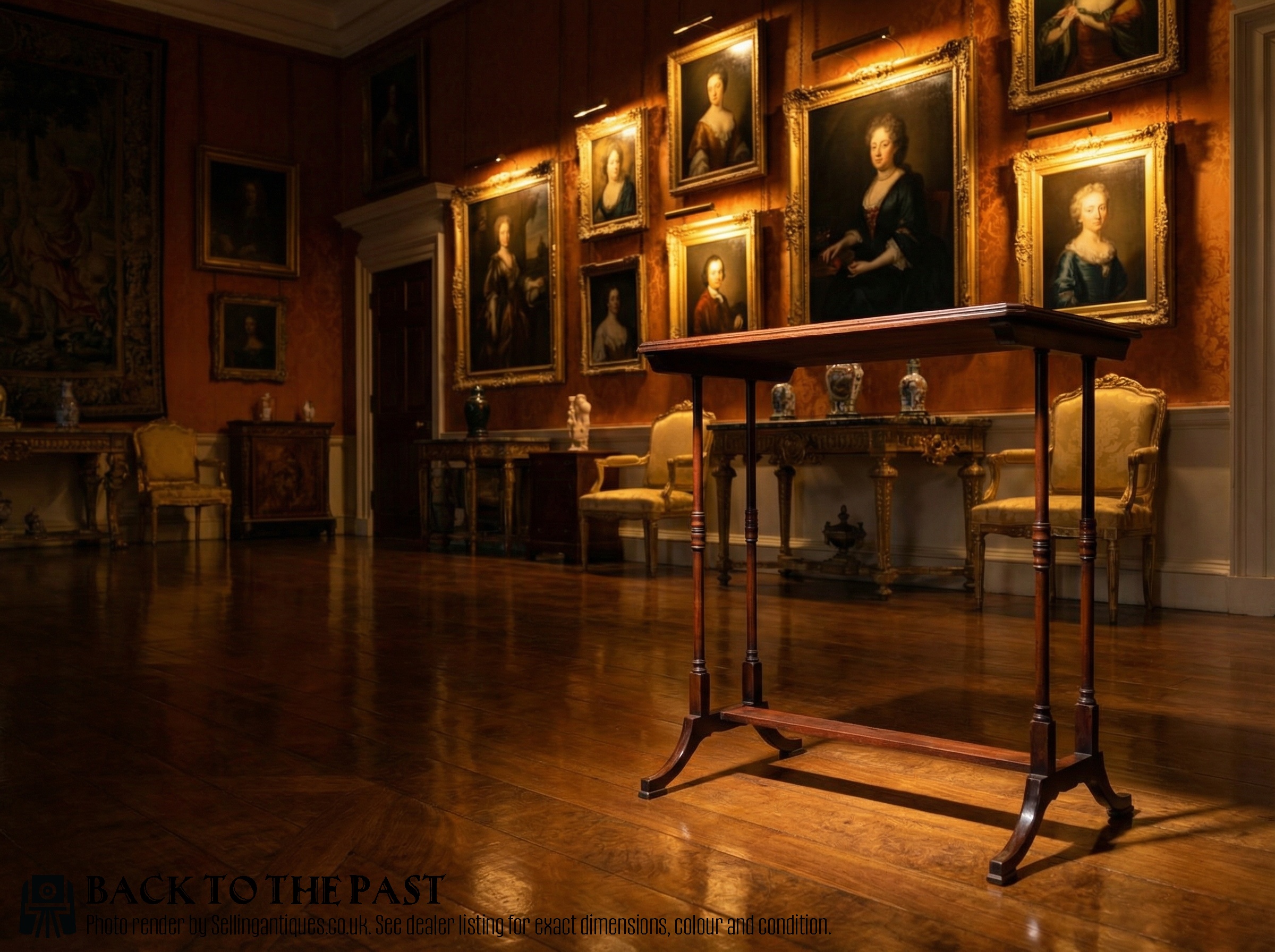
Antique Wooden End Table
An antique wooden end table provides a small surface beside a chair or sofa, appearing across periods from the eighteenth century through to the 1930s. These pieces include side tables, occasional tables, nests of tables, and lamp tables designed for daily utility in domestic interiors.
The selection ranges from Georgian mahogany and Victorian rosewood examples to Edwardian golden oak and inlay work, alongside Arts and Crafts designs. Buyers encounter compact forms such as octagonal tables, drop-leaf tables, and tray-top occasional pieces.
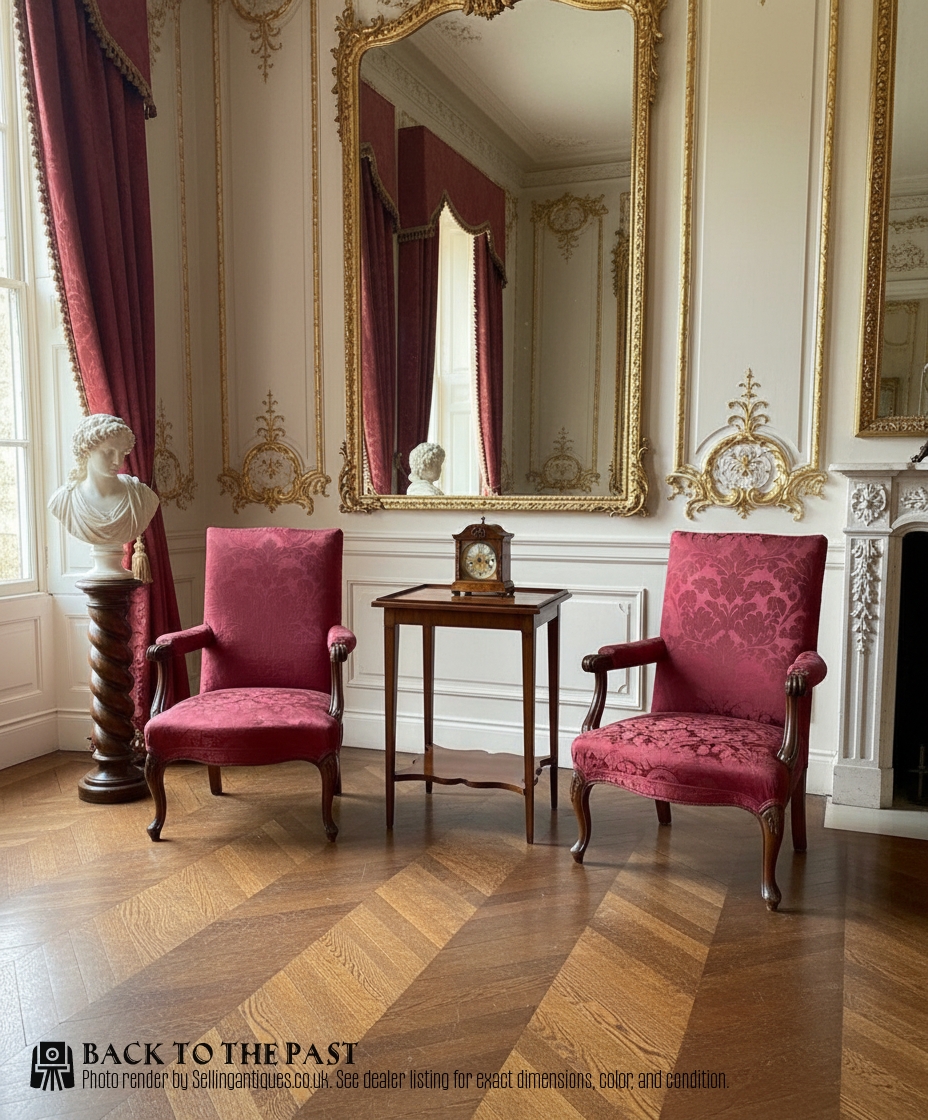
Materials and construction
Cabinetmakers utilised hardwoods such as mahogany, oak, walnut, rosewood, and satinwood to construct these tables, often selecting figured timber for top surfaces. Brass fittings appear on castors and handles, while specialised decoration incorporates wood inlay and brass inlay.
Construction methods visible in the period include drop leaves, spider legs, barley twist turnings, chip carving, and structural elements like trestle ends. Joinery relies on traditional carpentry appropriate to the Georgian, Victorian, and Edwardian eras.
Antique Wooden End Table Retail Price Guide 2026
Typical asking prices for wooden end table among the pieces listed under this phrase on Sellingantiques today, from the lower quarter to the upper quarter. They describe what is for sale here now, not the wider market.
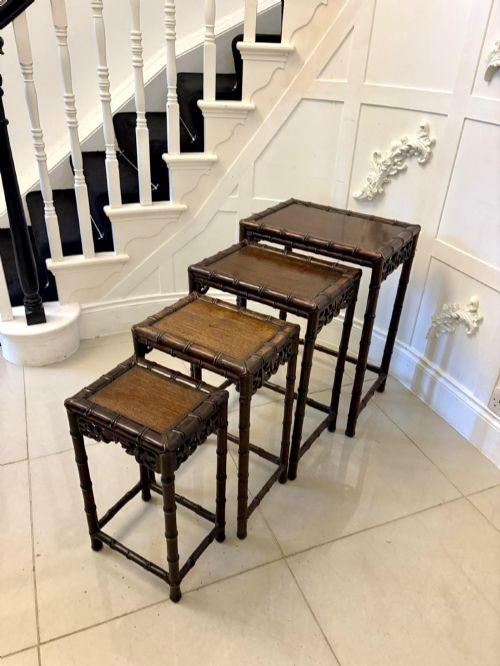
Faux bamboo framework appears on an oriental-carved nest of tables, satisfying Victorian enthusiasm for exotic botanical mimicry.
What separates examples
Quality rests on the selection of timber, where figured mahogany, burr oak, or rosewood exhibits superior grain pattern and natural depth. Cabinetmaking skill shows in crispness of carving, precision of wood inlay, and the stability of joints.
Proportion and utility define the better pieces, maintaining balance in smaller formats like nests of tables or spider leg lamp tables. Original surfaces and hardware carry more weight than later refinishing or replacement elements.

Trevor Page & Co·Liberty & Co·William Birch
The Antique Wooden End Table Glossary
- Occasional table
- A small movable table intended for versatile use around a room rather than a fixed dining or writing purpose. These pieces appear frequently in Victorian and Edwardian selections.
- Nest of tables
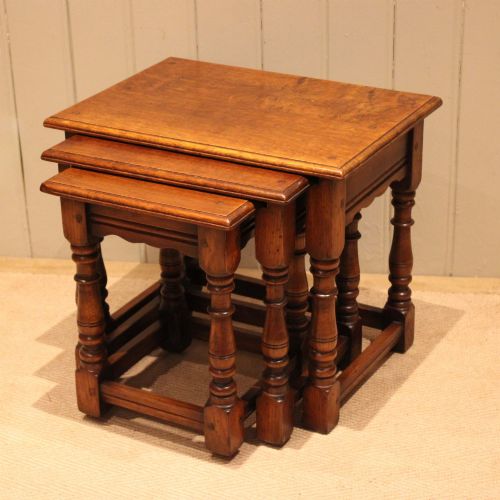
- A set of graduated tables designed to stack inside one another to save space when not in use. They occur in mahogany and golden oak.
- Sutherland table
- A narrow drop-leaf table with hinged flaps supported by pivoting swing legs. Victorian examples in mahogany or walnut demonstrate this form.
- Drop-leaf table
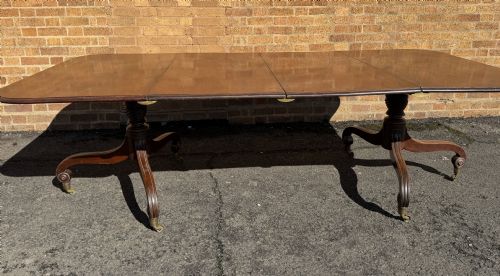
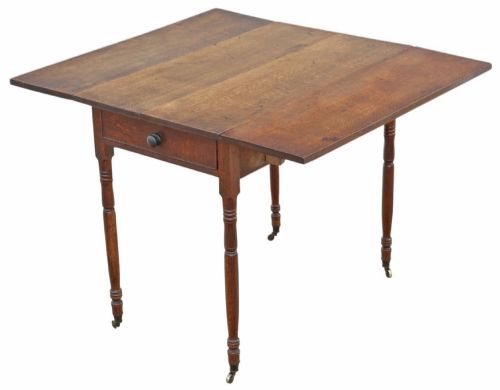
- A table with hinged flaps on the sides that fold down to reduce the footprint or lift up to extend the surface. Georgian and Victorian versions utilise this mechanism.
- Inlay
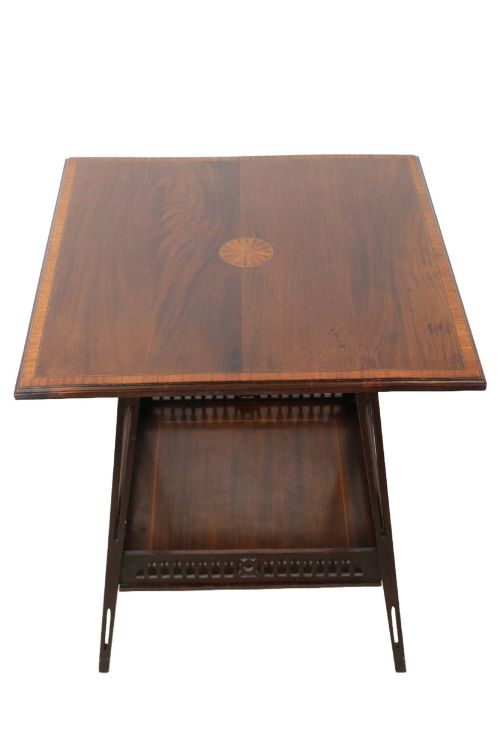
- A decorative technique where contrasting woods or metals are fitted into depressions within the primary surface. Edwardian and Hoshiarpur pieces employ this method.
Antique Wooden End Table: Frequently Asked Questions
What is an antique wooden end table used for?
These tables provide a convenient surface for lamps, books, or drinks beside seating furniture in living spaces.
Historically, specific forms like lamp tables or nests of tables served versatile domestic functions in Victorian and Edwardian rooms.
How do I identify a Georgian end table?
Georgian pieces typically feature solid mahogany or oak construction with restrained classical proportions and minimal ornamentation.
Details like spider legs or drop-leaf Pembroke designs help distinguish eighteenth and early nineteenth-century examples from later revival styles.
What woods were used for Edwardian tables?
Edwardian cabinetmakers frequently worked with mahogany, golden oak, burr oak, and satinwood for occasional tables.
Many pieces from this period incorporate decorative elements such as chequered wood inlay or brass details.
Are nests of tables an old invention?
Stacked tables appear in various configurations across the late nineteenth and early twentieth centuries.
Edwardian makers produced sets in mahogany and golden oak, designed to slide together for compact storage.
How do I fit an antique table into a modern room?
Compact forms like lamp tables and small side tables integrate easily beside contemporary sofas or armchairs.
Their varied timber tones, from dark walnut to warm oak, allow them to mix with diverse interior styles.