


Antique Wooden Elephant
These antique wooden elephant pieces bring carved regional craft and domestic utility together into rooms that value character.
Antique Wooden Elephant
When you search for an antique wooden elephant, you encounter diverse forms ranging from small library bookends to large side tables and sculptural studies. The objects span the nineteenth century through the early decades of the twentieth century, originating from workshops in India, China, Burma, and European carvers working in regional idioms.
Anglo-Indian Colonial and Raj period productions form a significant portion of what appears here. These items demonstrate distinct regional craftsmanship, utilising local timbers to depict ceremonial processions, working animals, and domestic furnishings.
Materials and construction methods
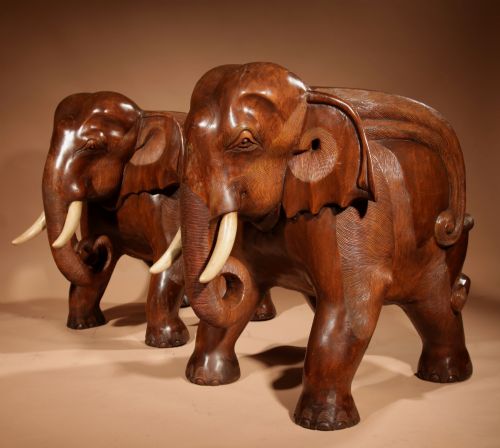
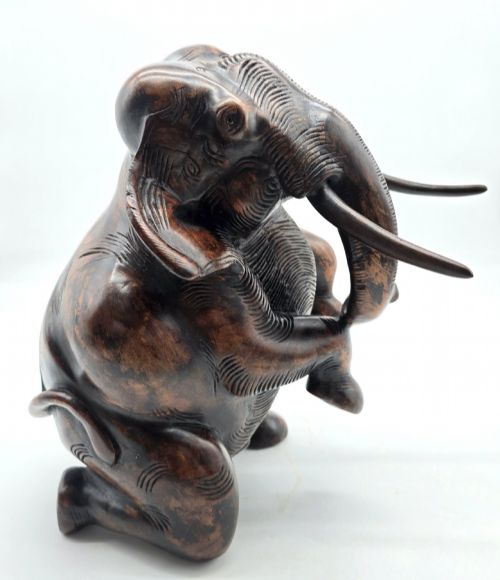
Carvers shaped these pieces from dense tropical timbers such as teak, rosewood, ebony, and hardwood. These heavy woods permitted deep undercutting and fine detail work without splintering during the carving process.
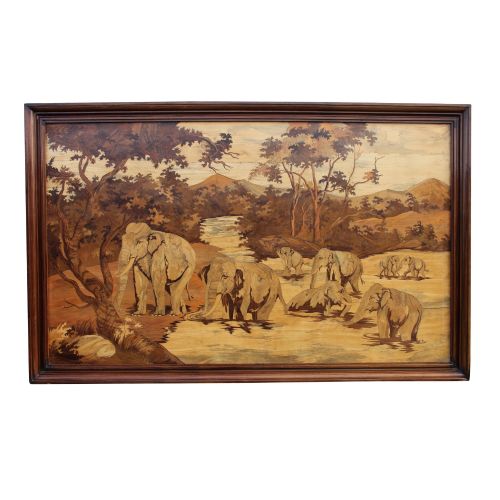
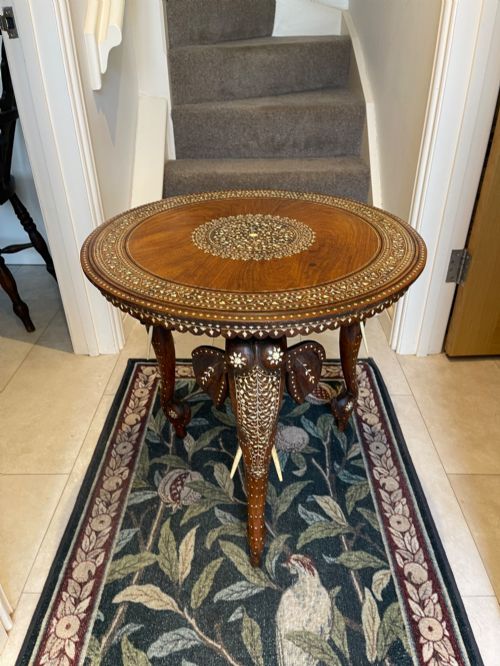
Artisans employed bone inlay, marquetry, and lacquer work to enrich plain timber surfaces. Tables and panels often combined multiple wood species or incorporated contrasting materials for tusks and decorative highlights.
Joinery techniques matched the regional traditions of the makers, utilising solid timber panels and pegged joints for tables, stands, and seating. Surfaces received hand-rubbed finishes that highlighted the natural grain and colour of the dense woods.
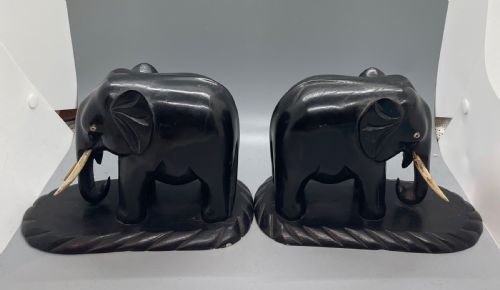
Several elephants sport painted wooden tusks, offering a charmingly direct solution when natural ivory was absent or impractical.
Distinctions in execution and design
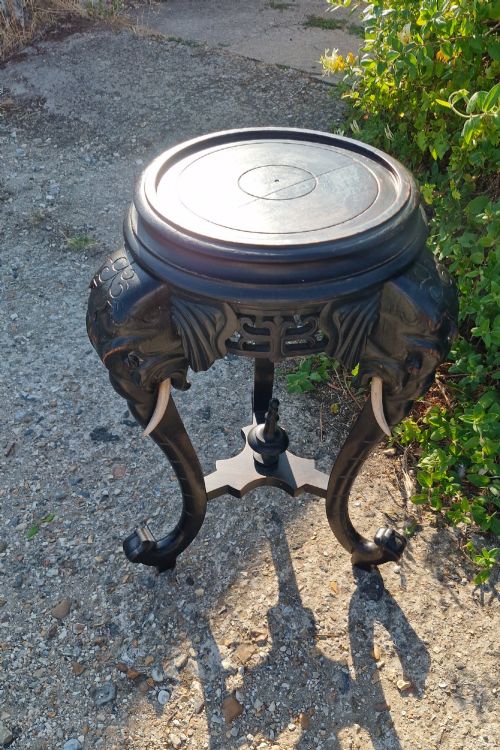
The integration of the elephant motif into furniture design dictates quality in tables and stands. Where figures support tops directly, the stability of the construction and the harmony between carved animals and structural elements show the maker's skill.
Complexity of surface decoration distinguishes exceptional examples from simpler work. The precision of bone inlay patterns, the crispness of relief carving, and the selection of figured timbers determine the overall refinement of the piece.
The Antique Wooden Elephant Glossary
- Anglo-Indian
- Describes objects made in India during the British period, combining British furniture forms with local decorative carving traditions. These pieces often utilise indigenous timbers such as teak and rosewood.
- Hoshiarpur
- Refers to a style of woodwork originating from Punjab, characterised by intricate wooden carving and dense bone or brass inlay work. Geometric and floral patterns frequently cover the entire surface of these tables and stands.
- Marquetry
- The art of applying small pieces of veneer to a structure to form decorative patterns or pictorial scenes. This technique appears on panels and furniture tops across the selection.
- Black Forest
- A style of wood carving associated with nineteenth-century European craftsmanship, known for realistic animal studies and domestic items. Carvers utilised local woods to create expressive figures with textured surfaces.
- Polychrome
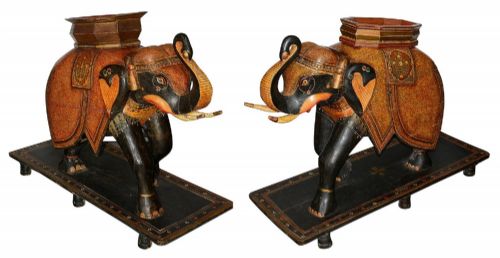
- Describes objects decorated with multiple colours in paint or lacquer. This finish highlights details on temple carvings and regional figures.
Antique Wooden Elephant: Frequently Asked Questions
How do I care for antique wooden furniture?
Keep wooden pieces away from direct heat sources and sudden temperature shifts to prevent timber splitting. Dust regularly with a soft, dry cloth and apply occasional specialist wax to maintain the finish.
Avoid using modern liquid polishes containing silicones or harsh chemicals. Natural beeswax preserves the patina and nourishes dense tropical hardwoods over time.
Where were these carved wooden animals made?
Most items originate from workshops in the Indian subcontinent, particularly during the Raj and Victorian periods. Others come from Chinese carvers, Burmese temple workshops, and European makers producing Black Forest style goods.
Regional preferences shaped the choice of timber and decorative techniques. Indian makers utilised teak, rosewood, and ebony, while European workshops often worked in softer fruitwoods or imported dense varieties.
How are elephant tables structured?
Elephant tables typically use carved figures as structural supports beneath octagonal, hexagonal, or circular table tops. The animals stand on carved bases or directly on the floor, bearing the weight of the surface above.
Some designs feature multiple animals arranged in a circle, while others present a single ceremonial elephant with elaborate trappings. Joinery relies on traditional pegged construction to secure the top to the carved supports.
What is Anglo-Indian furniture?
Anglo-Indian furniture represents a synthesis of British domestic forms and traditional Indian carving techniques. British officials and merchants commissioned local artisans to produce tables, stands, and seating using indigenous timbers.
These pieces combine familiar European silhouettes with dense surface carving, floral motifs, and detailed animal figures. The resulting objects reflect the cultural exchange of the colonial period.