
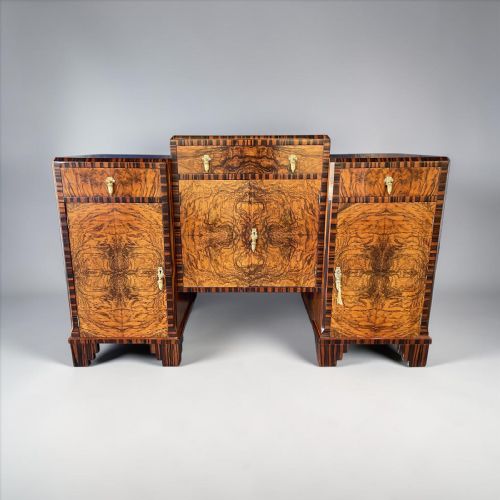
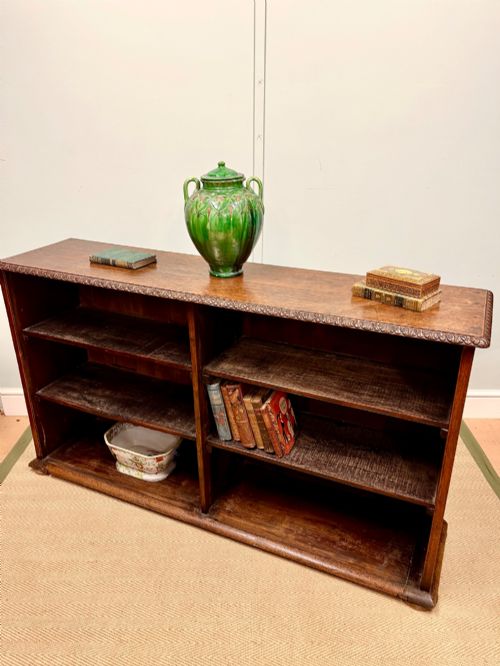
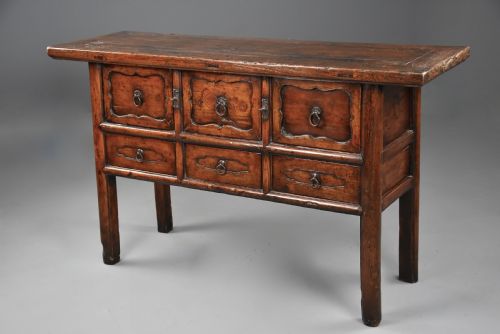
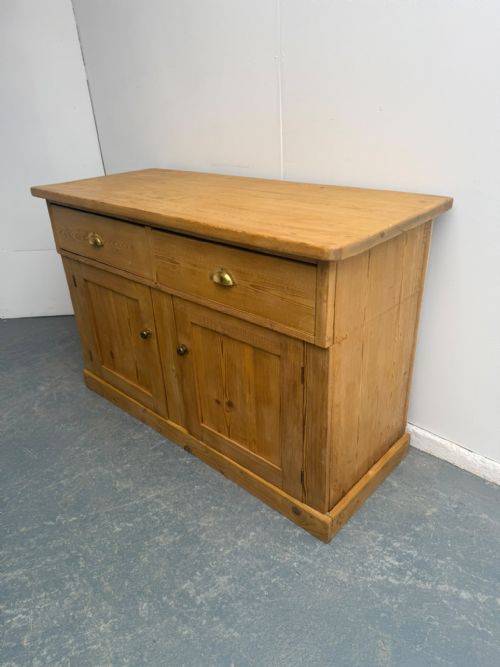
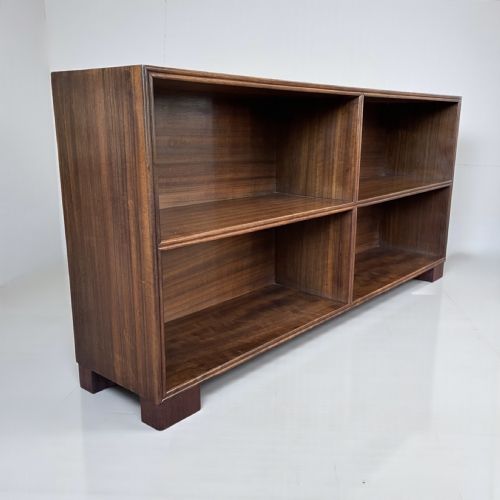


Antique Wooden Console Cabinet
These antique wooden console cabinet options bring solid timber storage into a room, offering practical surface space alongside period character.
Antique Wooden Console Cabinet
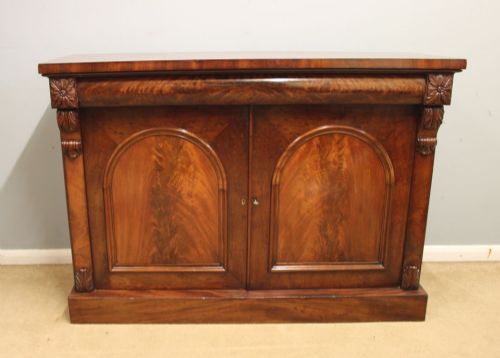
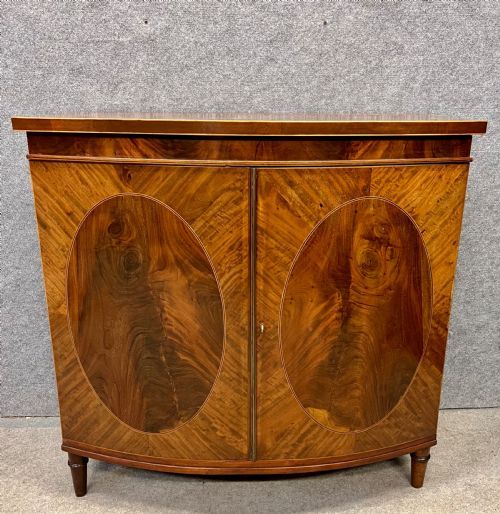
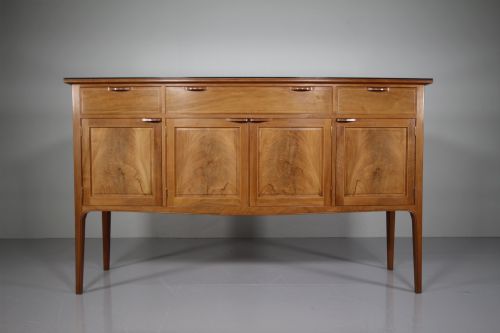
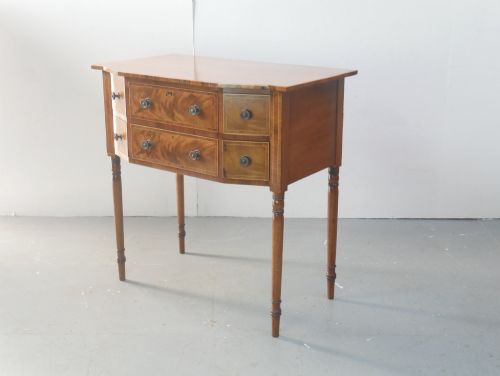
An antique wooden console cabinet covers a broad family of timber storage furniture encountered on this page, ranging from Georgian and Victorian sideboards to Edwardian demi-lune cabinets and Chinese elm side tables. Buyers seeking an antique wooden console cabinet often encounter pieces designed for dining rooms, hallways, or reception spaces, functioning as sideboards, side tables, or display units.
The selection leans heavily toward nineteenth-century production, alongside eighteenth-century examples and early twentieth-century creations spanning Edwardian, Art Deco, and Chinese provincial styles. Mahogany, walnut, pine, elm, and teak form the backbone of these listings, appearing across forms such as bow-fronted sideboards, marble-topped washstands, and carved side cabinets.
Materials and construction methods
Cabinetmakers utilised dense hardwoods such as mahogany and walnut, frequently pairing them with secondary timbers like pine and employing satinwood and boxwood for decorative inlays. Construction relied on traditional joinery techniques, cabinet frames, and applied carvings executed in teak, elm, or pine.
Surface treatments range from waxed finishes and French polish to intricate lacquer work, gilding, and brass hardware or feet. Regional variations extend from English Georgian and Victorian cabinetmaking to Swedish workshop production and Chinese provincial joinery.
Materials represented include mahogany, walnut, elm, pine, teak, and satinwood, occasionally accented with brass hardware and marble tops.
Distinctions in quality and execution
Quality separates through the precision of timber selection, such as figured mahogany grains, choice walnut veneers, or well-patinated Chinese elm. The refinement of secondary details like hand-carved ornamentation, marquetry inlay, and matching brass hardware determines the standing of a piece.
Exhibition pieces and items attributed to known makers demonstrate higher levels of joinery ambition, balanced proportions, and integrated design elements like marble tops or tambour doors compared to utilitarian workshop output.
Maurice Adams·Pietro Ferrario
The Antique Wooden Console Cabinet Glossary
- Demi-lune
- A half-moon shape commonly seen in the tops and frames of side cabinets and tables designed to sit flush against a wall.
- Marquetry
- Decorative veneer patterns formed by fitting together thin pieces of wood, often utilising boxwood and satinwood on mahogany or walnut carcases.
- Chiffonier
- A compact sideboard or low cupboard developed in the nineteenth century, frequently incorporating shelving or drawers.
- Tambour
- A flexible shutter door constructed from narrow vertical strips of wood glued to a canvas backing, allowing it to slide around a curved track.
- Patina
- The surface sheen and coloration developed by timber through age, handling, and wax polishing over generations.
Antique Wooden Console Cabinet: Frequently Asked Questions
What rooms suit an antique wooden console cabinet?
These pieces fit naturally into hallways, dining rooms, and living spaces where surface area and enclosed storage are both required.
Their varied dimensions, from compact demi-lune shapes to broad Georgian sideboards, allow them to function effectively as serving tables or display surfaces.
How do I care for wooden antique cabinets?
Maintenance involves applying traditional wax polish periodically to nourish the timber and maintain the surface sheen without building up heavy residues.
Keep these cabinets away from direct heat sources and strong sunlight to prevent the timber from drying out or veneers from lifting.
How do I identify Edwardian styles?
Edwardian examples frequently incorporate lighter timber tones, delicate satinwood inlay, and neoclassical revival motifs inspired by earlier periods.
They often appear as display tables, marble-topped washstands, or symmetrical side cabinets dating from around nineteen hundred.
What is the difference between a sideboard and a side cabinet?
Sideboards were traditionally built for dining rooms to store and serve food, offering a combination of long top surfaces, drawers, and cupboards.
Side cabinets are generally smaller or more decorative storage units intended for general rooms rather than formal dining service.