


Victorian Plinth Base Cupboard
A victorian plinth base cupboard brings solid timber storage and period character to a room, appearing in forms from bedside chests to side cabinets.
Victorian Plinth Base Cupboard
A victorian plinth base cupboard is a sturdy storage piece defined by a flat, solid wooden base rather than traditional feet or legs. These items span the nineteenth century, including pieces assigned to the Victorian and William IV periods, alongside specific dates from eighteen forty to nineteen hundred.
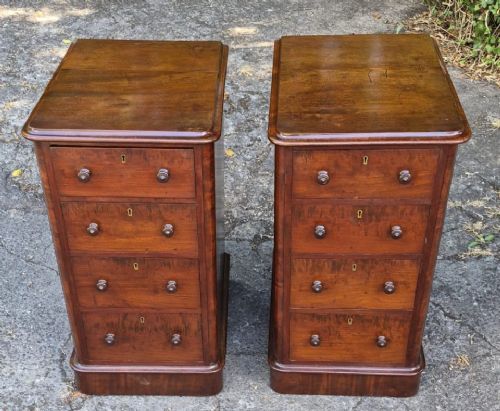
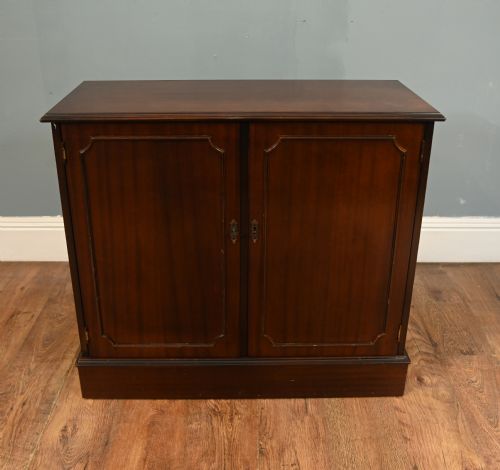
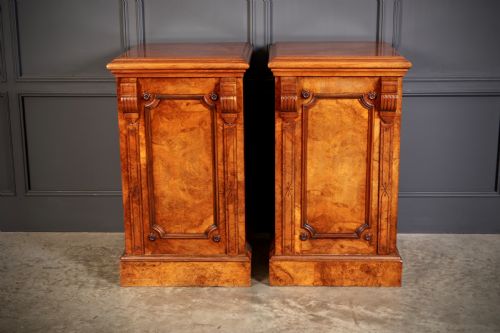
The selections on this page appear in various forms, most commonly as bedside cabinets, side cabinets, and pedestal cabinets, as well as larger sideboards and side cupboards. Mahogany is the predominant wood seen across these listings, accompanied by rosewood, walnut, burr walnut, figured walnut, mahogany veneer, and satin birch.
Buyers encounter single pieces alongside matched pairs, offering flexible options for bedroom and living space placement. Origins lean towards English workshop production, utilising brass hardware and occasional glass elements to complete the functional design.
Materials and construction
Cabinet makers utilised dense hardwoods like solid mahogany, rosewood, and walnut, often applying finely figured veneers such as burr walnut to prominent surfaces. These timbers were selected for their durability and grain pattern, forming the primary structure of the cabinet carcase and the flat plinth base.
Functional details included brass handles, hinges, and mounts, whilst selected side cabinets incorporated glass panels within their doors. Joinery relied on traditional techniques suited to heavy hardwoods, ensuring stable construction without the need for raised feet.
Listings feature items from the nineteenth century, spanning the William IV and Victorian periods with materials like mahogany and burr walnut.
Distinctions in quality
The grade of a piece rests heavily on the selection of timber and the quality of the veneer work, particularly on surfaces like figured and burr walnut. Finer cabinets display careful grain matching across doors and drawer fronts, whereas simpler examples rely on plain mahogany planks.
Construction details such as the integration of the plinth base and the finish of internal shelving separate standard utility items from more refined workshop productions. The presence of secondary timbers and the precision of brass hardware fittings further distinguish the tiers of craftsmanship.
Holland & Sons
The Victorian Plinth Base Cupboard Glossary
- Plinth base
- A flat, solid block foundation supporting the cabinet directly from the floor without legs. This architectural feature provides a grounded, stable appearance typical of nineteenth-century case furniture.
- Bedside cabinet
- A small enclosed storage unit designed to sit beside a bed, often featuring a single door and interior shelf. These pieces vary from compact chests to taller pedestal formats.
- Veneer
- A thin layer of finely figured wood applied over a secondary timber base to create decorative surfaces. Burr walnut and figured walnut veneers are common examples found on finer nineteenth-century cabinets.
- Pedestal cabinet
- A tall, narrow freestanding cupboard designed to stand alone or in pairs against a wall. They offer enclosed vertical storage with a heavy plinth foundation.
- William IV
- A British design period spanning the eighteen thirties, bridging the Regency and early Victorian eras. Pieces from this style often feature rich rosewood or burr walnut timbers.
Victorian Plinth Base Cupboard: Frequently Asked Questions
What is a plinth base?
A plinth base is a flat, continuous wooden foundation that sits directly on the floor. It replaces traditional legs or feet to give the cabinet a solid, grounded silhouette.
This construction style helps distribute weight evenly and prevents dust from gathering underneath the furniture.
How were these cabinets used?
These pieces served practical storage roles in bedrooms and reception rooms. Smaller versions functioned as bedside tables for night-time essentials, while larger side cabinets stored tableware or linens.
Their enclosed doors kept contents dust-free in era homes lacking built-in closets.
Are pairs common?
Matched pairs appear frequently among bedside chests and pedestal cabinets. Cabinet makers often produced symmetrical sets to flank a bed or fireplace.
Finding a matching pair of nineteenth-century timber cabinets offers balanced symmetry for interior placement.
Which woods are most common?
Mahogany forms the majority of the timber used in these cabinets. Rosewood and various walnut treatments, including burr and figured variations, also appear frequently.
Each wood dictates the natural colour and grain pattern of the finished piece.
How do I date a piece?
Dating relies on observing stylistic markers, timber choices, and construction methods. William IV pieces often display rosewood and bold proportions, whereas later Victorian examples utilise varied walnut veneers.
Hardware styles and plinth proportions also shift gradually across the nineteenth century.