


Antique Wooden Coffin Stool
An antique wooden coffin stool brings solid timber construction and centuries of domestic utility directly into a modern room.
Antique Wooden Coffin Stool
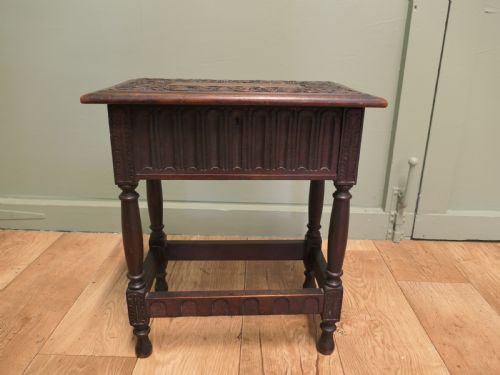
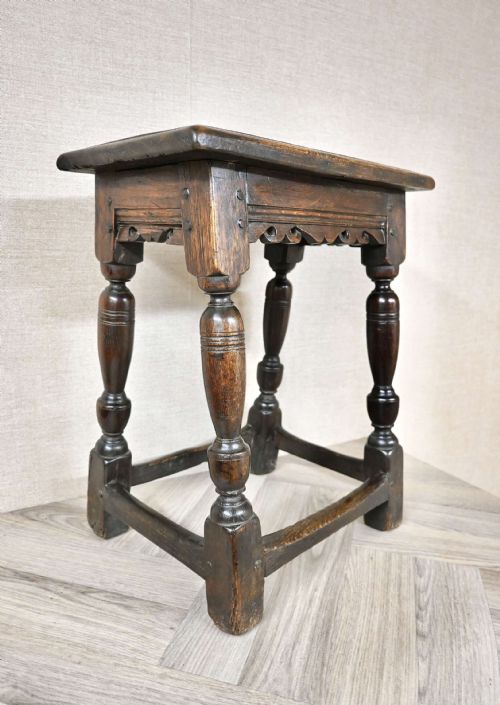
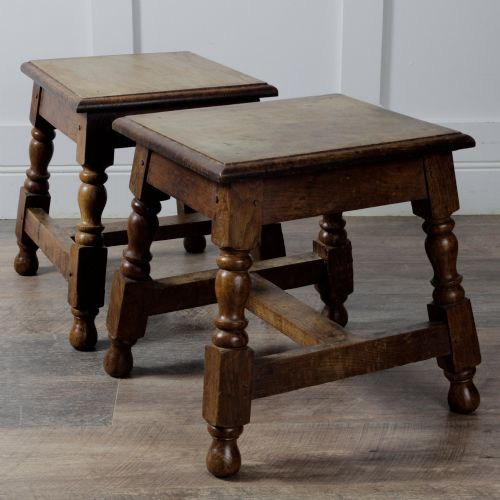
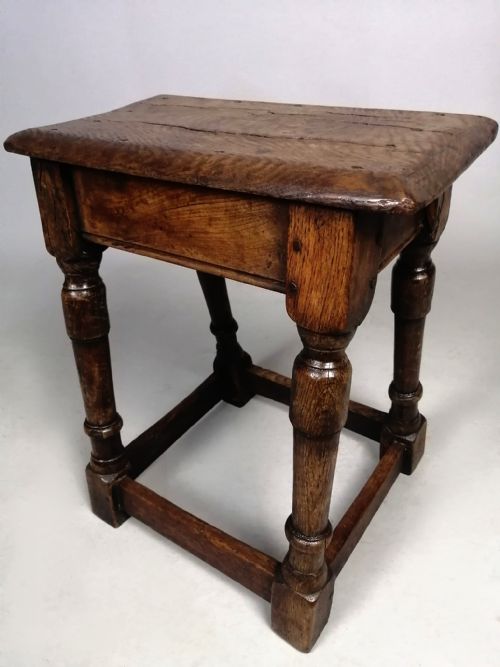
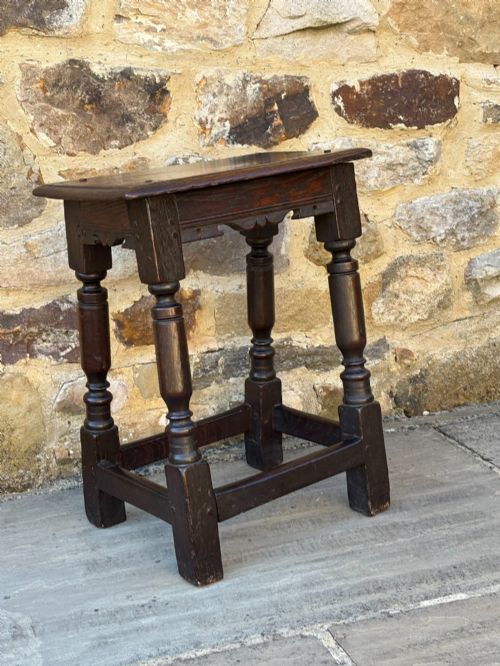
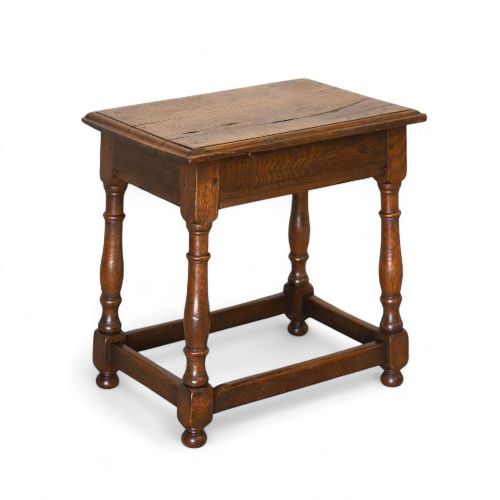
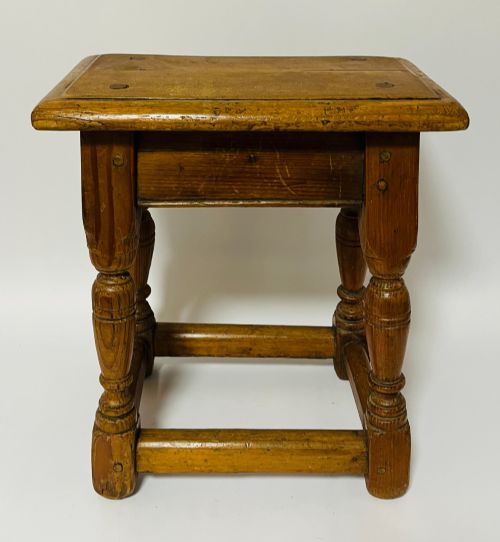
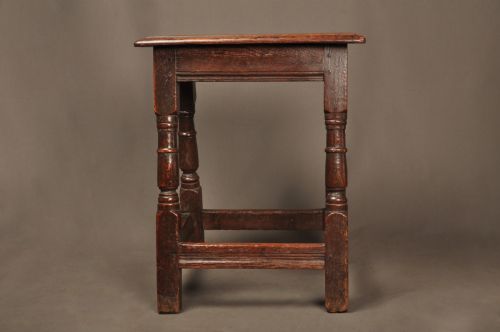
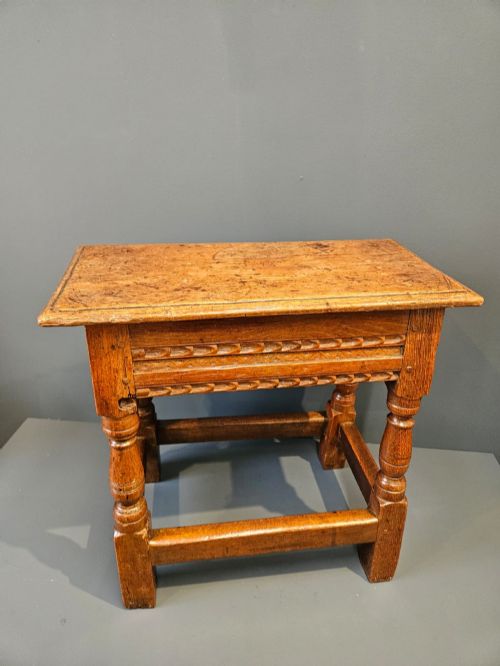
When you search for an antique wooden coffin stool, you encounter robust seating forms commonly known as joint stools, built with pegged frames and stout legs. The examples seen on this page span from the seventeenth century through to later revival periods, showing provincial English craftsmanship and practical design.
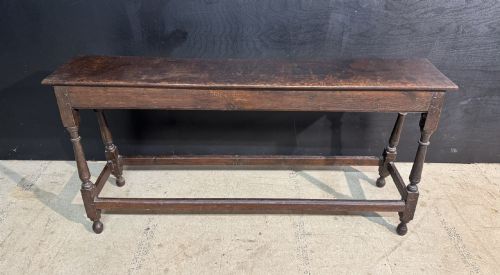
The most typical piece you meet here is constructed from oak, featuring a rectangular top and turned or straight supports connected by low stretchers. These sturdy items served various household functions beyond ecclesiastical use, functioning as small tables and everyday seats.
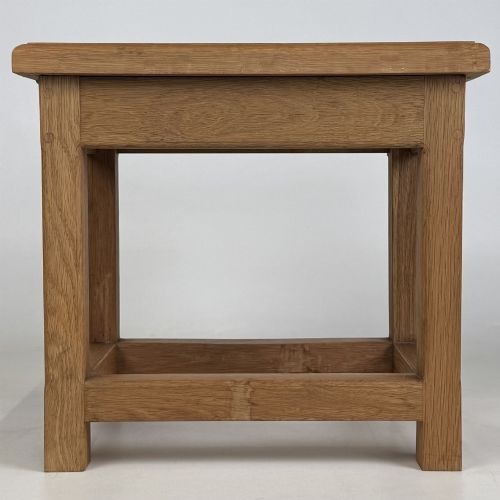
Makers produced these objects in elm, pine, and yew wood alongside oak, reflecting local timber supplies and regional furniture traditions. While seventeenth-century originals appear frequently, later nineteenth-century revival interpretations also populate the selection.
Distinguishing quality across the range
The distinction between a standard piece and a superior example rests in the integrity of the original timber and the crispness of the joinery. Earlier seventeenth-century pieces often display deeper patination and tighter frame construction compared to later revival items.
Surface depth and timber figure dictate visual strength, where rich colour developed through prolonged use elevates provincial English examples. Original pegging and minimal timber replacement preserve the structural authenticity that collectors value.
Listings feature robust wooden forms spanning from the seventeenth century through to early twentieth-century revival interpretations.
The Antique Wooden Coffin Stool Glossary
- Joint stool
- A sturdy wooden seat constructed with mortise and tenon joints, common in domestic interiors from the sixteenth century onwards. These items earned their name from the joiner's craft used in their assembly.
- Mortise and tenon
- A woodworking joint where a protruding tongue fits tightly into a corresponding cavity, secured with a wooden peg. This method provides immense strength without relying on metal fasteners.
- Stretchers
- Horizontal wooden braces connecting the legs of a stool near the floor to reinforce the structure. They frequently doubled as footrests in early domestic settings.
- Patina
- The surface sheen and colour depth developed by timber over centuries through handling, light exposure, and polishing. It serves as a visual indicator of age and continuous use.
- Provincial
- Describing furniture made in regional workshops outside major urban centres, often displaying traditional local construction methods and native timbers.
Antique Wooden Coffin Stool: Frequently Asked Questions
What is an antique wooden coffin stool?
An antique wooden coffin stool is a sturdy piece of seventeenth-century or later domestic seating, structurally identical to a joint stool. These low wooden items were built to support heavy loads and served multiple utilitarian purposes within the household.
While traditional association links them with resting biers during parish funerals, they functioned primarily as everyday seats and small tables in early homes. Their robust pegged construction ensured they survived centuries of heavy domestic wear.
How can I tell a seventeenth-century stool from a revival piece?
Differentiating an early original from a nineteenth-century revival piece involves examining the timber grain, tool marks, and construction wear. Seventeenth-century examples display deep patination and hand-split surfaces unique to early forestry methods.
Revival pieces from the Victorian and Edwardian eras often show more uniform machine sawing and cleaner, tighter joints. Comparing the colour and peg placement helps clarify the true age of the timber frame.
Where should I place a joint stool in my home?
A joint stool functions effectively as a compact side table, an occasional seat, or a display surface for lamps and ceramics. Its small rectangular footprint allows it to fit into narrow hallways or beside seating groups.
Placing the stool away from direct heat sources protects the dry historic timber from splitting. Regular light dusting maintains the rich colour of the polished oak or elm surface.
What woods were used to make these stools?
English makers relied heavily on native oak for the primary frames and tops of these durable stools. Elm, pine, and yew wood also appear in provincial pieces depending on regional timber availability.
Each wood species ages differently, with oak developing a dark, lustrous surface and pine taking on a softer, paler character. The choice of timber often reflects the local vernacular furniture traditions of the maker.