
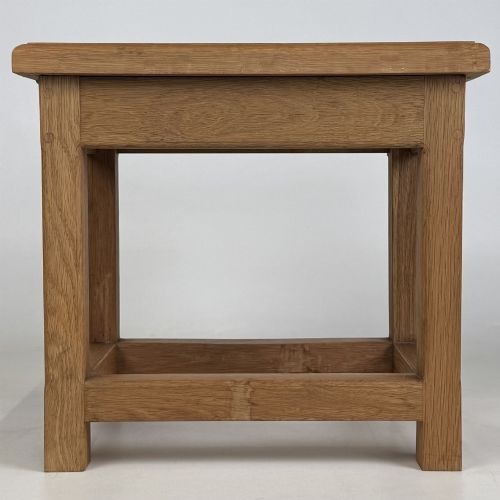

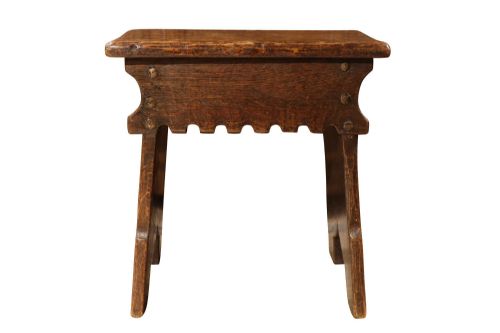


Brown Wood Joint Stool
These brown wood joint stools are sturdy timbers built to last centuries, prized for their honest craft and rich patination.
Brown Wood Joint Stool
When you search for a brown wood joint stool, you are looking at solid timber seating built using traditional pegged mortise and tenon joinery. These pieces range from early seventeenth century examples to nineteenth century revivals and country pieces.
The versions you are most likely to meet on this page span the 17th, 18th, and 19th centuries, alongside Edwardian revivals. They appear in forms such as oak five-plank stools, yew wood pairs, elm square-topped designs, and low side tables.
Originating in Britain and influenced by styles like Jacobean Revival and rustic farmhouse, these stools served practical domestic purposes. Their sturdy construction made them useful as both seating and low occasional tables.
How they were made
Cabinet makers utilised native timbers including English oak, yew wood, elm, and general hardwood. These woods were chosen for their density and durability, often finished with hessian details in certain contexts.
Construction relies on pegged joinery, particularly pegged mortise and tenon joints, creating a rigid frame without metal nails. Carpenters shaped five-plank configurations and turned legs by hand to support everyday weight.
One tiny miniature apprentice piece survives here as a small decorative shelf table, built just like the full sized originals.
What varies in quality
Quality rests in the integrity of the timber and the honesty of the construction. Pieces with original pegs and minimal structural replacement hold greater historical weight than heavily restored examples.
The depth of the natural patination and the crispness of early turned work dictate the visual appeal. Solid country made pieces with honest wear show a superior tactile presence compared to later, overly polished imitations.
The Brown Wood Joint Stool Glossary
- Joint Stool
- A sturdy wooden stool constructed with mortise and tenon joints held together by wooden pegs rather than metal nails. These were common household items from the Tudor period onwards.
- Mortise and Tenon
- A joint connecting two pieces of wood where a protruding tenon fits snugly into a matching slot called a mortise. This method forms the structural backbone of traditional furniture.
- Pegged Construction
- A method of securing joints by driving a wooden dowel through pre-drilled holes in the interlocking wood pieces. It allows the wood to expand and contract naturally with humidity changes.
- Jacobean Revival
- A nineteenth century design movement that copied the heavy, dark carved aesthetic of the early seventeenth century. Makers utilised turned legs and geometric panel motifs.
- Patina
- The surface sheen and colour developed over decades through handling, waxing, and ageing. A deep patina indicates genuine historical use and unbleached timber.
Brown Wood Joint Stool: Frequently Asked Questions
What is a joint stool?
A joint stool is a sturdy wooden seat built using traditional carpentry joints rather than simple nailing. They earned their name because joiners made them using pegged mortise and tenon techniques.
Historically, these items provided versatile seating around the home and doubled as small side tables when needed.
How old are these stools?
The pieces span several centuries, running from seventeenth century originals through to eighteenth and nineteenth century country interpretations. You will also find Edwardian revivals that mimic earlier styles.
Determining age involves examining the tool marks, timber shrinkage, and the type of joinery used in the frame.
What woods were used?
Makers relied on native British hardwoods that offered strength and durability. English oak, yew wood, and elm appear frequently across these listings.
Each wood ages differently, with oak developing a dark, rich grain and yew displaying striking figuring and warm tones.
How do I style one at home?
These compact pieces fit easily into modern interiors as bedside tables, plant stands, or occasional surfaces next to a sofa. Their low profile makes them practical for small spaces.
Keeping them away from direct heat sources helps preserve the antique timber and maintain the original surface condition.