



Antique Wooden Canteen
An antique wooden canteen is a fitted storage chest designed to hold flatware securely, offering both practical utility and period craftsmanship.
Antique Wooden Canteen
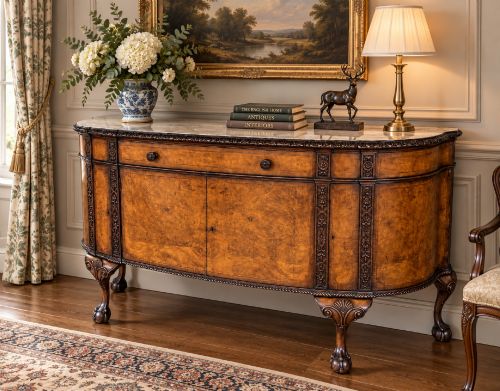
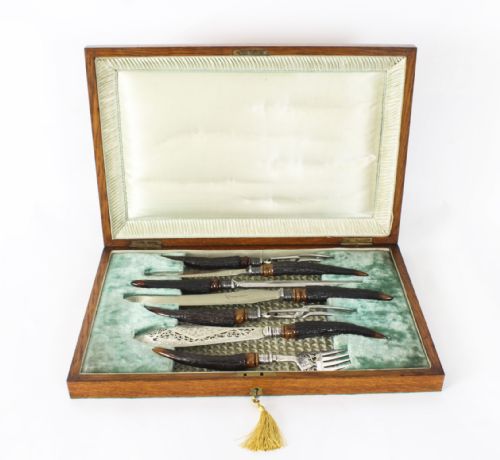
When you search for an antique wooden canteen, you are looking at fitted storage boxes, chests, and sideboards designed to house cutlery sets from various historical periods. The examples found here span from the Georgian era through to the Art Deco period, encompassing both standalone knife boxes and large fitted chests.
The version you are most likely to meet on this page is the traditional mahogany or oak box, often featuring compartmented interiors designed for specific flatware collections. These pieces originate from Georgian, Victorian, and Edwardian workshops, reflecting the dining customs of their respective eras.
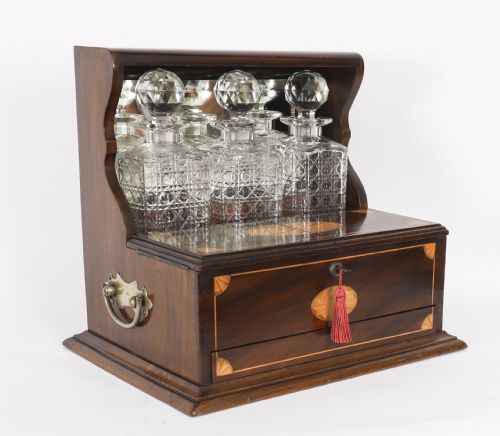
Alongside dedicated cutlery canteens, the selection includes related dining furniture and storage forms such as knife boxes and fitted sideboards. Each object demonstrates how past households organised and displayed their dining implements.
Markers of Quality
Quality in these pieces rests upon the selection of timber and the precision of the interior joinery fitted to hold the flatware. Superior examples display carefully matched wood veneers, robust dovetailed joints, and original working hardware.
The complexity of the fitted interior also distinguishes the range, with fully fitted multi-tier canteens representing a higher standard of cabinet work than simpler standalone boxes.
Antique Wooden Canteen Retail Price Guide 2026
Typical asking prices for wooden canteen among the pieces listed under this phrase on Sellingantiques today, from the lower quarter to the upper quarter. They describe what is for sale here now, not the wider market.
Walker & Hall·Waring & Gillows
The Antique Wooden Canteen Glossary
- Canteen
- A fitted chest, box, or cabinet designed specifically to store a complete set of cutlery. These containers often feature multiple trays or vertical slots.
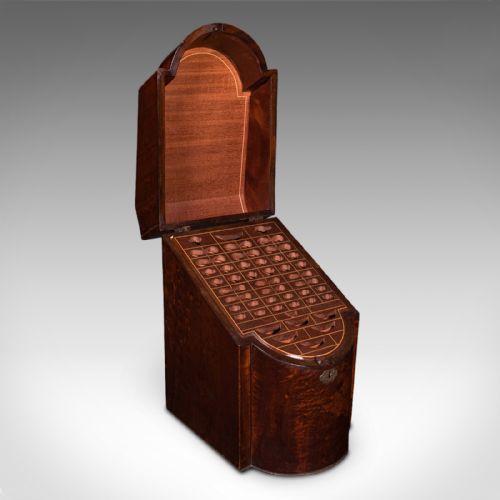
- Knife Box
- A specialised upright container from the Georgian period with a sloping lid, built to hold table knives vertically. They were frequently placed on side tables during formal meals.
- Fitted Interior
- An internal arrangement of partitions, baize lining, and shaped grooves designed to secure specific pieces of flatware. This prevents movement and damage during transit or storage.
- Fiddle Pattern
- A traditional English flatware design characterised by a stem that widens gradually towards a notched shoulder before flaring flat at the terminal.
- Veneer
- A thin slice of decorative wood, such as burr walnut or mahogany, applied over a sturdier secondary timber base to create a patterned exterior surface.
Antique Wooden Canteen: Frequently Asked Questions
What fits inside an antique wooden canteen?
These chests typically house sets of table knives, forks, spoons, and serving utensils arranged within dedicated slots or layered trays.
Larger canteens may accommodate extensive flatware collections comprising over a hundred individual pieces.
How do I date a wooden canteen?
Dating relies on observing the exterior timber, cabinet style, handle design, and lock mechanism relative to known periods.
Georgian boxes often display sloping lids and mahogany construction, whereas Edwardian and later canteens utilise heavier oak or walnut cases.
Were canteens made for everyday use?
Historically, these boxes belonged to affluent households where formal dining required organised storage for silver or silver-plated cutlery.
They protected delicate metalwork from tarnish and wear between large dinner parties.
Can I use a canteen for modern cutlery?
Many modern flatware sets fit into antique canteens, provided the slot dimensions match the profile of the newer utensils.
Checking the internal divider layout against your specific cutlery dimensions ensures a proper fit.