




Antique Wooden Candle Sticks
These antique wooden candle sticks bring warmth and texture to a room, ranging from simple turned treen to carved Italian altar pieces.
Antique Wooden Candle Sticks
Antique wooden candle sticks encompass everything from practical table lights to decorative altar prickets and chamber sticks. When you search this phrase, you encounter diverse forms shaped by Georgian, Victorian, and later tastes.
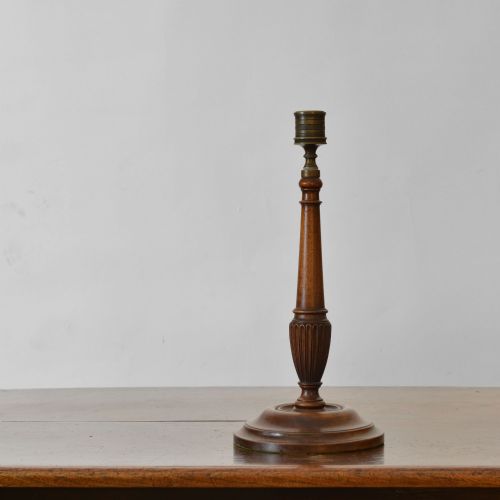
Mahogany, oak, walnut, and fruitwoods appear frequently alongside turned treen and carved examples. Many pairs combine timber with brass or iron details to secure the candle nozzle.
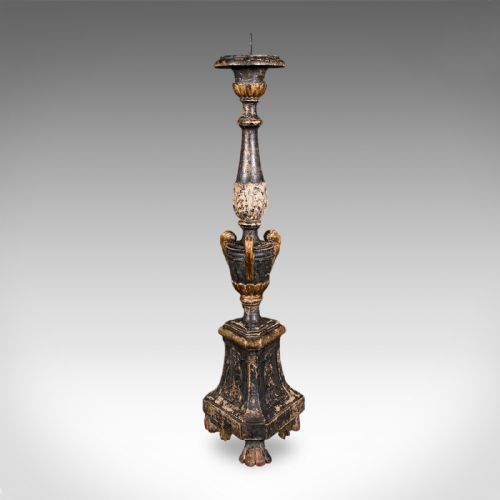
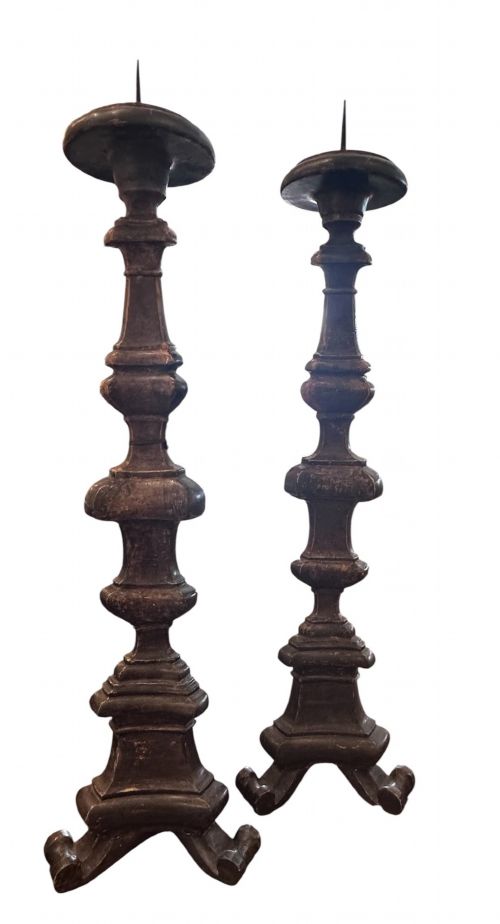
Folk art pieces and Italian silvered or gilt-wood altar sticks offer more sculptural silhouettes. These items span domestic table lighting and larger devotional objects adapted for interior display.
How they were made
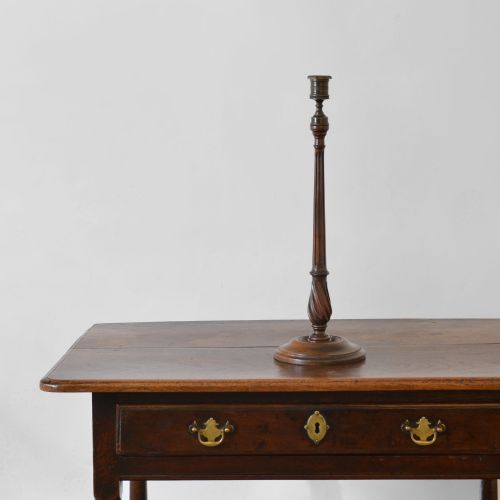
Turning on a lathe accounts for many barley twist and column shafts seen in mahogany, oak, and walnut. Artisans shaped these timbers to create balanced profiles suitable for domestic use.
Carving defines the more decorative folk art and altar pieces, sometimes incorporating applied gesso, gold leaf, or silver leaf. Metal sconces and pricket spikes were then fitted to protect the timber from burning wax.
Listings feature periods from the 18th century through to the 1920s, utilising mahogany, oak, walnut, brass, and gold leaf.
What varies in quality
Proportion and the crispness of turning or hand carving dictate the visual strength of a stick. Pieces with well-balanced columns and original surfaces command greater attention than clumsily proportioned alternatives.
The survival of original gilt, silver leaf, or patinated treen surfaces alters the character of the object. Integrated brass work and secure construction complete the measure of a well-made stick.
The Antique Wooden Candle Sticks Glossary
- Treen
- Small handmade wooden domestic objects. These items show the dense grain of hard timbers like lignum vitae or walnut.
- Pricket
- A candlestick featuring an upright spike to impale a candle rather than a socket. Altar sticks frequently use this method.
- Sconce
- The metal cup or nozzle fitted at the top of a wooden stick. This component catches dripping wax and holds the candle firm.
- Giltwood
- Timber coated with gold leaf or gesso and gilding. Italian altar pieces often display this technique.
- Chamber stick
- A low candlestick fitted with a pan and a handle. People used these to carry light through a house before electricity.
Antique Wooden Candle Sticks: Frequently Asked Questions
How do I clean an antique wooden candlestick?
Dust gently with a soft dry cloth to protect the aged surface and patina. Avoid using liquid polishes that can sink into unsealed grain or soften old wax.
Keep wooden sticks away from direct heat sources and strong sunlight to prevent the timber from drying out and splitting.
Can I use real candles on these?
Many antique sticks accommodate standard taper candles, though older hand-turned sockets can vary slightly in diameter. You may need to pare the base of a candle or use a small insert for a secure fit.
Pricket sticks require candles with a pre-drilled base to sit safely upon the central metal spike without wobbling.
Are pairs harder to find than singles?
Matching pairs command higher interest because decorators and collectors prefer symmetry for mantelpieces and side tables. Single sticks often survive from larger sets or altar arrangements dispersed over time.
Many listings present matched pairs assembled from similar period turnings rather than factory-identical production runs.
How do I date a wooden candlestick?
Turn timber profiles, tool marks inside socket bores, and the presence of brass or iron fittings point towards specific periods. Georgian and Victorian examples reveal different levels of lathe work and timber choice.
Wear patterns around the base and the depth of the wood patina further indicate the age of the piece.